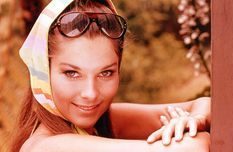
 Paige Young in Los Angeles
Meet Artist & Paige Young Friend Richard Sample. 1964-1969. Malibu. Venice. Celebrity Connections. Cult Characters. PART 1. Under Construction. Long. 2/12/2025
Posted on June 8, 2021
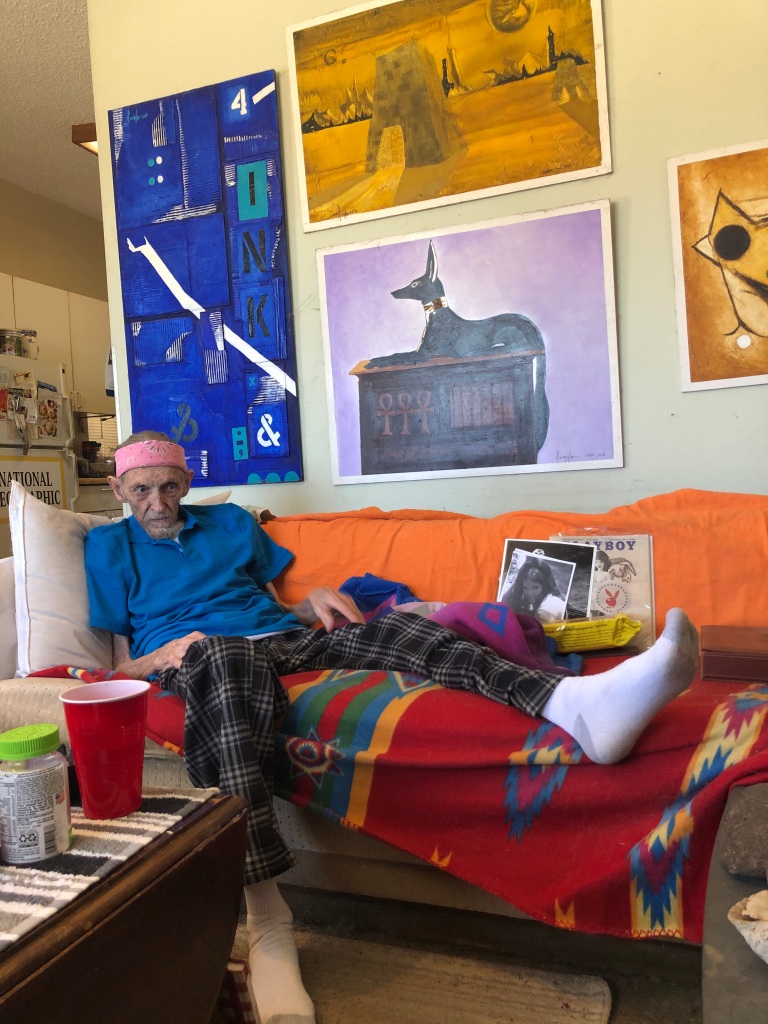
UPDATE: Richard L. Sample passed away on August 10, 2021.
Recently, I interviewed Richard Sample, Paige’s ex-boyfriend, friend, painter, sculptor, collage-maker, furniture-maker.
He now lives in the Coachella Valley area of California.
Richard Sample was still living in Sun Valley, Idaho when he was interviewed by Daily Mail reporter Ryan Parry in 2014. He says he doesn’t know who gave his name to Parry in association with Paige Young.
I am thankful to Richard Sample for inviting me to interview him in person. He took the time and effort to talk about Paige Young. It was not always easy for him (or me).
Thanks also to his niece Ellen (Ellie) Sample who has been insightful and supportive.
At the appointed time, I pulled up in my rental car and parked next to Richard’s house. There was a chainlink fence and gate that had a big padlock on it and the house was about 10 yards beyond it; I called out his name several times and did not get a response.
Luckily, Richard’s niece Ellie pulled up in her car, got out and told me Richard’s neighbor had called and told her that “there is woman in a red car in front of her Uncle Richard’s house.”
Ellie unlocked the gate and as we walked toward the house, she told me that Richard doesn’t hear very well now.
Ellie said that she was aware of the interview, but “didn’t ask him any questions so that he feels he has his own life.” Ellie lives one street over and has been very involved with caring for Richard since he moved to the area.
Richard warmly greeted me with a hug as did his dog Tolly. Ellie left us to the interview.
Richard Sample gave me permission to quote him in my article.
After we sat down to talk, Sample said to me:
“In 2001 I got throat cancer. I got radiation that burned the lining of my throat and my whole body. I also had a surgery and they cut my throat, it left me hard to talk, hard to drink, hard to eat… I am dying.”
Richard Sample is now 84 years old and does not hear too well or speak easily. I strained to hear his whisper of a raspy voice. I tried to understand what he was saying, but I didn’t always understand right away. I got better at understanding him as our conversation got going.
I will say Richard and I didn’t exactly have a normal flowing conversation. It was more of a question and answer session. Mostly the answers Richard gave took him a long time to say. I also got to know him as a person and shared my journey with researching Paige’s story.
This chapter will be a mixture of exact quotes from my tape recorder and hand written notes.
Background of Richard Sample and his connection to Los Angeles.
His father was Charles “Charlie” Sample, well known artist and metal smith, eccentric Los Angeles (and other parts of California) character.
Richard was born in Huntington Beach in 1936, 3 years after his parents married.
“My father (Charlie Sample) was a famous gold and silver smith. He made silver spurs for $8000. He also made belt buckles and horse saddles for Gene Autry, Roy Rogers, John Wayne, Mae West, Tim Holt,” said Richard.
Richard showed me a recent catalog for a company producing artistic, high quality western gear: Bohlin.
It featured Charlie Sample designs by name.
Horse saddles, bridles, spurs, belt buckles, bolo ties, rings, bracelets etc.

Richard’s mother, the former Virginia Smith, was one of about 8 women that modeled for the Columbia Pictures symbol.
His parents divorced when Richard was young and his mother remarried and had more children. Charlie moved on and did not see Richard for a while. Charlie had more marriages and children too.
Richard was upset and angry about his parents’ divorce. He “acted out negatively,” according to a relative I messaged on ancestry.com.

Father metalsmith artist Charlie Sample mentioned. LAT Jan. 18, 1937
News articles indicate that Richard’s
“negative acting out” included being on the wrong side of the law.
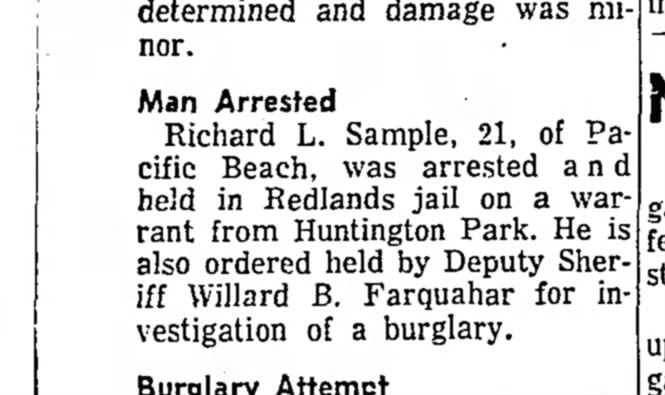
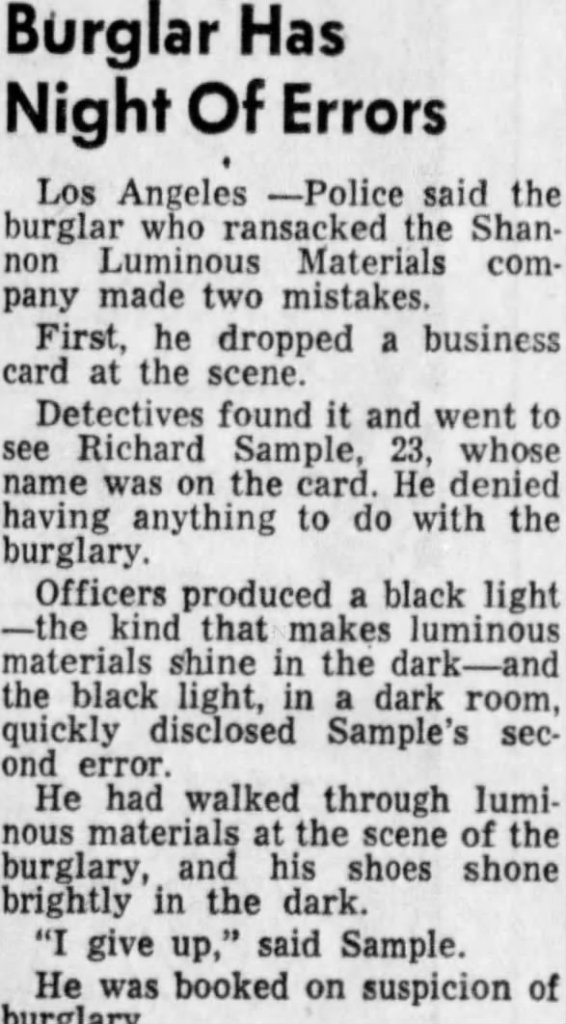
. At some point after this Richard was tried and sent to prison at California Medical Facility in Vacaville California.
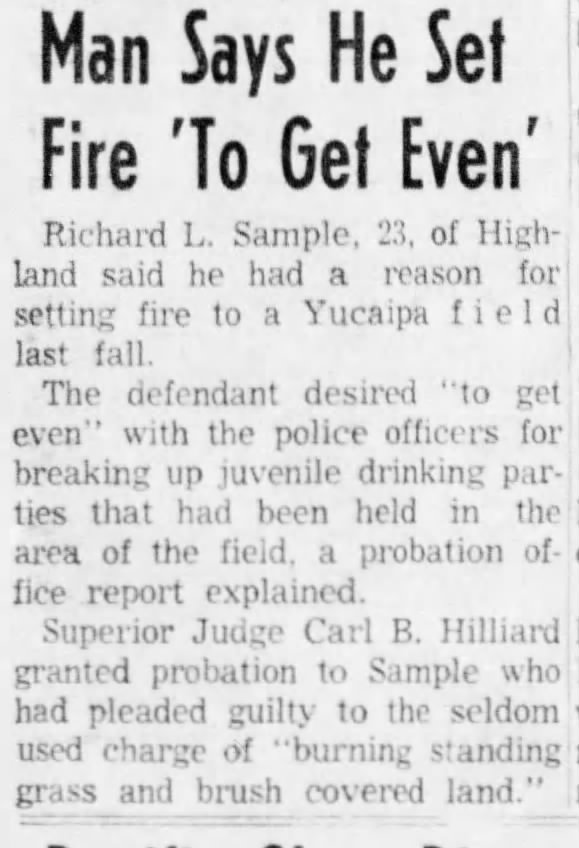
San Bernardino County Sun Feb. 29, 1960
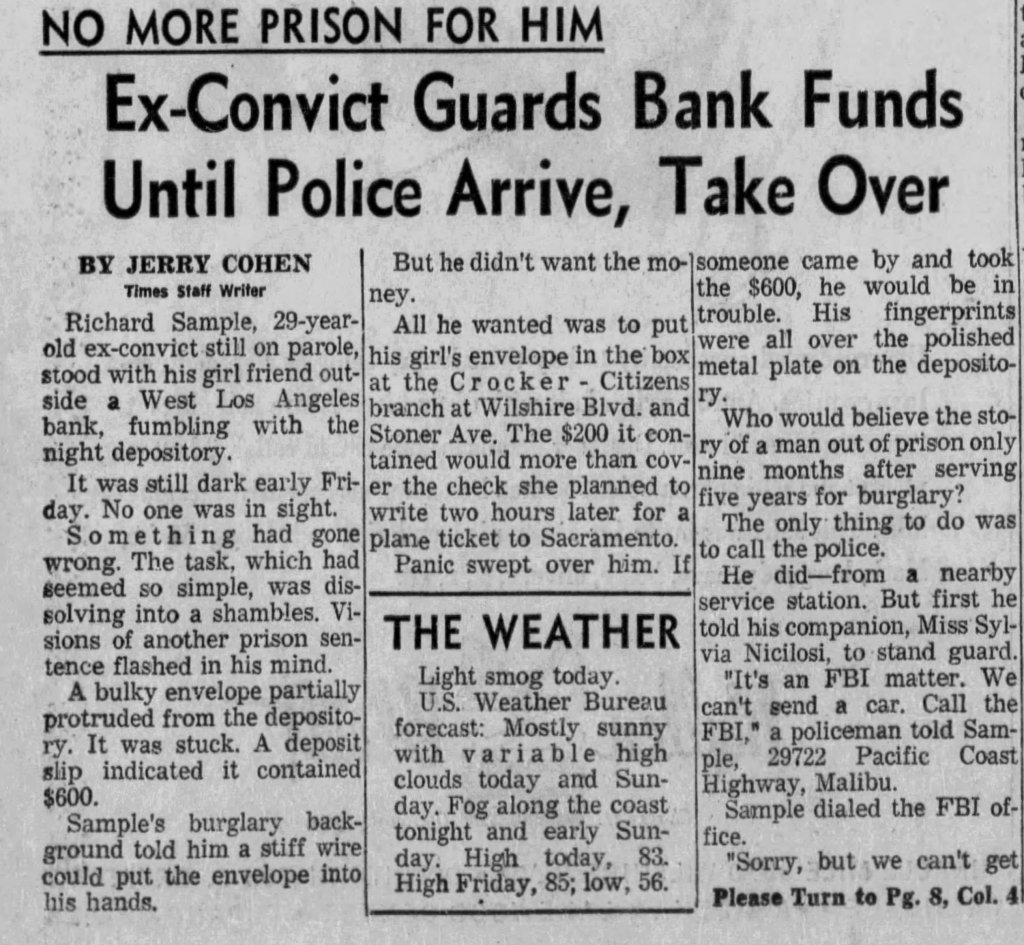
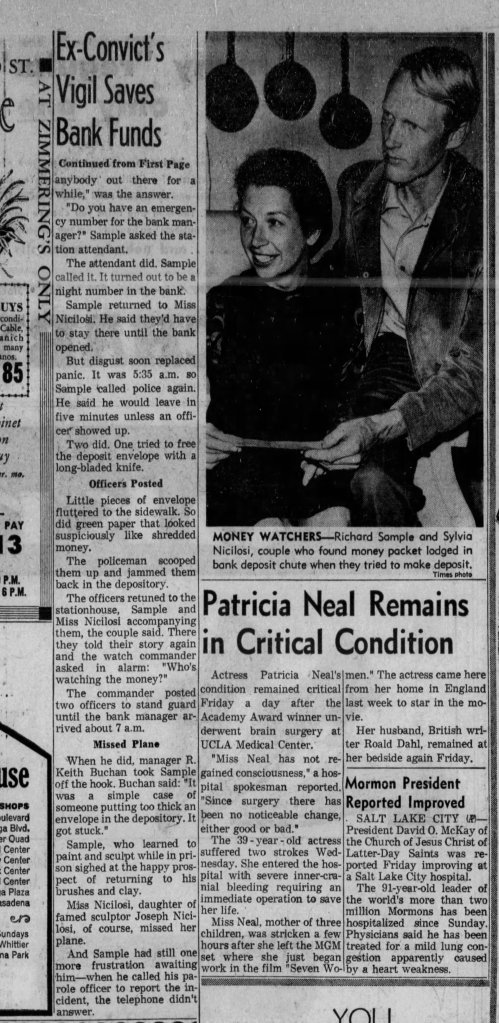
Richard and Paige got together after the end of his relationship with Sylvia Nicolosi shown above.
Sylvia is the daughter of famed LA based sculptor Joseph Nicolosi. She was one of three sisters.
I found several articles about her, she usually went by the name Maria.
Richard said he was in the military in the 1960s but “never made it to Vietnam, just Ft. Bragg North, Carolina.” He then showed me his military ID.

When our interview began, Richard was excited to tell me about aspects of Paige’s personality and character.
“Paige lived in a converted chicken coop on the edge of Malibu.“

Richard doesn’t remember which edge. (I’m confident it was the Topanga Canyon area or closeby.)
“For a dinner party, Paige had a different chair for each guest to use, not a matching (dining) set.”
“She would only eat salad if it was a day old.”
“I never saw Paige with shoes on.” (see chapter 1970 Warhol, Paige appears with her date at the Pasadena Art Museum Warhol opening and is photographed wearing a ankle length Rudi Gernreich dress barefoot. This is described by the reporter.)
“She is the only person I’ve ever known who ate ice cream with a fork,”
At the end of Richard and Paige’s first date….coming soon.
I asked about Hamish, the horse she had owned since junior high and still had in late 1964 according to her divorce filing. Richard responded she did not keep a horse in Malibu that he knew of. (Malibu is a town with a history of horse and stable owners and dedicated riders)
Paige would often strip down to her underwear and “run around topless or even nude.” Confirmed. Westwood neighbor Melanie told me that Paige often walked around nude in the shared backyard. It got on her nerves. Paige’s nudity was also described to me by Malibu friend Veronica.
When Richard met Paige
Paige was “going with a man named Harry Gesner.“
“He was an architect who designed the Cooper house in Malibu. The house was on the cover of Life magazine. Harry Gesner was a client of my landlord.”

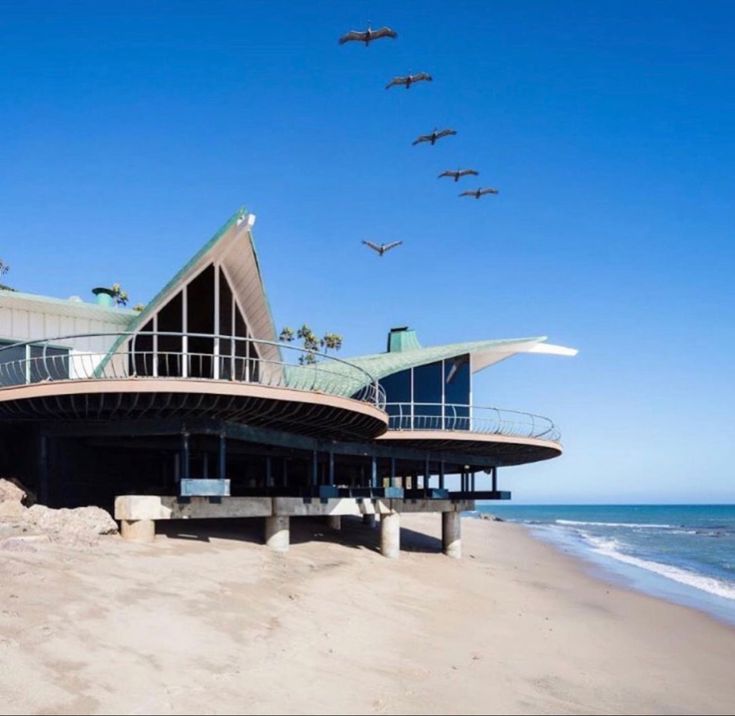
“My landlord was Edward Ravick; he was involved with the Malibu Colony and maybe lived there at times,” said Richard
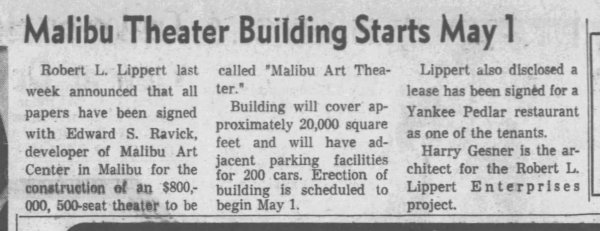
“Ravick sent Gesner and Paige to my studio in Malibu, to see my art.”
“This is how I met Paige.”
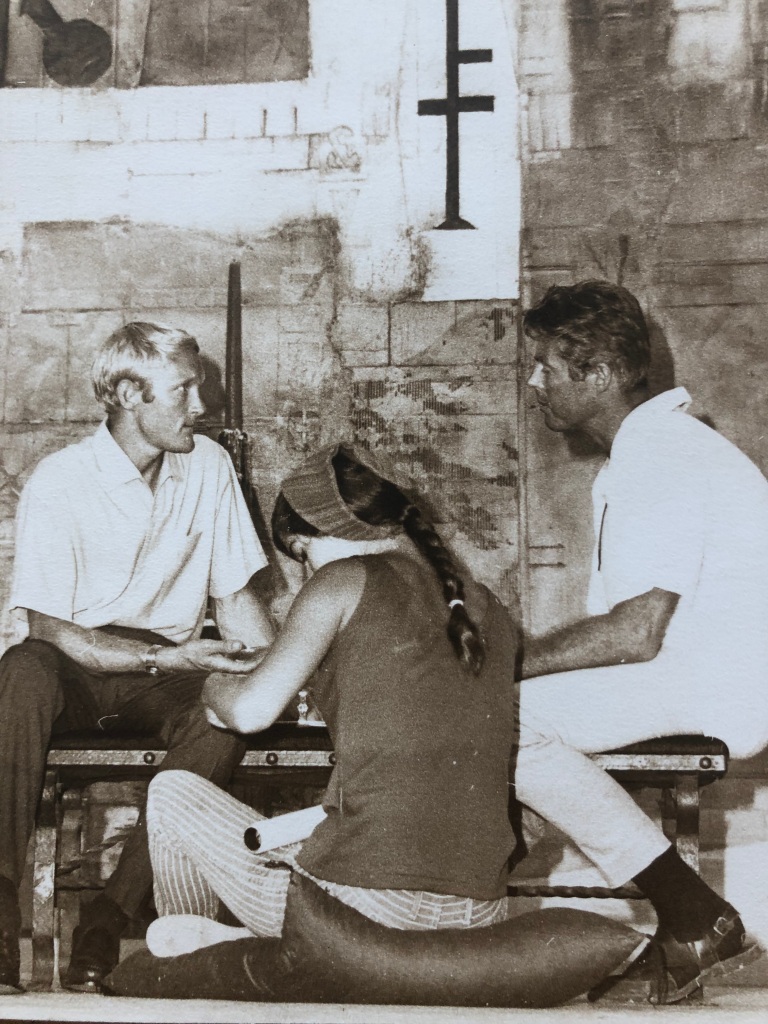

Eleven months ago, the world got a little duller with the passing of Malibu architect Harry Gesner at the age of 97. To say Gesner led a full life would be putting it mildly; the word “epic” might be more apt. Born in Oxnard to an engineer father and an artist mother, he learned to fly a plane at 14, stormed the beach at Normandy aged 19, worked as a waterski instructor in Lake Arrowhead, turned down an invitation from Frank Lloyd Wright to study at Taliesin in favor of being a tomb raider in Ecuador, squired models and actresses, fraternized with Errol Flynn and Marlon Brando, collected fancy sports cars, including a 1957 Mercedes 190SL convertible that he adapted to be all-electric, and surfed every day into his late ’80s
Pauline O’Connor DIRT, a magazine about real estate. June 1, 2023. Dirt is now called The Robb Report.
Paige Young was one of the models Harry squired.

Notice the names above. Edward Ravick being one. Before I saw the above pamphlet on ebay, Richard had told me about the buyers of his art: Vincent Price, Elaine de Kooning, and Harry Gesner, spelled incorrectly here, had purchased his art. Edward Ravick is also listed as a buyer.
This confirms Richard’s comments to me using all these names was the truth.
Elaine De Kooning attended the prison art exhibits that Richard participated in during his prison stint. Documented in newspapers.
I have found two mentions in an online Malibu newspaper on but not “saveable.” There was an Edward Ravick mentioned in a Malibu paper connected to real estate in the 1960s.
Jonathan Winters
I first contacted Richard by old school letter writing as there was no phone number for him that worked.
In that letter, I asked him if he knew of a connection with Paige and comedian-actor legend Jonathan Winters.
Early on in our interview, Richard asked why I wrote him asking about Winters.
I told him about the many newspaper interviews with Paige, I found from 1969 as she was traveling to promote Playboy After Dark.
In a few or the articles, it says Paige “appeared in many skits on The Jonathan Winters Show.”
(See my chapter on Paige’s Most Public Year 1969).
I then asked Richard why he called Jonathan Winters an “asshole” in his letter back to me.
His answer:
“Dennis, (does not remember his last name) was the owner of the Golden O Gallery, in Los Alamos, he told me that Jonathan Winters used to come and sit on the sidewalk at Dennis’ gallery and talk about Paige, and he had nothing good to say, it was always nasty or negative. I never met the man, but Dennis could tell you all about it. Richard added that Dennis never met Paige, but he “did know about her.”
Presumably because of Jonathan Winters.
He said he wasn’t aware of her appearing on the show during its run from 1967-1969.
He said it is a possibility that she did and he didn’t know about it.
Richard said that Paige never said anything about Jonathan Winters when they were together.
Winters was serious about his painting hobby.
He published a book of his paintings, Hangups.
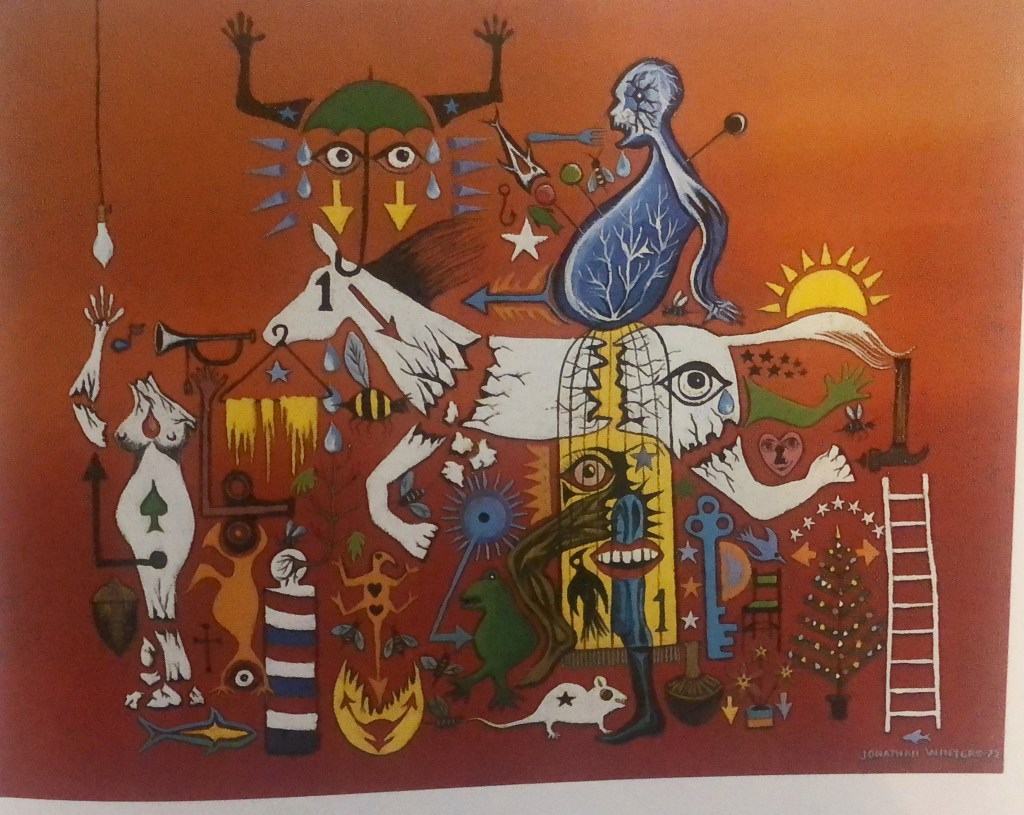
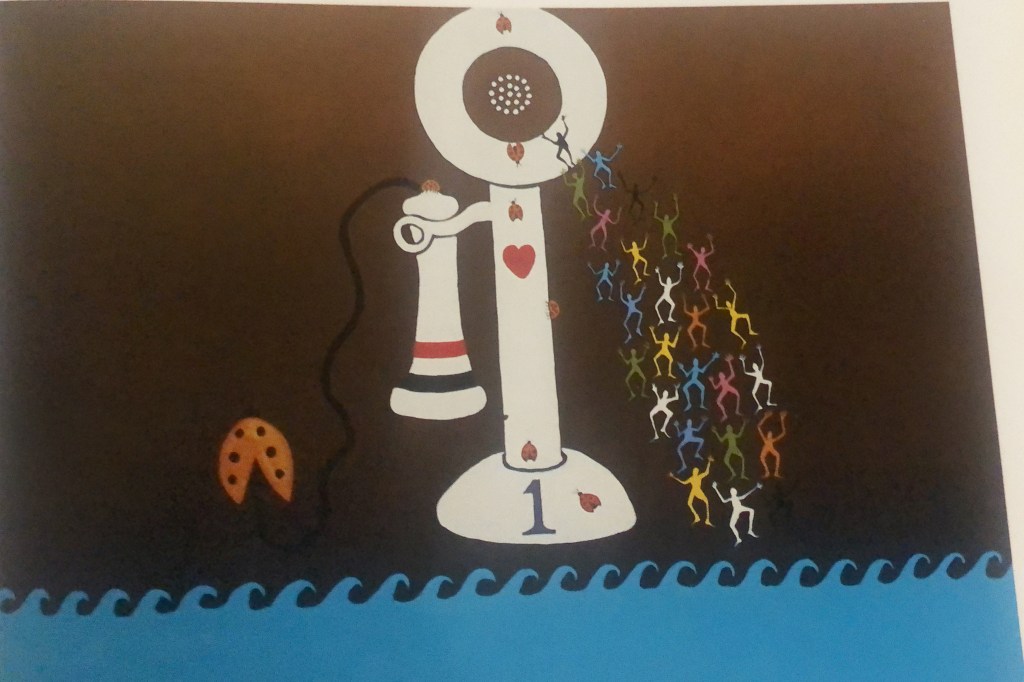
For many years Winters resided at least part time in Montecito, which is quite close to the town of Los Alamos.
Bill Cosby
was a frequent visitor and performer at many Playboy Clubs in the 60s 70s and maybe even beyond. He was a close friend to Hugh Hefner during those years.

Richard said he would occasionally pick up Paige at the Sunset Strip Playboy Club, after her shift. She worked at the club “for about 3 months,” he said.

“Bill Cosby was always trying to put the make on Paige. She didn’t want anything to do with him, she ignored him,” said Richard.
Richard then told me of one time when he was picking Paige up from the club after her shift. He saw Bill Cosby get angry at Paige after she rebuffed another one of his advances.
Richard then asked me if I was, “sure that Paige committed suicide and was not murdered.” I told him that I owned a copy of her death certificate with suicide by gun typed into the cause of death box cert. and I showed it to him.
“I wouldn’t ever think she would do that,” he said shaking his head at the document.

I decided not to tell Richard there is more proof of a suicide besides the death certificate: witnesses like neighbor Melanie, the man D. DeWitt listed as a “2nd witness” on the police report, the police at Paige’s house on that day. (See chapter on LAPD report) And the coroner’s report.
Celeste Huston told me in a Facebook exchange, which I no longer have, that Bill paid for Paige’s art lessons. She mentioned having lunch with Bill and Paige (and her husband John Huston) at the studio where he was filming in the early 70s.
Melanie is the only one of these people to have spoken out publicly about the day of Paige’s suicide.
“She was a good person. I really miss her.” Richard said about Paige a few times that afternoon.
More Background
Richard Sample moved to Venice Beach around 1967. He was motivated by the thriving art scene which was becoming more well-known on a national level. At least for those who paid attention to the Art scene.
His father Charlie Sample was already working and living in a Venice studio.
Darlene Valentine remembers Charlie as a landlord of sorts at the Venice Beach studios rented by DeWain Valentine, Richard Sample and Paige Young.
Richard got a studio for himself through his dad and Paige through her connection to Richard.

“Paige liked my father, he made some jewelry for her.”
Paige joined Richard not too long after he moved to Venice Beach. He said he invited her and was thrilled that she moved in.
Records show that Richard was married in 1968 and not to Paige Young. His niece Ellie says Richard actually “leased” the Venice studio to Paige.
I asked Richard if he encountered any of the many artists who became famous out of the Venice Beach art scene (that started in the 1950s with “The Cool School” and the slightly later “Light and Space” or “Finish Fetish” art movement.)
He said “De Wain Valentine had a studio next door to Paige and me.” (See chapter on Pasadena Art Museum appearance with Warhol 1970)

“Valentine was a friend of mine.”
“Another friend, Larry Bell, lived across the street from us, on Market.”
(Turns out Larry Bell had a building next door to Valentine, it was Robert Irwin who lived across the street. I did ask about Irwin and Ruscha but Richard did not recognize those names.)
“We (Paige and I) all used to hang out a lot, with all these (Venice artists) at Barney’s Beanery.”
After I returned from my trip, I did some research and I found quotes from Bell and Valentine in Art magazines.
There were a lot of actors and writers. We all used to hang out at a place called Barney’s Beanery, which was in West Hollywood. It was a local bar, a funky little place right at the end of La Cienega Boulevard where all the galleries were. So after the Tuesday or Thursday night openings, everyone would go up to Barney’s and hang around—there was The Raincheck Room on Santa Monica Boulevard in West Hollywood as well.
Larry Bell in Whitewall: Beyond the Walls, Dec. 2019
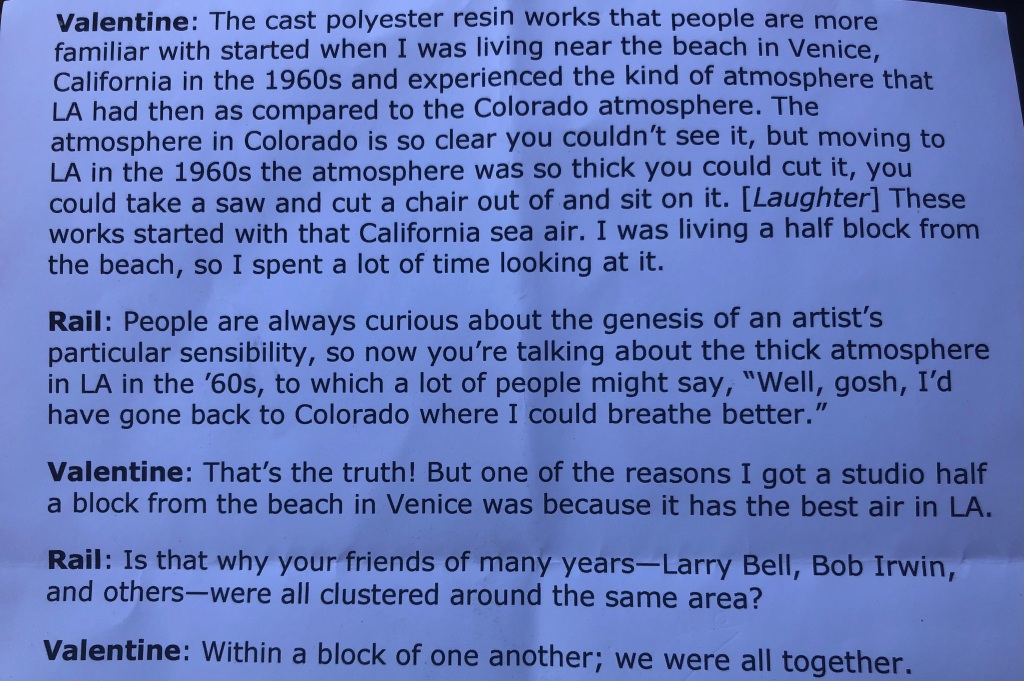
See chapter on Pasadena Art Museum for much more on DeWain Valentine.
I spoke with Darlene Valentine, the first Mrs. Valentine. When she, her husband and children moved to Venice, California in 1965, they found the studio on Market St.
She remembers him being and eccentric character and a funny man. “You were not supposed to live in the studio, (only practice your art), but many did anyway.”
Cars
Paige owned a yellow Mustang, and Richard owned a red Corvette.
“A guy named Rex Ramsey stole our cars, but Paige got them back.”
Before the interview, I already knew about Rex Ramsey; he’s connected to Mark F. Segal, through renting Segal’s (where Paige lived as his wife in 1963 and 64) house at 4144 Crisp Canyon in Sherman Oaks. Both men spent a career heavily involved with cars: sales, importing and racing. Ramsey designed a successful race car once. He did some stunt driving in Hollywood and is credited in the 1968 hit Disney hit The Love Bug.
Rex Ramsey told me Mark’s family had a series of car dealerships and a towing service business. “They were quite well off,” Ramsey said. Otherwise he said he did not remember Paige Young but maybe he would later. I haven’t been able to reach him since the second phone call when he was unable to talk with me.
Richard shows me a picture of himself decked out head to toe in animal fur, looking like mountain man Jedidiah Smith.
Richard and his father were both quite handsome.
He says that “unfortunately” he has no photos of Paige or paintings by her; he has lost a lot of his possessions and paintings over the years but he is hoping to retrieve some of Paige’s paintings in Santa Maria.
“I never knew Paige to be involved with drugs, except an occasional use of grass.” Richard said that she did sometimes drink alcohol and occasionally “went to clubs in the Marina.”
Richard Sample
And possibly the Raincheck Room per Larry Bell’s quote. And definitely Barney’s Beanery.

After I asked about something else and not hearing my question, Richard said “Paige was basically a very good person, until she got mixed up with Hefner. She went downhill then.”
Lewis Beach Marvin 3rd
was born into the family, “who owned Green Stamps. He was a friend of Paige’s and mine. He introduced me to Robert Carl Cohen who put a lot of my sculptures in his movie Mondo Hollywood.“
Lewis Beach Marvin and the amazing dwelling he put together in the hills of Malibu, is featured in Mondo Hollywood. The movie is a cult film known as an important document of counterculture LA/1960s history.
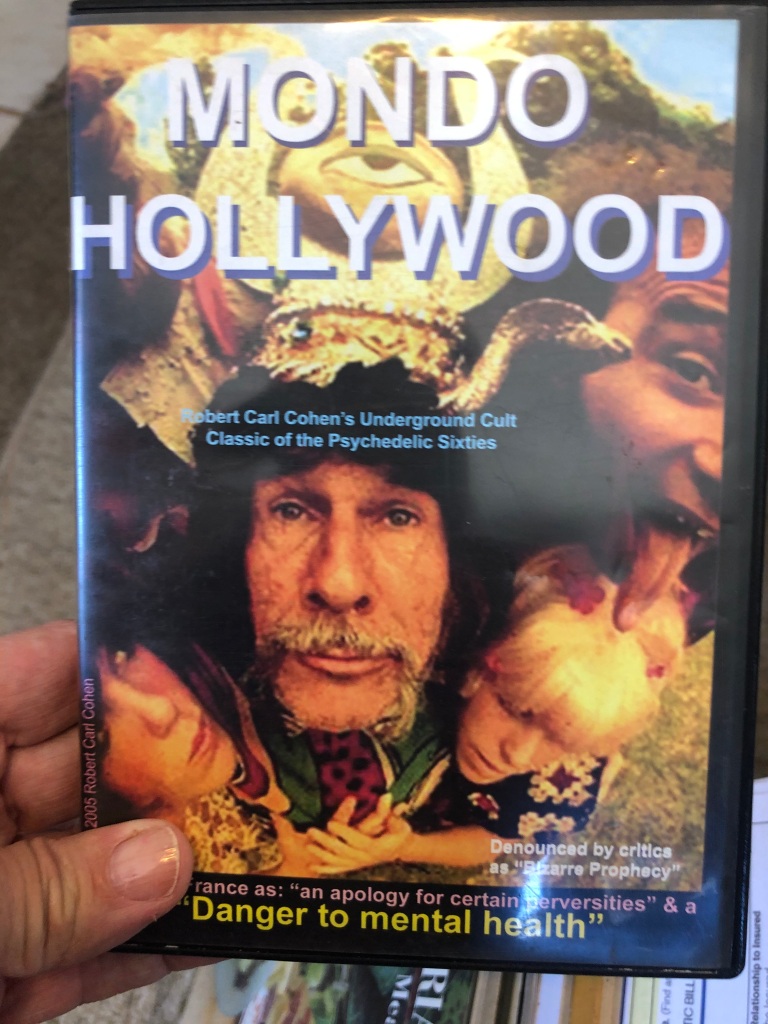
I did some research and one story says that Lewis Beach Marvin is the young man who gives Jim Morrison a lamb on stage in Miami on May 1st 1969. This can be seen on a video. It’s the concert that resulted in Morrison’s arrest due to allegedly exposing his penis on stage.
Lewis Beach Marvin was a vegan activist WAY before it was a “thing.”
He does appear in a Miami article with a lamb around the time of the Doors concert.I have also read a local Miami man gave Morrison the lamb.
The Miami arrest hanging over his head is supposedly one reason Jim Morrison left for Paris where he fatally overdosed on heroin. He was already in bad health due to alcohol abuse.
Shortly after I returned from California, I rented Mondo Hollywood on Amazon.
I was unable to specifically identify Richard’s sculptures in the film–a sculptor named Valerie Porter is one of the “main characters” and the movie is heavy on a variety of her sculptures and many sculptures and structures.
I did see an ending credit:
Moonshadow sculpture: Richard Lauren Sample..
According to Richard:
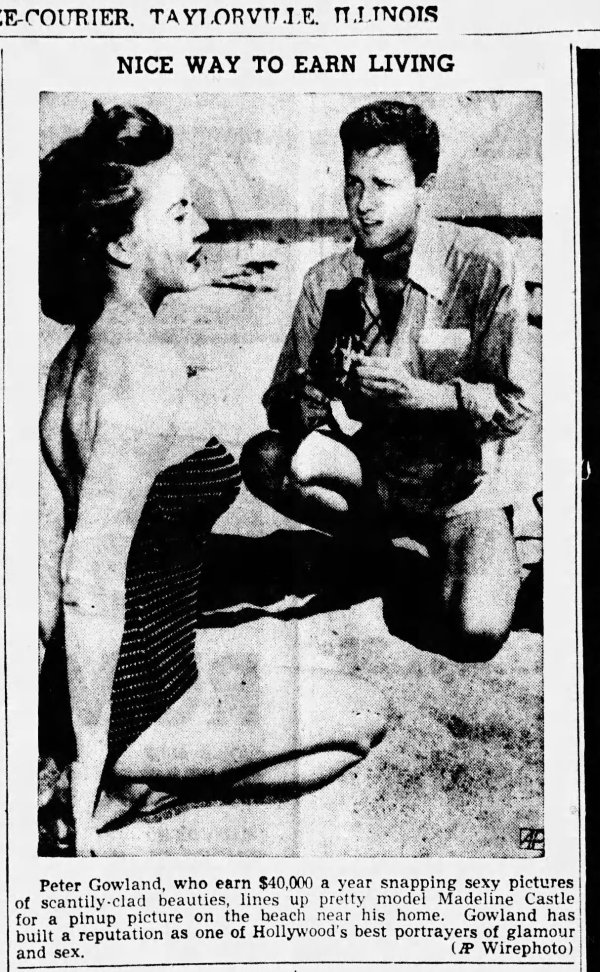
Peter Gowland Playboy and Glamour Photographer
and Paige had met a few years before her appearance as a Playboy centerfold. Paige had already modeled for Gowland several times. This checks out with a few pre-centerfold photos of Paige taken by Gowland. These can be found on the internet.
Peter Gowland is the one who suggested and encouraged Paige to try out for Playboy; he submitted her photos as she recounted in 1969 to newspaper reporters.
I knew Paige mentioned in a few 1969 interviews that “my photographer friend suggested” the idea and he submitted her photos to Playboy. I did not previously mention this to Richard.
Gowland called Richard, in 1974, looking for Paige because he hadn’t heard from or seen her for a while. He called Richard back some time later to tell him that Paige had committed suicide. Peter did not tell Richard the method that Paige used to kill herself, Sample said to me.
Sample is quoted in Daily Mail story as saying he was told by Gowland that it was an overdose.
Richard says he opened Eros Gallery in Westwood in the late 60s.
He can’t remember the location beyond that.
The next several photos are from Playboy magazine November 1968, taken by Peter Gowland.
Richard and I went through them .
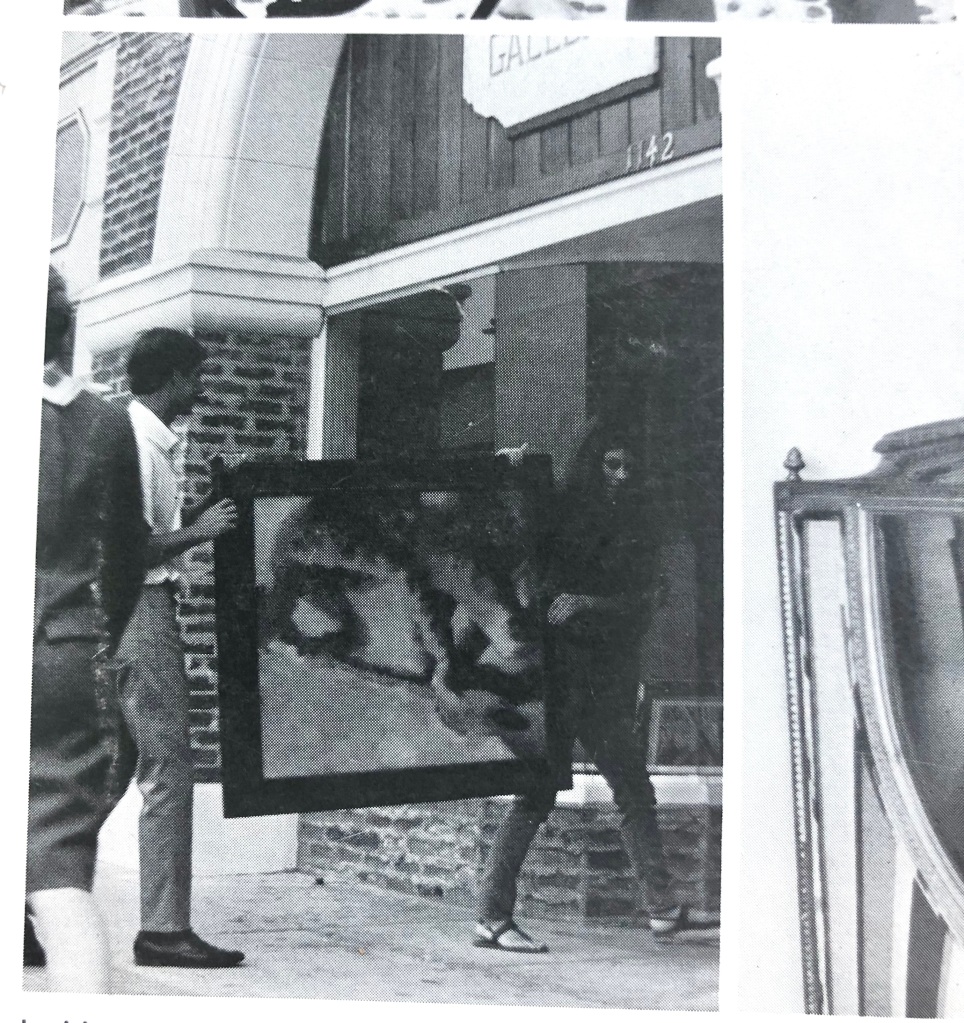
Richard said this photo above shows him helping Paige carry one of her paintings into his Eros Gallery.

Richard says the seated woman on the left is “Mrs. Burke, my partner in Eros Gallery.” Mrs. Burke was a local patroness of the Arts. He said that Peter Gowland is the man in between Mrs. Burke and Paige.
He may be mistaken, if it is Gowland, I don’t know who took the shot. Richard said Peter’s wife, who is the co-owner of their photography business, Alice Gowland was not there that day.
Richard said never met her.
According to Richard, this photo of Paige running with her dog Joshua was taken at the Malibu Colony.


Richard said he has no idea who any of these people are at the cookout or in the room with Paige painting. He doesn’t recognize the location. These may or may not be real friends of Paige’s.
Sometimes young people were hired to stand in as “friends” for a Playboy centerfold shoot. Connie Kreski is one.
Richard said that when he was living with Paige he “never questioned where she was going, what she was doing” or with “whom she was doing it.”
“And she never questioned me. That is just the way the relationship was.”
Malibu fire
“Me and Harry Gesner went to Paige’s house during the Malibu fire (he’s not sure which year in the 1960s.) and hosed everything down. Paige’s house didn’t burn but everything around it did.”
I then asked a couple of questions about Paige’s family.
Was there ever an indication that Paige had grown up with a grandmother (Virginia Young LaRocca) who was a Christian Science practitioner/ 1st Reader in the Church for decades?
Richard answered, “Nope, nope, not at all.”
Richard said that Paige never talked about her childhood in the SFV. She never mentioned her family. He did not know that her birth name was Diana Cotterell or that she was married to Mark F. Segal. She never said she used Marvin Mitchelson as her lawyer, Richard had never heard of Mitchelson anyway.
Richard said he met Paige’s sister (Constance/Connie) one time only, when Paige drove him to a visit with her. He said he doesn’t “think that they had a close relationship.”
Richard looked quite exhausted so I ended the interview for the day. I felt bad about telling him too much of Paige’s background that he never knew.
He said it didn’t bother him.
He shared one last thing:
“I introduced Paige to Tony Dow, a good friend of mine. He drove a Porsche. He liked my Vette. He lived in the Valley. “
And Tony purchased some of Richard’s art .

Tony Dow died July 27, 2022, one month and 2 days after Harry Gesner‘s death.
Dow was 77 years old and experienced decades of pursuing his passion of creating sculpture. He had a long and happy 2nd marriage to Lauren.
From an interview with Richard: The Boise Weekly, where Richard was living Early 2007.
After parting ways with Maria Nicolosi, Sample married 1969 Playboy Playmate Paige Young who later died at her L.A home of a sleeping pill overdose. An artist in her own right, Young’s impressionistic portrait of Sample hangs in Gallery 8.
Sample was born on Friday the 13th of November 1936, a “triple Scorpio” by astrological accounts. “I have my Sun, Moon and Mercury in Scorpio,” he says, which may explain his resourcefulness and intensity. The legend of Scorpio tells of a scorpion sent by the immortal huntress Artemis to slay Orion, the great hunter. Scorpio, ever resourceful, fulfilled the deed for the goddess and was given a place in the night sky as his reward.
“I may not be a famous artist, but I am a successful one,” Sample said. And prolific. To date, he has completed and sold 2,761 paintings and is currently at work on six more.
The following is the Entire interview with Richard Sample when he still lived in Idaho and opened a gallery in a storage unit.
Just across the highway from the airport in Hailey, where Gulf Stream jets blast off regularly, lies the South Wood Self Storage Facility. Row upon row of identical containers are filled with furnishings and cargo, all except for locker No. 8, otherwise known as “Gallery 8,” a space used by artist Richard Lauran Sample. Above the door reads a sign: “Art Patrons Association of Idaho,” which Sample refers to as “a group dedicated to the arts, music and literature.” Just inside is the face of the Beatles’ Eleanor Rigby, “… wearing a face that she keeps in a jar by the door.” A cat named Turpentine studies the ghost-like face in a jar and then ranges freely through the menagerie of paintings and sculptures by Sample that fill Gallery 8: abstracts, Westerns and magical realism paintings, canvases of Batman and numerous other examples of skilled craftsmanship and determined artistic vision. There is an unfinished ivory-handled knife, a tidy collection of cobalt blue glassware and a series of clocks marking time at various Air Force bases across the United States, including Area 51. Gallery 8 is a long way from the Bel-Air, Calif., mansion Sample once called home.
Ever since Sample’s mother, Virginia, posed for the Columbia Pictures torch lady painting, Sample has lived in and around the glamour of Hollywood. During the 1960s, he was featured on several television shows, including the Jack Bailey show Queen for a Day, on which lucky American housewives were given makeovers and European vacations. “I sold 75 pieces from [the notoriety of] that show,” he recalls. Over the years, people like Raymond Burr, Edgar G. Robinson, and Tony Dow of Leave it to Beaver fame have purchased Sample’s work. “I traded one of my Castle paintings to Hollywood stunt man Charlie Wilcox—a family friend who worked on the movie Ben Hur and also did stunt work on The Creature from the Black Lagoon—for a small Picasso in the 1970s,” says Sample. “I should have held onto the Picasso.”
Today, Sample’s studio contains 108 paintings, all of which he has produced within the last year, while restoring antique oil paintings and repairing artwork in the Sun Valley area to make ends meet.
“I paint fast,” he says. “I’m an insomniac, so I rest. I don’t sleep. I’ll lie down on that couch there and have dreams and visions.” Like Salvador Dali, who also experimented with the state between wakefulness and dreaming, Sample creates surrealist landscapes. His are populated with the artifacts of his youth spent in the Ozark Mountains of Missouri, where he pumped water from a well and milked 13 cows each day before walking to school. For sustenance, he hunted and fished the nearby James River, named after Jesse James. During a stint as a ranger in the U.S. Army’s Third Missile Command, Sample was part of a three-man team that fired the 32-foot-long Honest John Rocket.
“It was fully manual'” he says. “We could hit a moving tank at 15 miles.” He also painted mess halls in the military.
Sample’s surrealism features whisky jugs and mushrooms, mechanical parts and hillside shacks. A recent work, “Lunar Reactor,” has taken hillbilly motifs and expanded them upon the cosmos. The oil painting shines under several coats of deep varnish that the artist has poured over sections of the piece. “When I am finished, there will be a three-dimensional effect. You will be able to see around the individual brush strokes.”
A similar fascination with technique developed some years ago into Sample’s black and white “Castle Paintings,” which he describes as “oil etchings.” These medieval ramparts above calm rivers are painted using brushes only a few hairs thick with paint strokes made in exactly five directions, similar to the etching procedure used in the production of the U.S. dollar bill.
Sample worked alongside his father at many trades during his youth: making trick poker tables, saddles, doing bronze work and cabinetry. The father and son also ran the West Coast Mint, pounding out thousands of custom bronze medallions under a 350-ton die press, including one of a farm field with a rocket ship commemorating the POMO Air Force Installation in California. They later built a bronze foundry in Pasa Robles from the ground up, which would reconstruct Remington sculptures to exact specifications. An accomplished gunsmith and saddle-maker, Charles Sample designed and built the spectacular silver saddles used in the Pasadena Rose Bowl New Year’s Day Parade. He also introduced his son to the magic and glamour of Hollywood.
“My father made a solid silver telephone and platinum garter clips for Mae West,” Sample says. “She tried to give him a Deusenberg, but he turned her down because the car didn’t have a spare tire.” Sample worked extensively for movie star Bo Derek and made gold leaf and wooden jewelry for Willem de Kooning’s wife, Elaine. De Kooning collected Sample’s work and corresponded with him for some time in letters. Sample keeps the correspondences in boxes with color snapshots and other personal memorabilia. One photo from 1973 was taken at the Marion Davies Mansion in Bel-Air. In it, Sample stands beside a gingerbread castle he made for the Christmas/birthday party of Charlton Heston.
“I put 7,000 pieces of candy in that cake,” he recalls. Nearby stands J. Paul Getty and Sample’s one-time paramour, Maria Nicolosi.
Sample reminisces about the life he shared with Nicolosi for seven years in the mansion, which was built by William Randolph Hearst for his lover, silent film star Marion Davies.
“The place was unbelievable,” he recalls. “It had every tropical tree you could imagine. They used to shoot Tarzan movies in the back yard. There were waterfalls and caves. The swimming pool was the largest in the United States and ran like a snake through the property. Vincent Price collected my paintings. He would stop in from across the street and have tea with us.”
According to Sample, the patriarch of the Nicolosi clan, sculptor Joseph Nicolosi, an artist of international significance, held a 50 percent interest in the Park Plaza Hotel in New York City. He had passed away before Sample took up residence in the mansion with his daughter.
After parting ways with Maria Nicolosi, Sample married 1969 Playboy Playmate Paige Young who later died at her L.A home of a sleeping pill overdose. An artist in her own right, Young’s impressionistic portrait of Sample hangs in Gallery 8. (Richard married Daryl if you remember, in 1968. The stayed married for a few years.)
Sample was born on Friday the 13th of November 1936, a “triple Scorpio” by astrological accounts. “I have my Sun, Moon and Mercury in Scorpio,” he says, which may explain his resourcefulness and intensity. The legend of Scorpio tells of a scorpion sent by the immortal huntress Artemis to slay Orion, the great hunter. Scorpio, ever resourceful, fulfilled the deed for the goddess and was given a place in the night sky as his reward.
“I may not be a famous artist, but I am a successful one,” Sample said. And prolific. To date, he has completed and sold 2,761 paintings and is currently at work on six more.
Sample also inherited a collection of books from his father published by the “photographer on horseback,” L.A. Huffman, who traveled the West in the 1870s. A book of glass plate prints and accompanying stories have provided the heart of Sample’s work for many years. He renders the photographs in sepia-toned oils. “There is a story behind every one of these paintings,” he points out. One is of a prairie Indian burial on stilts, entitled “Spirit Poles.” Another represents a self-portrait of Huffman, painted, as they all are, on maximum density particle board, which Sample says will never warp or bend. “These will last a thousand years,” he says. “You can wash them with soap and water.”
His decision to work in “permanence” came after working in the art of restoration at the L.A. County Art Museum, where several of his cardboard collages were hung in the 1960s.
“I’m self-taught,” he explains, while extolling the virtues of Ralph Mayer’s The Artist’s Handbook of Materials and Techniques.
“I have had three copies of this book over the years. It is the best book ever written for artists wanting to learn. It has taught me permanence. It continues to teach me the chemistry and permanence of paint,” he says.
Sample proudly displays a diploma for an Honorary Doctorate in the Arts from California’s Polytechnic State University, which he earned after completing a rigorous examination on his knowledge of things such as paint chemistry.
Yet Sample’s interests and talents range far beyond the fine arts and include herbology, anthropology, astrology and rock-collecting, to name a few. Against one wall, beside a tableau of religious icons and tribal mementos, is a case filled with meteorites.
Among the artifacts Sample has collected as an amateur archeologist are two nearly perfectly round black stones he found in a dried river bottom near Shoshone. He explains that the natives used them as weapons at one time, bound in hard leather at the end of a battle axe. Sample is incorporating each of the balls into meter-high white plaster abstract sculptures that will resonate with deep history and contemporary sculptural forms. “I also practice Tai Chi and read quantum physics,” he says, “including just about anything Albert Einstein wrote.”
Sample’s studies in physics pertain to certain technical projects he plans to undertake with the U.S. military, projects he would rather not discuss publicly. Relying on friends from NASA, he has plans to install a live video feed of nearby heavenly bodies to a televison set in his studio in the near future.
Even in Idaho, where he continues restoration, cabinetry and painting projects for actors Bruce Willis, John Larroquette and others, Sample still has the occasional brush with fame.
“One night at my brother Bill’s, Muffet Hemingway,” who is Margaux Hemingway’s sister, Joan, “came driving straight across the yard and right over the Christmas tree,” Sample says. “Muffet walked into the house and started munching on a crab leg, waved to herself in the glass window and then got into her car and drove away back across the yard. My brother came out and said, ‘Who’s the chick grazin’ in the kitchen?'”
Sample will auction off some of his work in spring of 2008 and give 15 percent of the proceeds to the Parkinson’s Foundation. “All of these 108 paintings will be sold in two days,” he says. “The last show I had, 1,500 people showed up at the Sage Brush Arena in Hailey. My place is always open to students and lovers of art,” he says.
1960-1964. A New Decade. Paige Young Is “Miss Panorama City.” Robinson’s In the Valley. Stepfather. Birth of Half-Brother. Childhood Home Razed. Updated & Longer: 3/11/2026
Posted on March 2, 2021
1960-1961 Where was Diana/Paige living, and what was she was doing these years? She would have been 16 and 17 years old.
Her grandmother Virginia LaRocca was a recent widow. Virginia has voter’s registrations listed at 13204 Riverside Drive. It was a 4 or 6-plex at the time, on the corner with Atoll Ave. Diana could have lived here with her grandmother as she was still high school age.
Josephine Young Harker, Virginia’s sister and Diana’s great aunt, is also listed with the Riverside Dr. address in a 1960 LA phone directory. Josephine was also listed at least once living at the LaRocca family home at 3834 Evans St. in the 1940s.
13204 Riverside Drive is also the address on Ned LaRocca’s death cert. 1959. It is unknown if he ever lived there. He might have been at the sanitarium for the last year or so of his eventually fatal lung cancer. (see related chapter)
This all means the family had to leave the duplex on Moorpark and Ethel Ave., at some point.
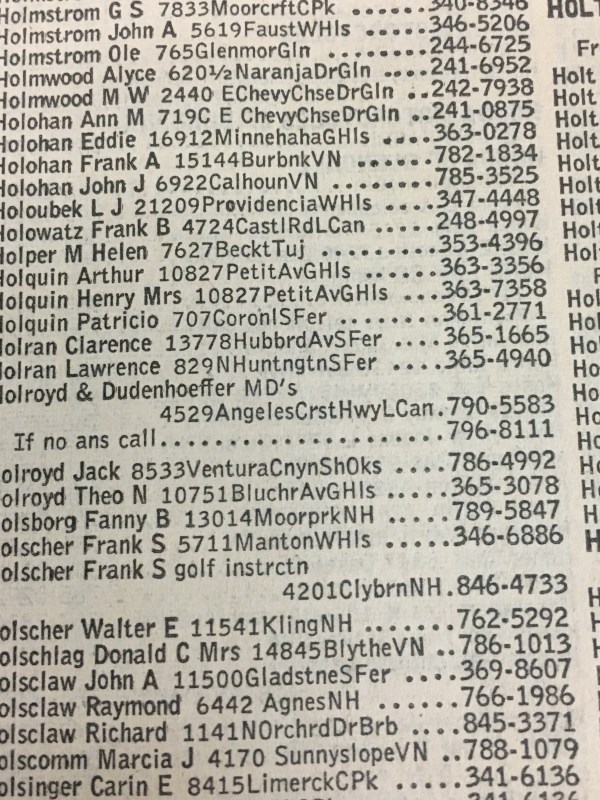
Donna LaRocca Cotterell married Jack Holroyd in 1958. The couple moved to their own place on Oxford Ave. and/or Ventura Canyon Blvd in Panorama City. Did Diana live with them even temporarily?
Sister Constance (Connie) was already married by 1960 when she was 18 years old.
There were profound changes in Diana’s life circumstances these years.
Her de facto father, grandfather Ned LaRocca, died in 1959.
Her mother Donna remarried in 1958.
A move out of a single family dwelling/duplex with family, to multiplex living.
UPDATE 7/25/2022: I had a phone conversation with a close relative of the family named Chris.
Chris informed me that Donna and Jack Holroyd had a son Wesley, born in 1960.
Add this to the list of major life changes for Diana who again, was only 16 in 1960.
Chris/Christain Young also confirmed visiting Diana and Virginia, at the Riverside Drive unit in Sherman Oaks.
Donna and Jack Holroyd, are listed at 12835 1/2 Oxford Ave., a few blocks from Grant High School in 1960, 61 and 62, voter’s registrations.
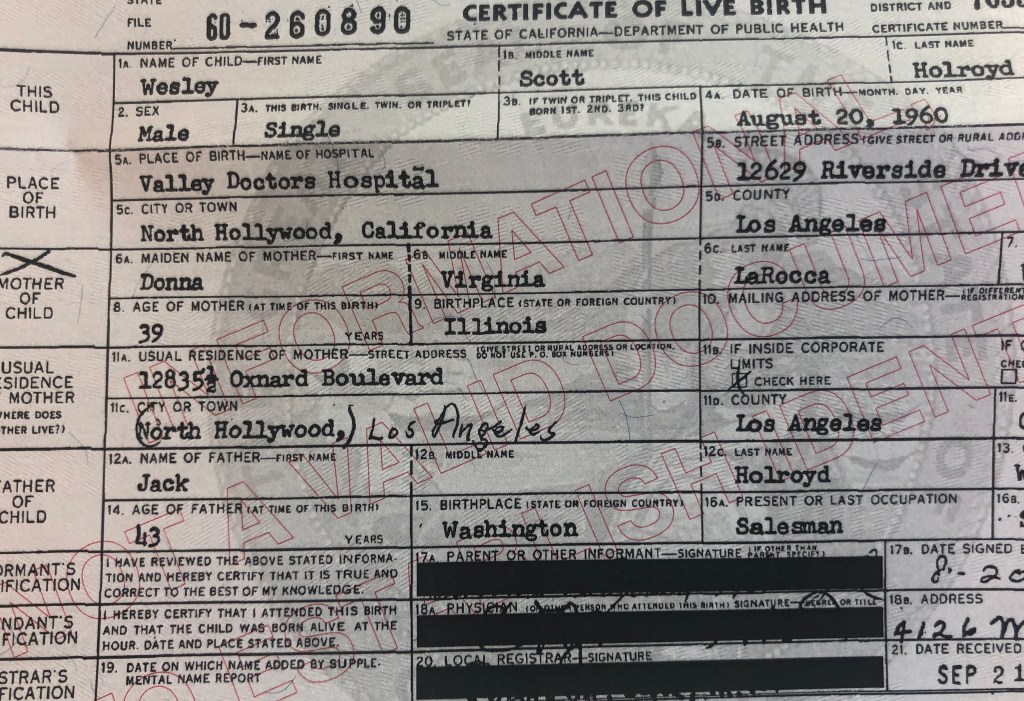
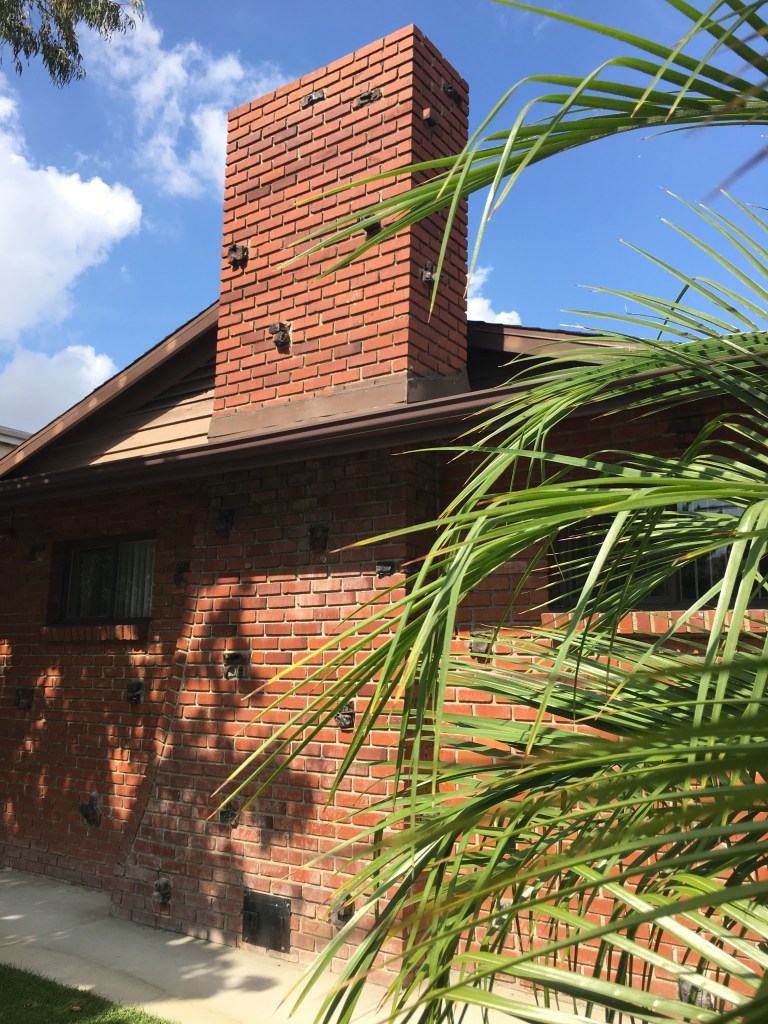
Donna and Jack Holroyd were married in Las Vegas in 1958, their son Wesley Scott Holroyd was born on August 20, 1960.
That date is almost 9 months to the day after Ned LaRocca died.
If Diana and/ or Virginia both lived here on Oxford, they would have run out of space and privacy pretty quickly. Especially with an infant.
Virginia LaRocca is listed here on Oxford at least once or twice in directories and voter registrations in the early 1960s.
Move to another SFV city: Panorama City
1962 What looks here like a Panorama City Chamber of Commerce ritual, takes place at the popular venue Sportsmen’s Lodge, only 0.6 miles from Diana Cotterell’s childhood home on Moorpark St. in Studio City.
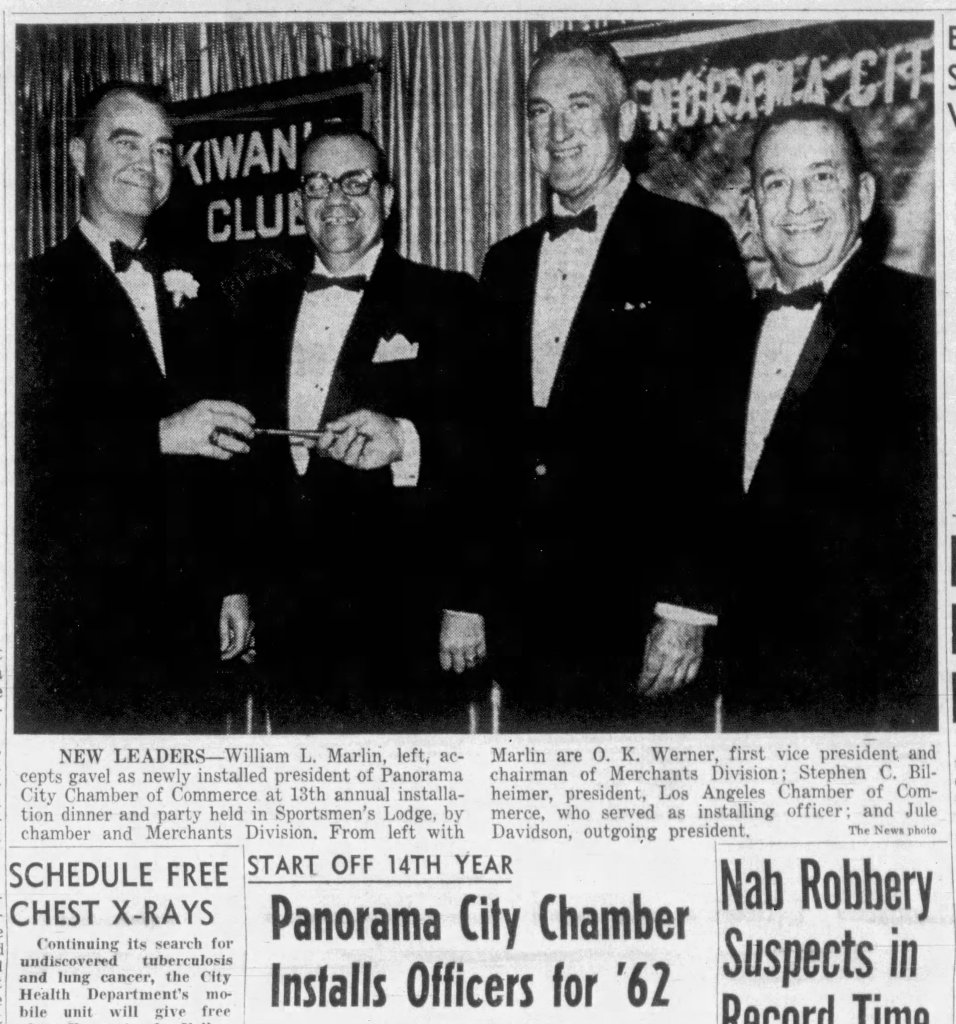
To liven up this dull looking affair there was a special appearance at the lodge….


With 3,000 homes built between 1947 and 1952, Panorama City was the first large postwar community in the San Fernando Valley. In making up the blueprint for the community, Kaiser engineers also designated space for a Kaiser Permanente clinic and hospital, which was completed in 1962.
A General Motors plant completed in 1947 was situated one quarter mile south of Roscoe Boulevard, the southern boundary of Panorama City. A Schlitz Brewery sat immediately to the east, and Lockheed and Vega Aircraft, and Precision Tool, were all within seven miles of the Kaiser development.
Kaiser Permanente website.
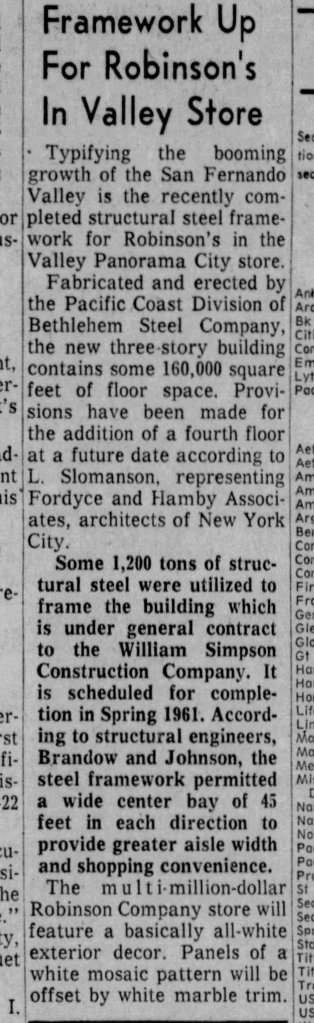
Los Angeles Mirror June 26, 1961
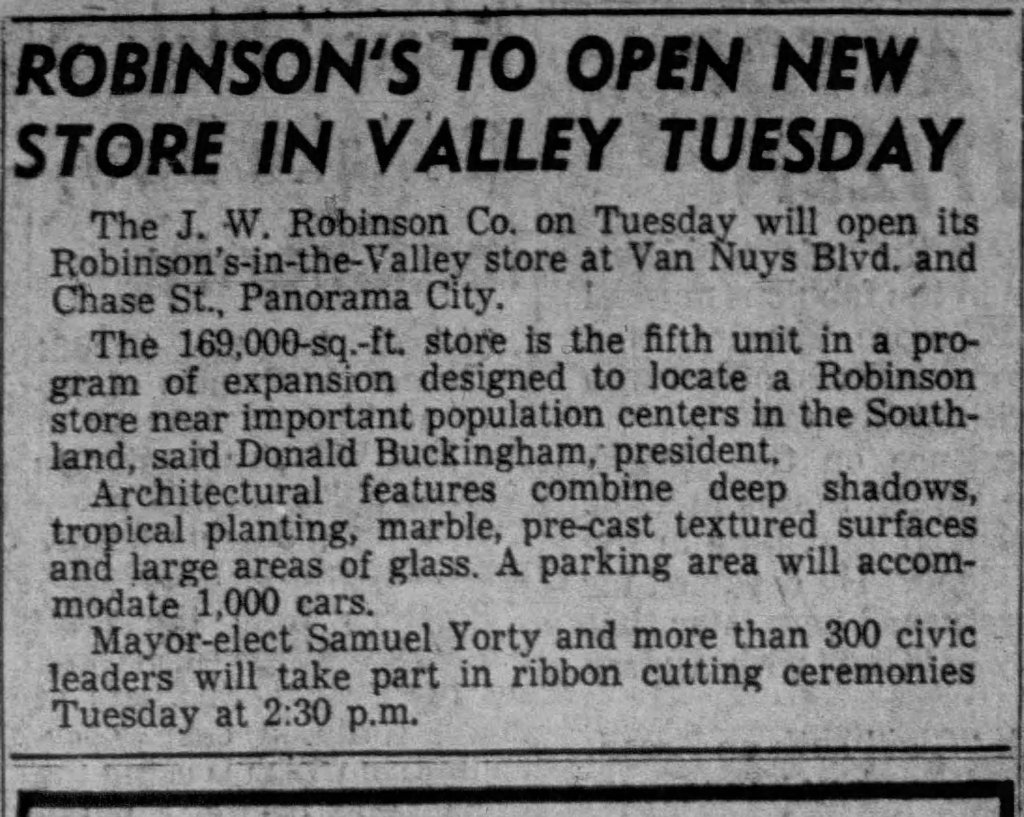
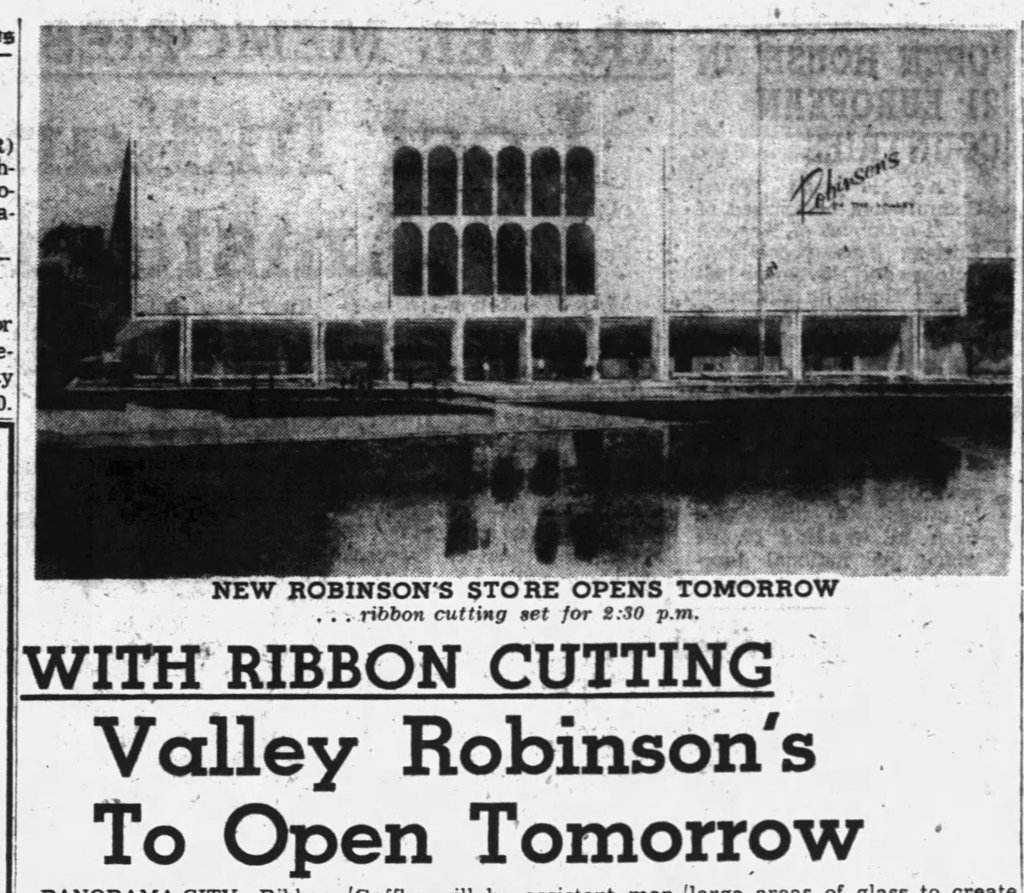
Los Angeles Evening Citizen News June 26, 1971
This was Robinson’s first store in the SFV opening June 27, 1961. Other major department stores expanded into Panorama City: The Broadway, Orbach’ s, Montgomery Ward. The department stores in Panorama City continued the Los Angeles tradition of hiring the best architects for department store buildings. In fact beautiful department stores thrived in the consumerist post-war years of the 1950s and 60s.
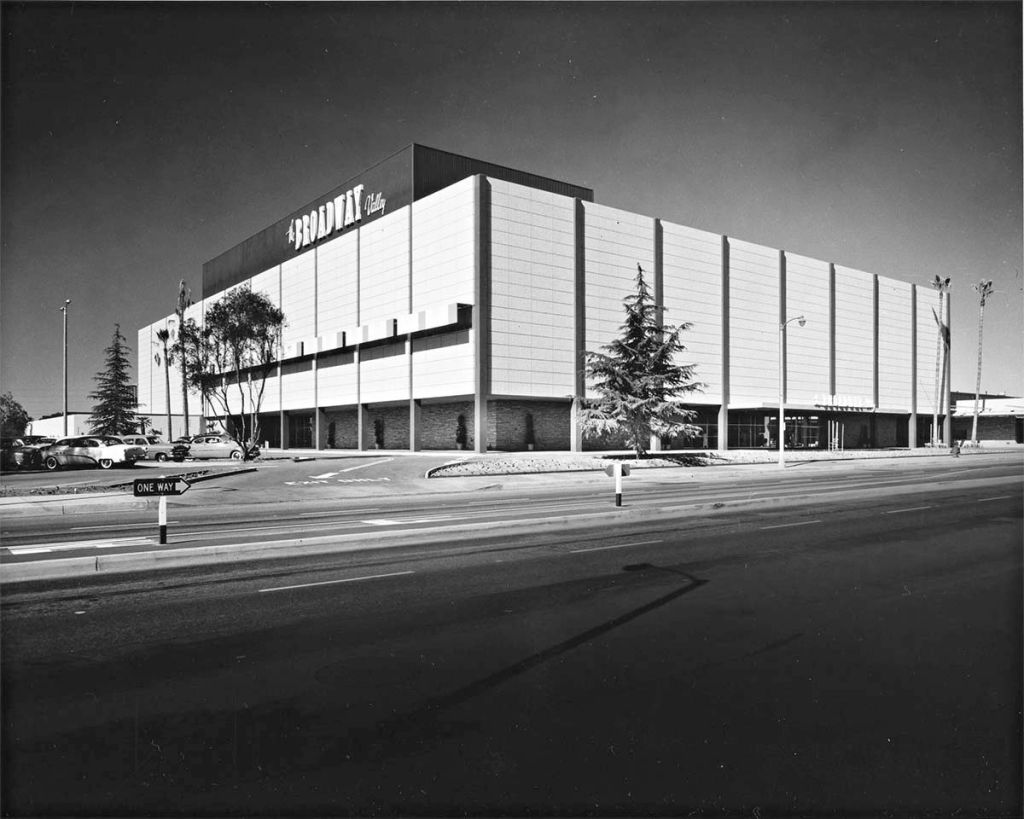
Broadway of the Valley designed by Welton Beckett.
The Broadway opened a stone’s throw from Robinson’s in the Valley. Photo by famous LA architecture photographer Julius Schulman.
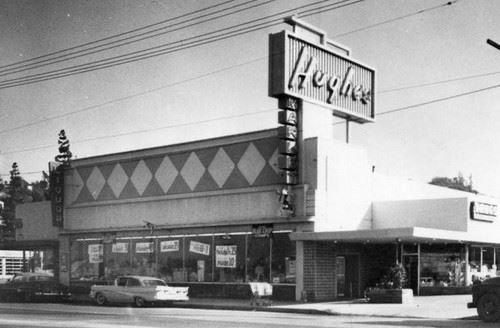
Still trying to get a great photo of Robinson’s!


This is the earliest date I have found of Paige’s usage of the name Paige Young: Feb. 1962 when she was 18 and could be the first time she she was publicly documented with the name Paige Young .
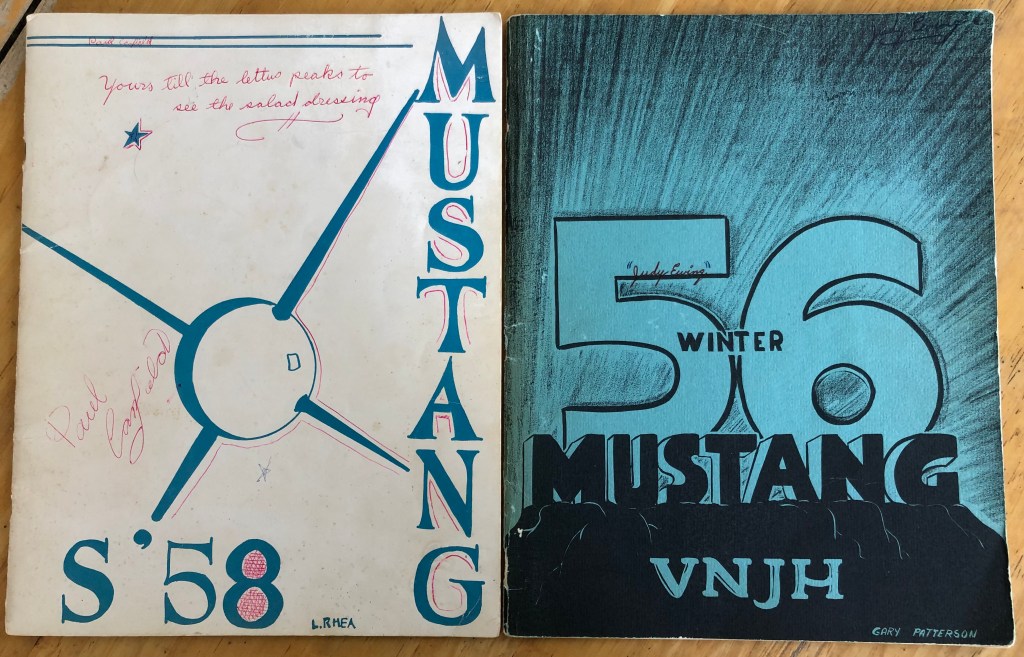
The latest date I have seen Paige associated with her birth name, Diana Cotterell: her 9th grade photo listing in the Van Nuys Jr. High yearbook, 1957, age 15 or 16.
Note that in this write-up of Paige, no high school is mentioned. This is out of the ordinary.
I’ve seen and read dozens of newspaper photos with brief write-ups of models, starlets, beauty pageant winners, even “Muscle Beach” beauty contest entrants and winners and runners-up from the 1950s and 1960s.
The article nearly 100% of the time includes where the young woman attended high school and frequently, they were still in high school.
It is probably the only article of several I’ve read interviewing Paige that doesn’t mention her devotion to oil painting.
In 1969 interviews, Paige told reporters she graduated from Van Nuys High School. I have found no school photos of Paige at VNHS. (see 1969: Most Public Year)

“Space made for ample parking.”
My opinion is Paige dropped out of high school after the 9th or 10th grade. And changed her name between ages 16–18.
1963 and 1964 Both Virginia LaRocca and Jack Holroyd are in the phone directory with an address of 8533 Ventura Canyon, Van Nuys. This address is also listed as Panorama City. Paige was married in 1963 and 64, living with her husband”south of the Boulevard” in Sherman Oaks on a steep winding Road known as Crisp Canyon.
Donna Holroyd is not listed in the phone book these years, only her husband Jack Holroyd.
She may have started her studies at UCLA around this time, majoring in Early Childhood Education.
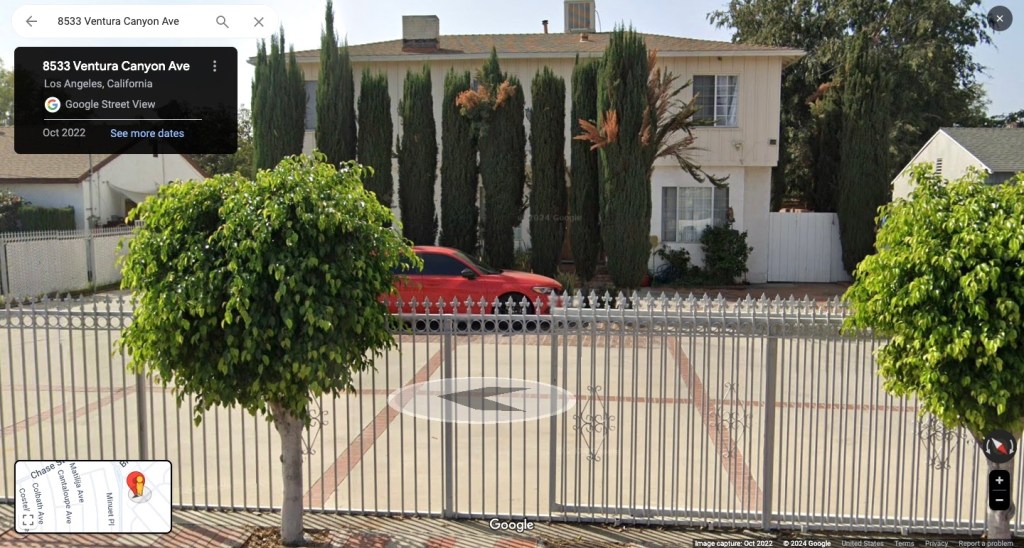
Paige’s cousin Chris told me he remembers visiting Donna and Jack Holroyd and their baby Wesley in the early 1960s, in an apartment building. He couldn’t remember the address. He did remember an unheated pool. Chris said the apartment certainly could have been one near Grant High School or Panorama City. He didn’t see Paige during those particular visits.
Chris said he did see Paige at the Riverside Dr. location.
Paige would be married in Las Vegas 1 1/2 years (Oct. 1, 1963) after this “Miss Panorama City” article appeared.
The marriage lasted for 11 months (Aug 27, 1964).
In 1964, Paige filled out a divorce questionnaire ( below) stating that she had moved out of the marital home and was “living with family”.
Family would have been living at 8533 Ventura Canyon Ave. according to phone listings.
Her answer to employment record says clerical-secretary.
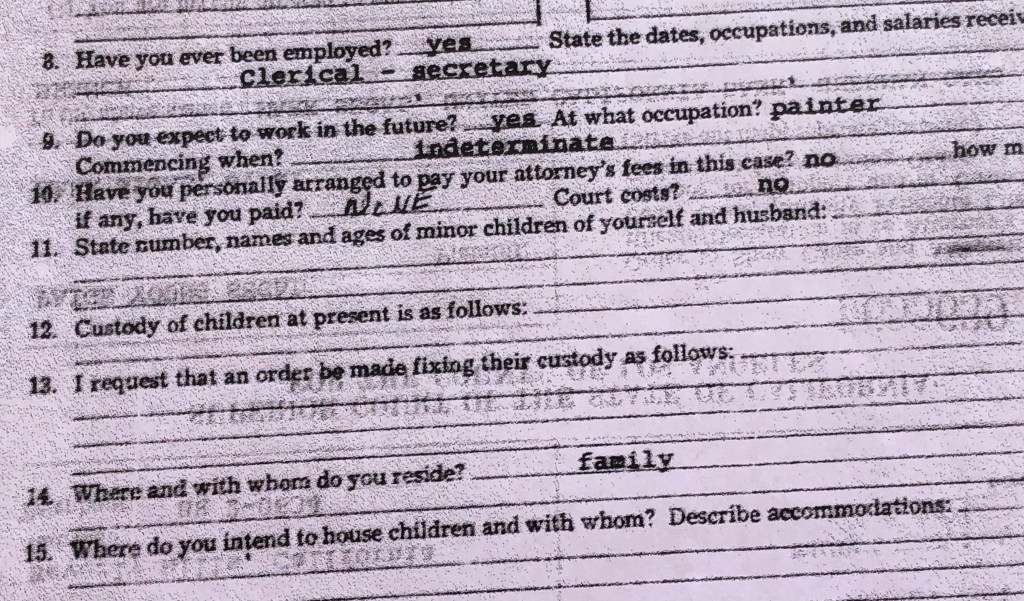
-is this at Robinson’s of the Valley as a clerk-secretary in their business offices, or was she a salesgirl in the department store. Unclear.
See chapter on Marriage and Divorce to Mark F. Segal 1963-1964.
Some of Paige’s quotes from Playboy magazine are about disliking and avoiding the “9-5 doldrums” and “working for impersonal corporations.” Ironically enough.
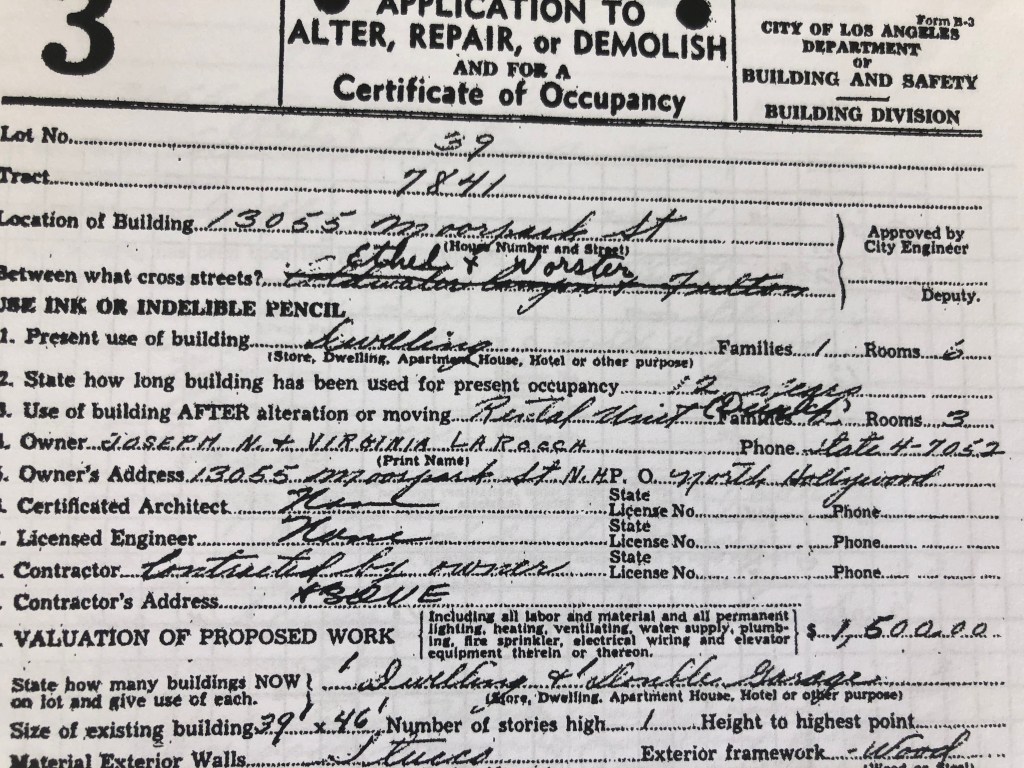
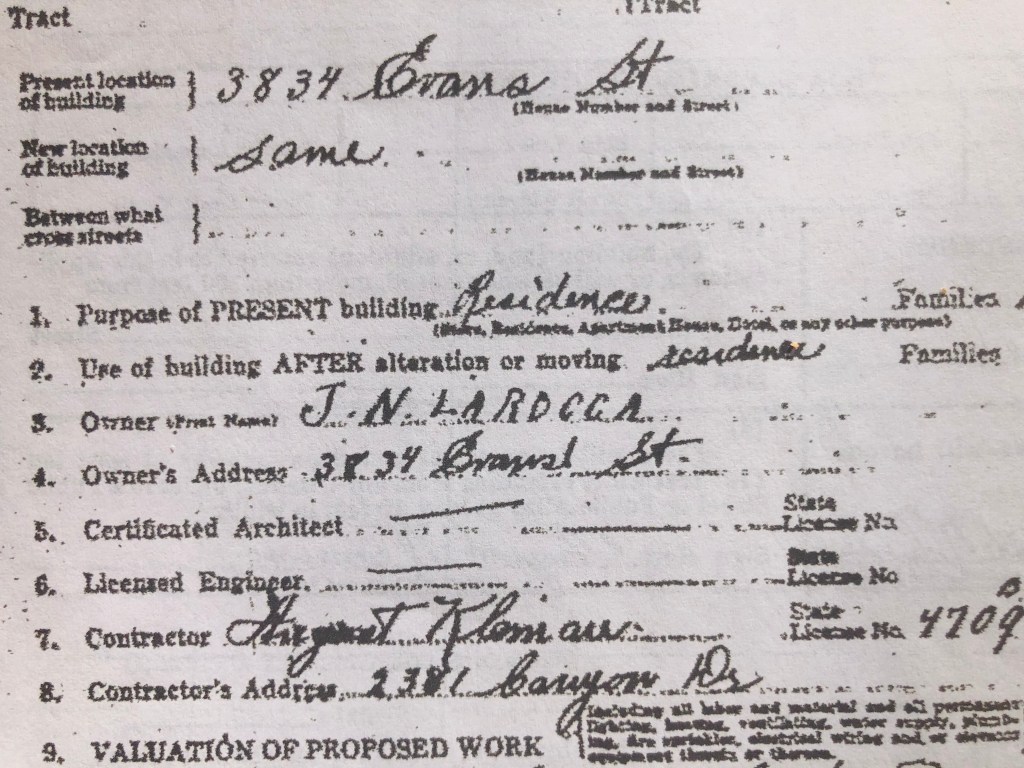
By 1963, Diana’s childhood home on Moorpark near the Sportsman Lodge had been razed. Records show a city permit (below) requesting a 6-unit apartment to be built.
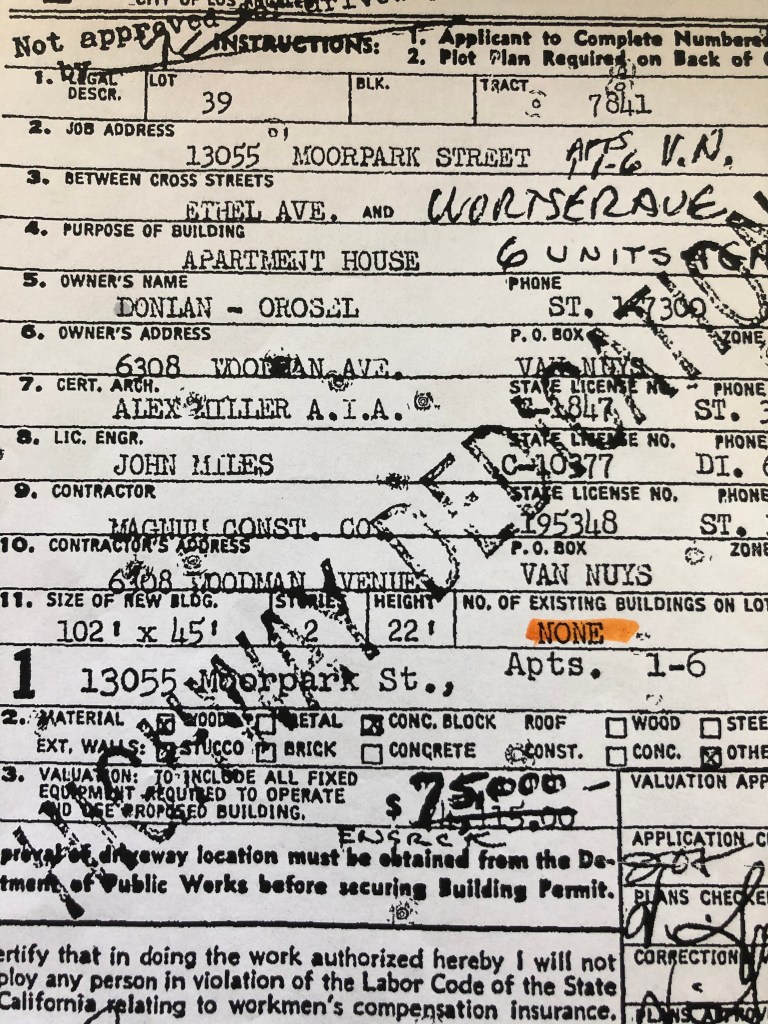
Notice it says NONE (highlighted) for “existing buildings on lot.” I’m not sure when the house was actually torn down. It was converted into a duplex so that Virginia and Ned would be on one side, Donna and the girls on the other.
Did a developer make the LaRoccas an offer for the Moorpark house back in the late 50s? At that time, Ned was sick with lung cancer and the after effects of a stroke. Many older houses were now being razed for multi-unit housing to meet demand for higher density populations flooding into the San Fernando Valley.( If you can call a 6–plex multi-housing.
I’ve been by this complex and it is obvious that more buildings were added over the years
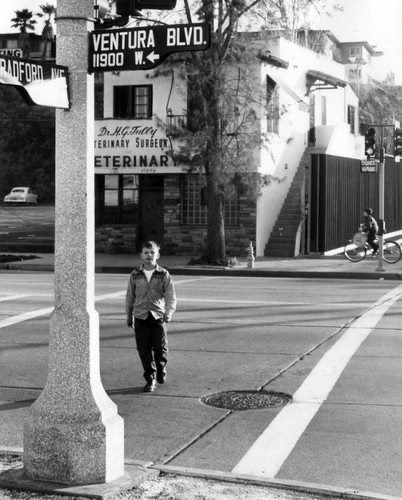
Nearby Ventura Blvd. continued to thrive with many businesses of all kinds.
SFV continued to experience massive population growth and housing development throughout the 1960s and beyond.
The famous Sportsmen’s Lodge has been demolished as of 2024.
1963 Marriage & 1964 Divorce to Mark F. Segal. Meet Marvin M. Mitchelson, Beverly Hills Lawyer. Pamela & James Mason. Post Divorce Move To Beach. 1966. Updated 3/28/26 Long.
Posted on May 26, 2020
1963 October 1st Paige Young marries Mark Frederick Segal in Las Vegas, per impossible to read ledger records easily found on ancestry.com.
The record shows only the date and names.
It was likely an elopement in one of those 24-hour Las Vegas wedding chapels.
Paige’s mother Donna eloped for a Vegas wedding to marry her 2nd husband, Jack Holroyd, in 1958.
An old friend of Paige’s named Joan Edwards told me driving from LA to Las Vegas, getting married at one of several legal wedding chapels, “was a popular thing to do back then.”
Paige’s new husband was born in 1942, the son of WW2 veteran Harold Segal and his wife. Mark was a marine private who took combat training in 1961 at Camp Pendleton.
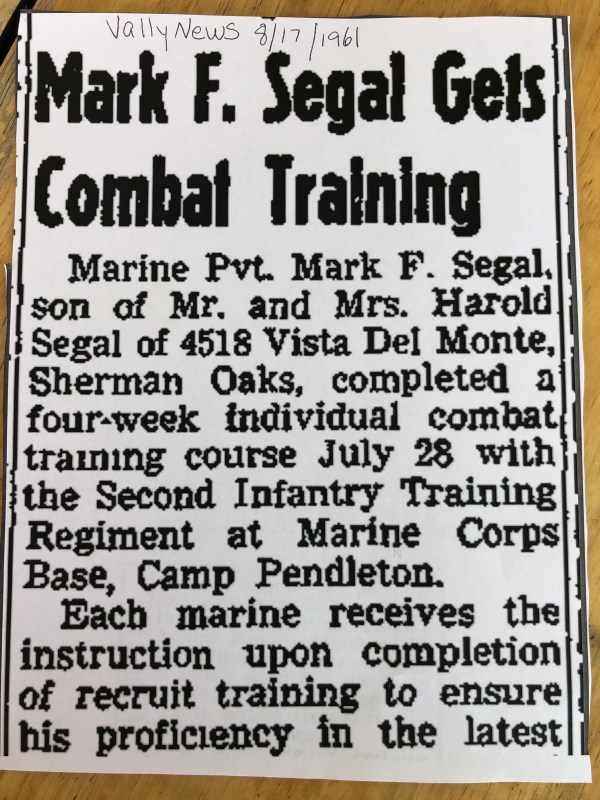
Mark F. Segal was also a car dealer at “Sea-Gull Motors,” a business started by his father, according to newspaper ads in the late 1950s, and Segal family friend Rex Ramsey.
Sea-Gull Motors either had several locations or moved locations several times in the Sherman Oaks/Van Nuys area in the 1950s and 1960s: 7211 Balboa Avenue, 4425 Van Nuys Blvd. and 6738 Sepulveda Blvd.


This is the only photo I’ve found of Mark F. Segal, Van Nuys News and Valley Green Sheet Aug. 17, 1961.

Rex Ramsey, a friend of Mark Segal’s, was a semi-successful race car designer and a Hollywood stunt driver in Herbie the Car.
He told me during our phone conversation that Mark’s father, Harold Segal, also owned the business Fox Auto Service, which “was like Triple A in the San Fernando Valley. Rex added that the Segal family had several brothers in addition to Mark and the family was “pretty well-off.”
1963-1964
Paige and Mark live together as husband and wife at 4133 Crisp Canyon Road in Sherman Oaks, “south of the boulevard.” Ramsey said that that the home was a cabin type, the kind that Hollywood stars would rent on the weekend “to get away from it all.”
This Crisp Canyon house was very close to the neighborhood where Diana Cotterell, as Paige was known back then, lived and attended elementary school: Dixie Canyon, and junior high school, Van Nuys Junior High.

From a notice in the Van Nuys News and Valley Green Sheet, Jun. 19, 1962.
After she married, Paige continues to board her horse Hamish at nearby Sepulveda Stables.
I corresponded with a woman who told me that when she was 12 years old, she met Paige at Sepulveda Stables where they both boarded a horse; Paige was about 19/20 years old and Paige drove her to the house on Crisp Canyon Rd., to hang out and drink lemonade, around 1962 and 1963. She is the one who tipped me off about the Paige living there.
August 28, 11 months after her Las Vegas marriage, Paige and her attorney file for divorce from Mark F. Segal.
Paige is represented by rising Beverly Hills attorney Marvin M. Mitchelson.

Below are just a few of the dozens of divorce documents I obtained from a records department located in Downtown LA. I picked out some key pages to post.
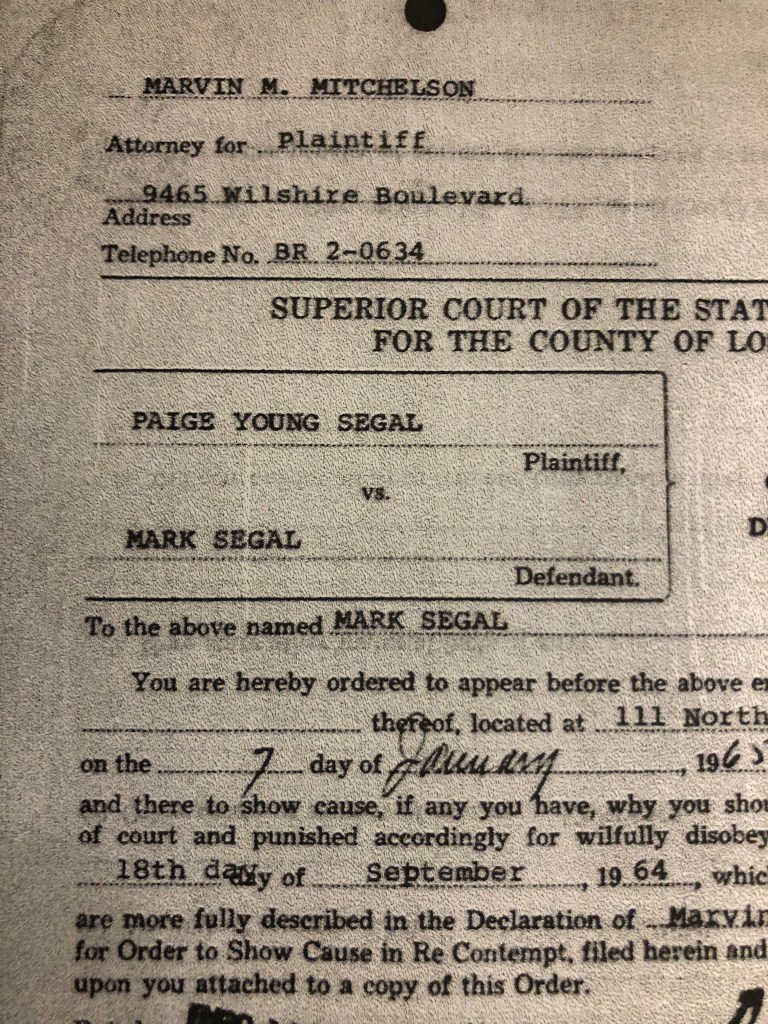
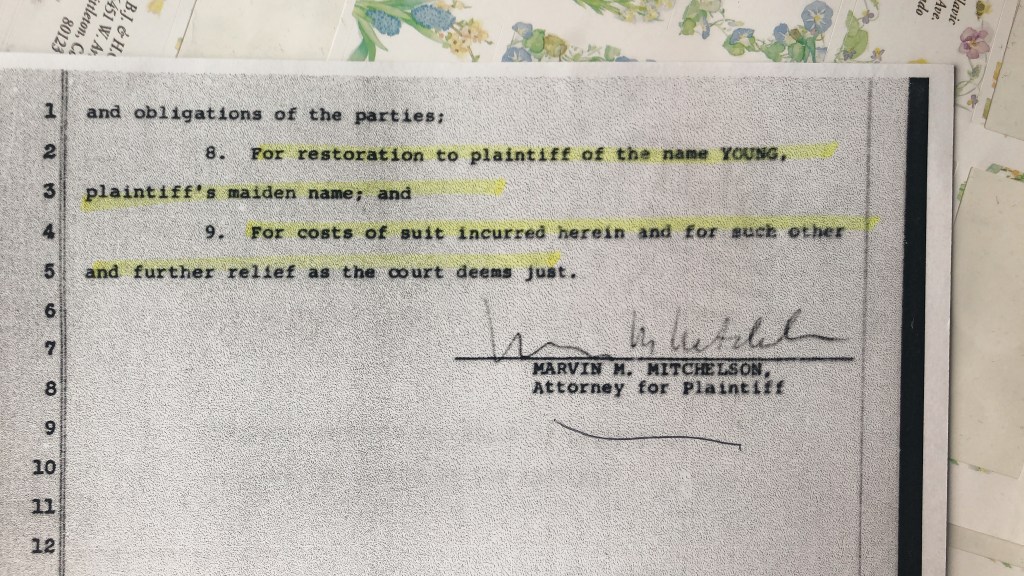

The filing states that Mark threatened Paige and her animals with bodily harm “on numerous occasions,” and on August 17, 1964, “brandished a knife in her presence,” and “Plaintiff’s profession is that of an artist and painter and on or about June 15, 1964, defendant maliciously and with intent to destroy plaintiff’s artwork drove nails through plaintiff’s prized paintings and further did mischievous damage by driving nails through plaintiff’s personal belongings including an expensive fur stole.”
Paige requests and is granted a temporary restraining order from the court.

Mark quickly countersues and denies all of Paige’s claims of abuse. He claims that she is the one who caused him mental anguish and suffering.
I do not find in the documents further explaining what Mark meant by that, no further details on what Paige did to him. With the exception of one complaint “She paid more attention to her animals than to me.”
Marvin Mitchelson, on behalf of client Paige, asks for alimony, lawyer’s fees and court costs: “Plaintiff is not employed and presently embarking on a career as a painter, therefore needs the money from Defendant who is able bodied and employed.”
Marks balks at this request and states he can’t afford it.
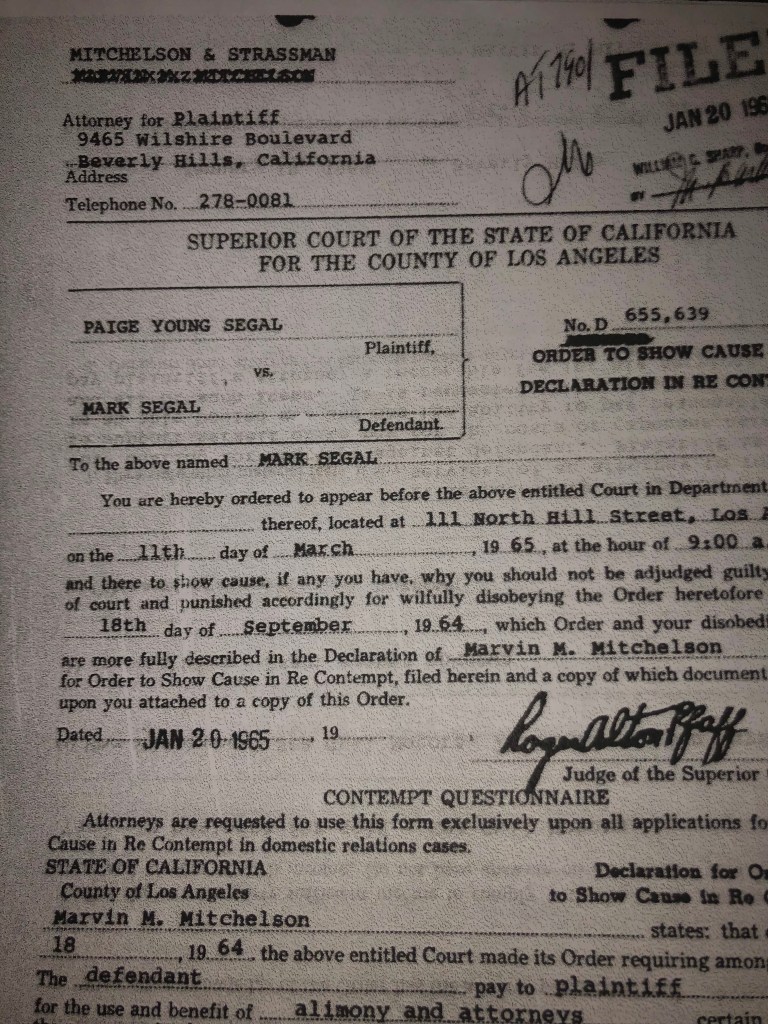
Paige sues Mark Segal for divorce after less than one year of marriage. She is represented by rising celebrity attorney Marvin M. Mitchelson.
The divorce filing was picked up by the wire service UPI and appeared in several newspapers across the country.


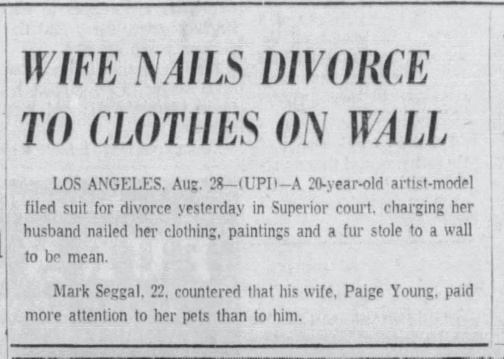

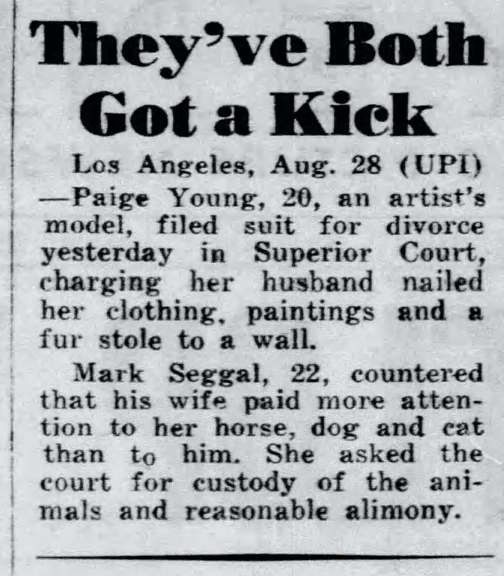

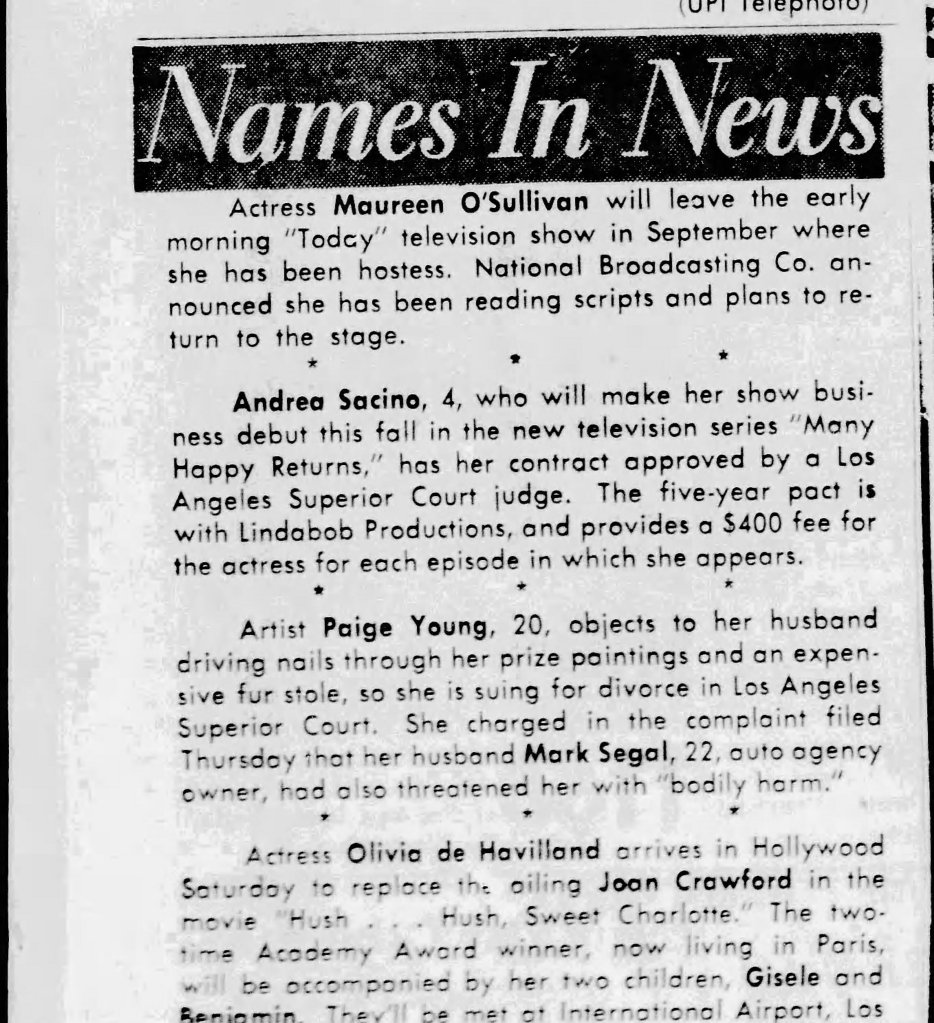
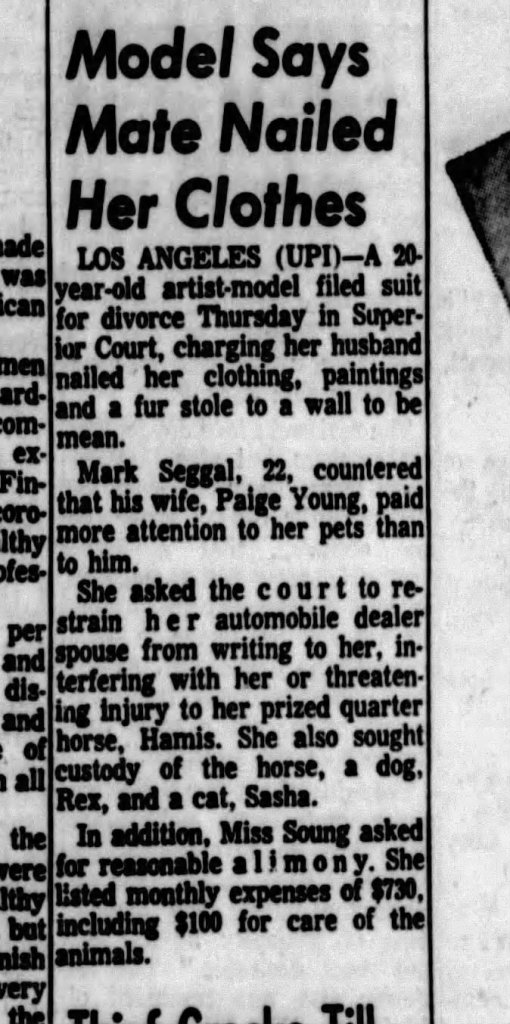
These headlines might be called “clickbait” today.
There is a high probability that Marvin M. Mitchelson was behind the above stories.
I found evidence for this in Mitchelson’s only biography which I will quote from extensively.
“Ladies Man, The Life and Trials of Marvin Mitchelson” by John A. Jenkins.
“Beginning early in his career, Marvin had a belief in the power of publicity and looked for ways to garner some for his cases.
No matter how trivial the cause of action, if he (M.M.M.) found an angle, he could turn it into a story. And in the early days when his client list was still thin, he could gin up publicity by filing an oddball lawsuit himself.”
…”But Mitchelson knew that Man Bites Dog was what sold papers…this was 1964 and he had to work with the material fate sent him.”
Patti Corman recalled that for her in 1976 divorce, Mitchelson “called AP, UPI and every other P there is!”
This is likely the reason Mitchelson took Paige’s case despite her lack of ability to pay him any upfront fees. Her case was unusual or “oddball” enough for it to be of use to him.
I would really like to know how Paige and Mitchelson may have met or who introduced them.
Hollywood History with Celebrity Connections
Only a few days after the articles about the Paige Young/Mark Segal divorce is published in several newspapers, more news breaks that Beverly Hills society matron and LA talk show host, Pamela Mason, has won an unprecedented amount of money in a divorce settlement from husband of 20 years: suave British-Hollywood actor, James Mason.
Mrs. Mason’s lawyer is Marvin M. Mitchelson.
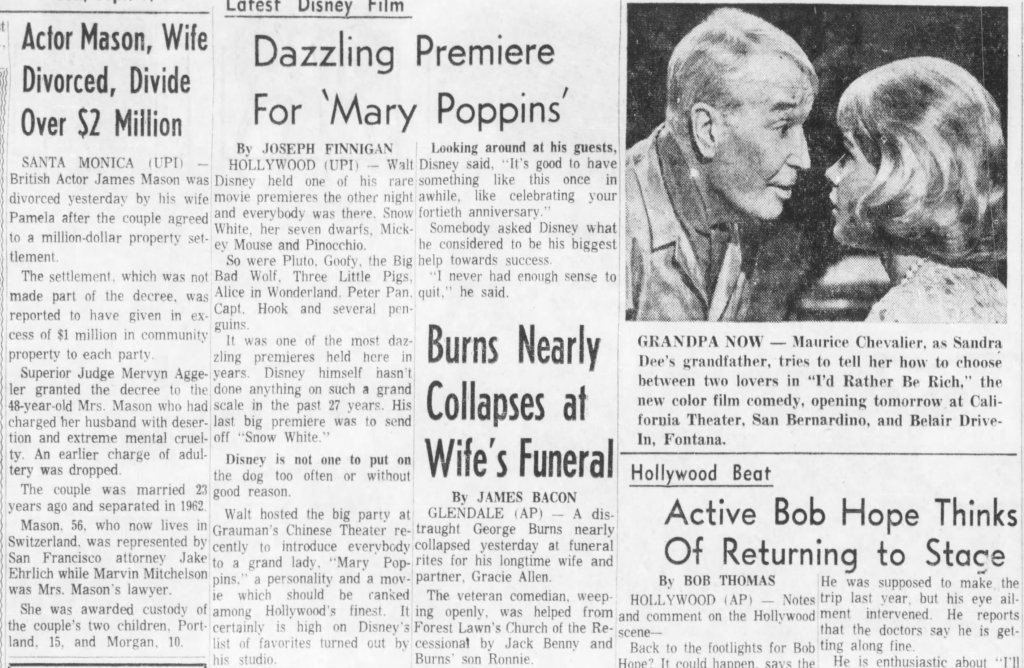


Sept.1, 1964 Pasadena Independent, Pasadena, California. 1.5 millions stated here.
Author Jenkins discusses the 1 million plus dollar settlement Mason case:
“Afterward in the courthouse corridor, “James (Mason) called the settlement ‘a flea bite.’ After all, he was getting off the hook without giving her any alimony at all. But Pamela was ecstatic. Her settlement was one of the first to break the magic million-dollar mark, and Mitchelson had gotten her, and himself, a ton of publicity about it.”
“The Mason case set the tone for the Hollywood divorces to come. Pamela was so grateful she did everything she could to make Marvin Mitchelson a household name. Pamela introduced Mitchelson to her divorcing friends…she became his entrée to those rarefied upper brackets of Beverly Hills and Hollywood. Pamela hired him eight months later for a 138, 500 breach-of-contract suit against actress Loretta Young on behalf of Pamela’s sixteen-year-old daughter Portland.”

“Pamela Mason introduced Mitchelson to her divorcing friends, all of whom were wildly delighted with the results, she later said.”
END
The Mason case was a first as far as Hollywood divorces go, and a major breakthrough for Mitchelson’s career.
He seemed to be on a roll in 1964.
Michelson represented legendary lyricist Alan Lerner’s estranged wife, Micheline, in the couples’ contentious custody fight.
Roy Cohn was Micheline’s divorce attorney in NYC. Yes, that Roy Cohn, who had a great admirer in Mitchelson. And later Donald Trump, who ditched him when he lay dying of AIDS.
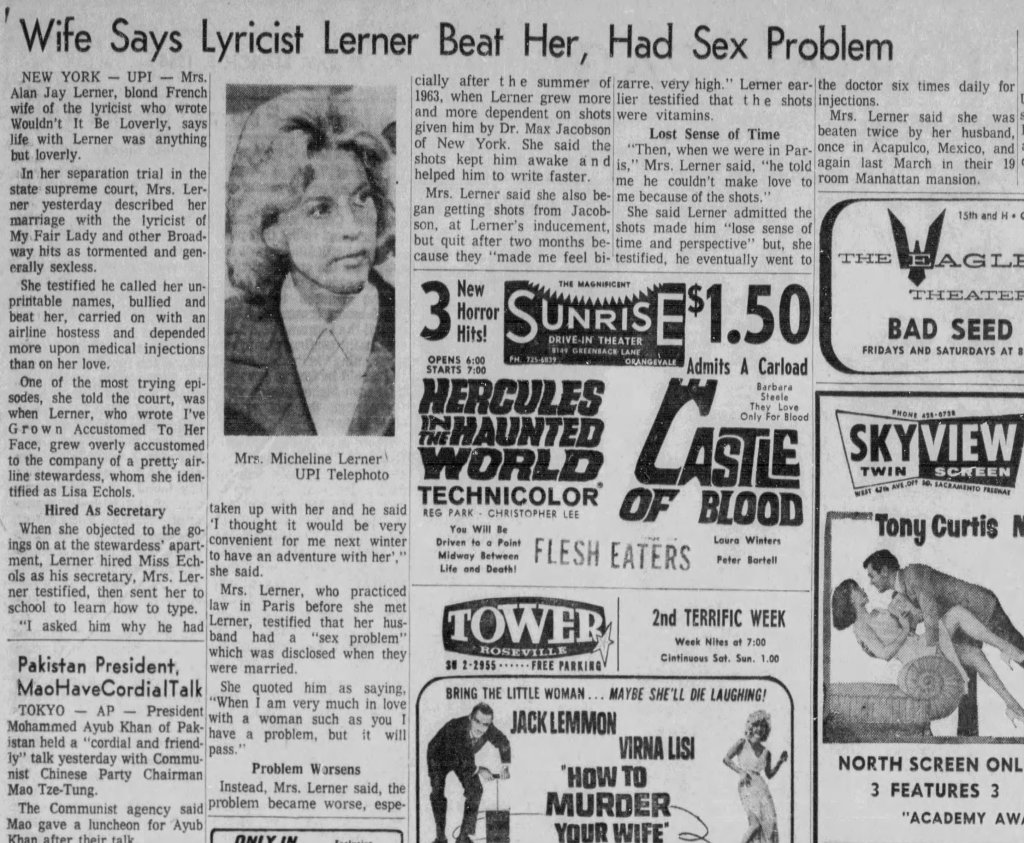

Mark F. Segal came from a fairly well off Sherman Oaks family according to Mark’s friend and stunt car driver Rex Ramsey, quoted above.
Still Mark Segal wasn’t anywhere near the league of My Fair Lady and Gigi composer Alan Lerner.
However, both men did have some things in common that most divorcing men that year did not, and that was estranged wives represented by rising lawyer Marvin M. Michelson.
The other is being found in contempt of court by failing to pay alimony to the estranged wives.
Mark’s attorney is Bernard Echt from Sherman Oaks. Echt, a few years down the road, would represent the milkman who was being sued by Vincent Bugliosi for suspected impregnation of his wife. Strange yet true.
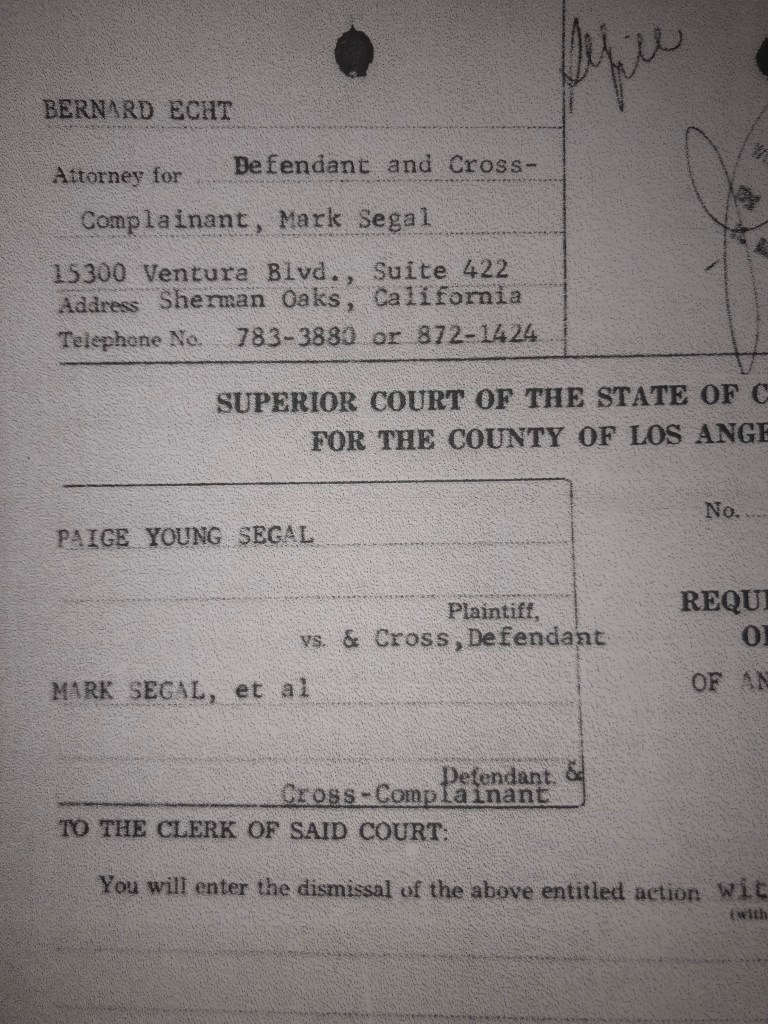
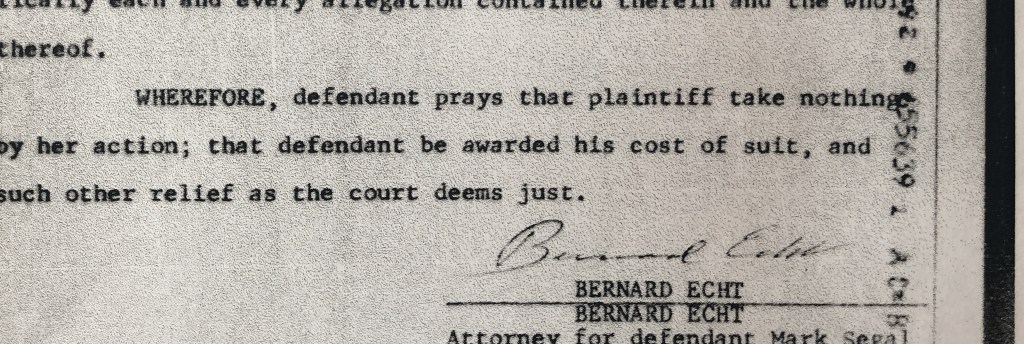
An initial agreement is reached quickly: Sept. 18, 1964. Mark is required to pay Paige alimony, but only for six months.

This would be about $1000 in 2017, so the equivalent of $6000 in 2017.
1964 November 24: Paige and her grandmother Virginia LaRocca are sworn-in for testimony in a Los Angeles courthouse, probably 111 Hill Street, for the divorce trial; Mark is a no-show.
Virginia LaRocca testifies for the plaintiff, her granddaughter Paige. An interlocutory decree of divorce is granted to Paige on grounds of extreme cruelty. But it was never finalized according to the clerk who helped me in DTLA, in a building across the street from Hill St, in a basement where they keep old hard copy records.
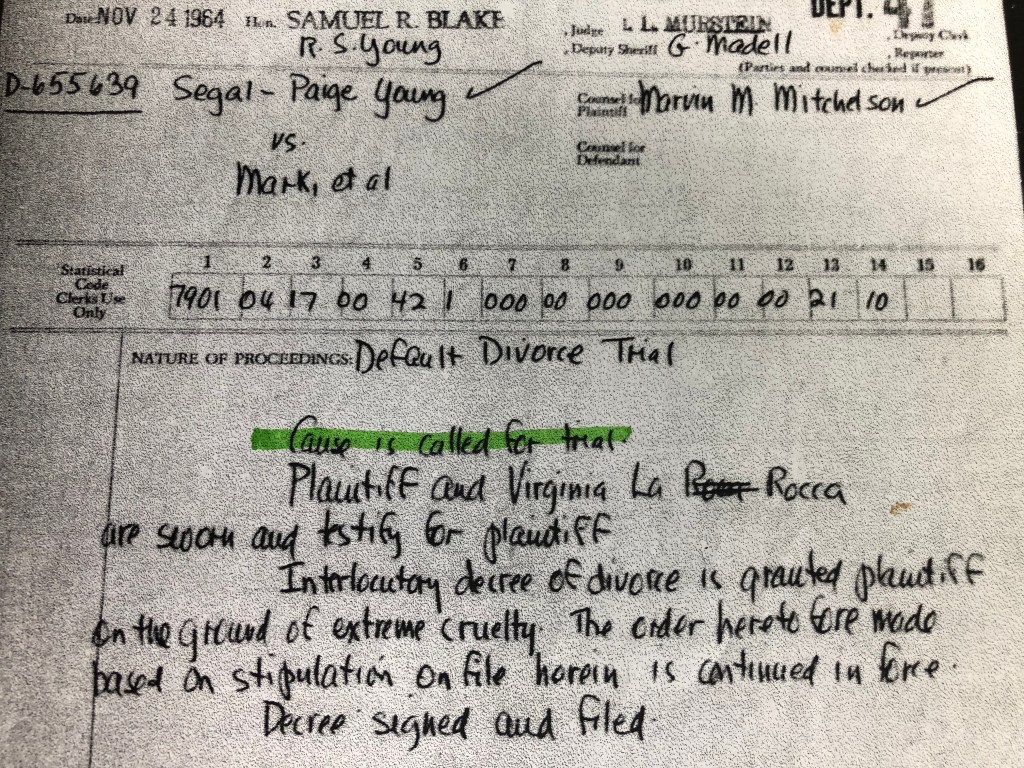
Paige waives her right to any further alimony payments beyond the six months. Mark is also ordered to pay Marvin Mitchelson $300 (about $2072 in 2017 dollars) and $15.00 in court costs around $100 today.

Paige is awarded a 1953 MG Roadster; Mark is ordered to sign the title over to her. Paige gets to keep certain antiques and wedding gifts. Mark gets to keep his home at 4133 Crisp Canyon Rd. in Sherman Oaks.
Both parties are ordered to not annoy, molest or harass the other.
1965
This year shows Mark has not been making his required alimony and lawyer’s fees since 1964.
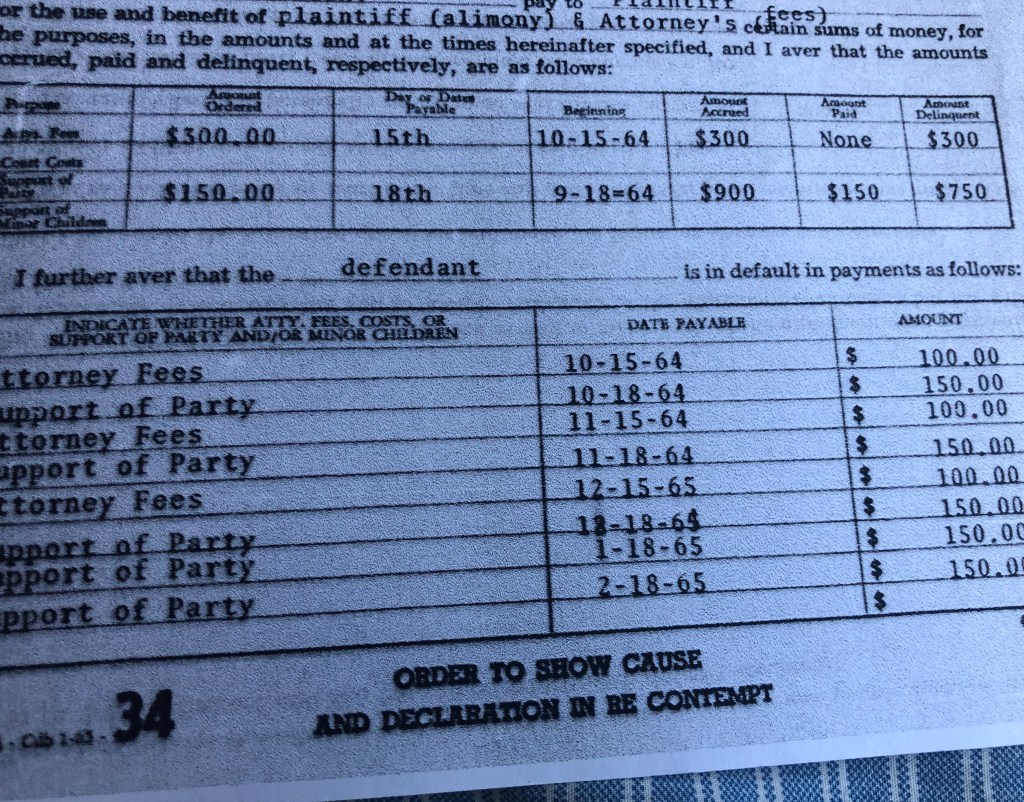
Marvin M. Michelson puts the hammer down on Mark Segal this year. For every month Mark fails to make his monthly alimony payment to Paige and the lawyer’s fees, Michelson goes to court files a suit for contempt.

It turned out to be all 12 months.
Paige’s cousin Chris told me about the last time he saw Paige.
She had a brand new yellow Mustang outside her apartment in Sherman Oaks. I told Chris about the 1953 MG that Paige had won in the divorce. Chris thinks she sold the MG to buy the yellow Mustang.
Paige moves to Malibu in late 1964/early 1965.
Months before this conversation with Chris Young, Richard Sample told me he remembers Paige owning a yellow Mustang.
When she was living in her “chicken coop” house near the beach from 1964/5 to about 1968.
Richard and Chris Young never met.
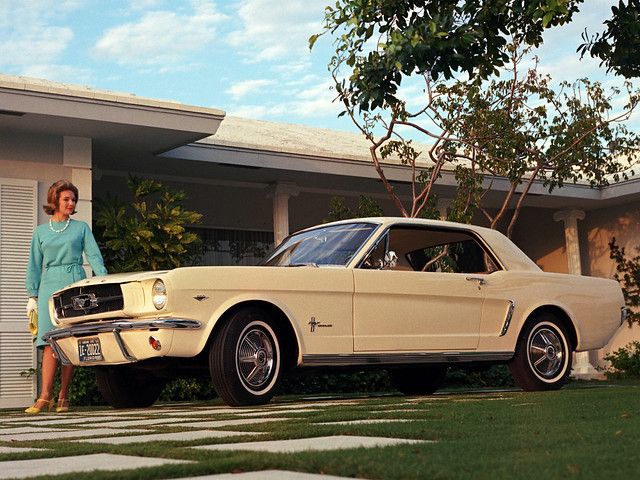
By default Paige would have owned a 1964 or 1965 Ford Mustang in yellow. There were 2 yellows if it was 1964.
“Since 1964 the Ford Mustang has utilized a multitude of shades of yellow to adorn their famous pony car. Below is a year-to-year breakdown of the yellow shades (with paint code in parentheses, if available) we all have come to love so much.
1964: Ford unveils a couple different shades for the inaugural release of the Mustang, a pale hue called Phoenician Yellow (7) and a brighter hue of Sunlight Yellow (V).
1965: Phoenician Yellow (7) is kept while the Sunlight Yellow (V) is replaced with a lighter hue called Springtime Yellow (8, only available in the Spring of 1965.”) From the website Yellow Mustang Registry.

A 1964 Ford Mustang in Sunlight Yellow. yellowmustangregistry
Approx. 1968 is when Paige moved to a cabin-studio in Topanga Canyon, with financial help from Bill Cosby. According to Paige’s friend Veronika from Malibu beach and Topanga. On the topic of cars Veronika said Paige did not own one, she hitchhiked or asked friends for rides.
I will be publishing a chapter on this soon. Published and appears at the bottom of the main menu.
July 1966
Paige gets transferred from the Marvin Mitchelson law firm of Beverly Hills, to the law firm of Silverton, Ruderman and Graf of Studio City. Her new law firm is located at 12345 Ventura Blvd.; a 5 minute drive from her childhood home at 13055 Moorpark St.

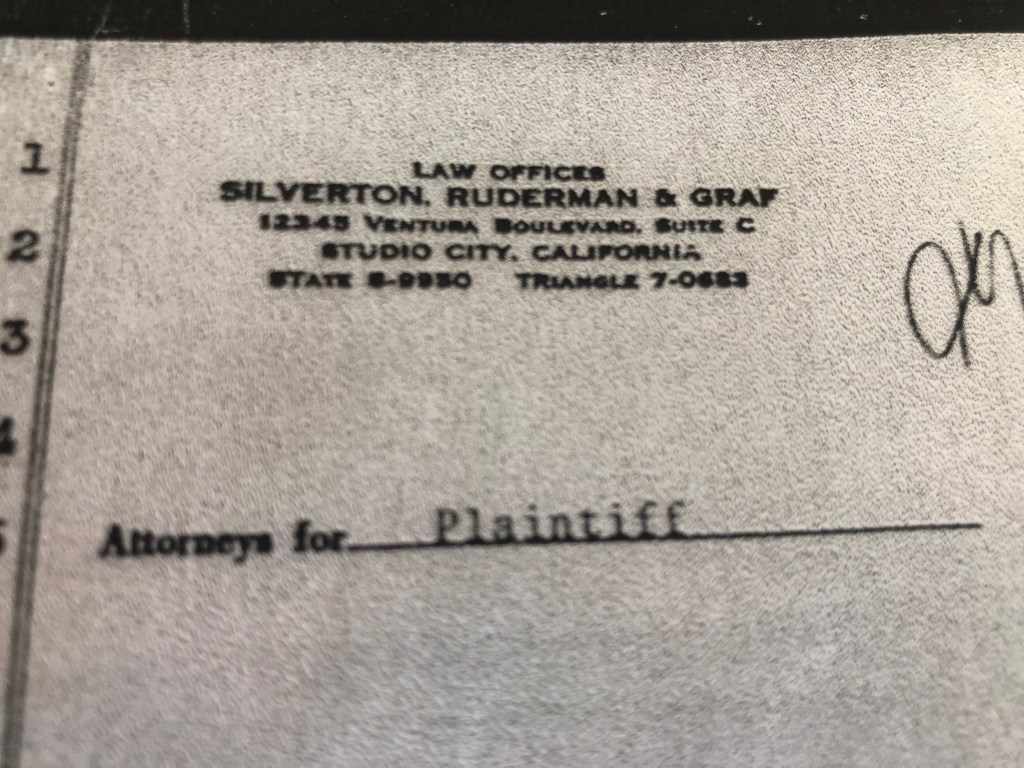
Marvin Michelson was busy climbing the ladder of success in 1966. He did not have time for or a need, for a non-paying client divorcing and her husband who was in contempt of court for non-payment.
In the divorce documents, (I own copies) dated all the way into 1969 showing Paige and her lawyers, Silverton, Ruderman & Graff, still trying to collect the unpaid, court ordered alimony and lawyer’s fees from Mark F. Segal.

From the Marvin Mitchelson biography Ladies Man by John A. Jenkins.
He continued to represent Hollywood and Beverly Hills “soon-to-be-divorced-wives.”
Marvin Michelson probably grew tired of Paige’s non-payment divorce case by 1966. Her “interlocutory” divorced ex-husband Mark F. Segal, had not paid more than the one initial payment in 1964.
Any publicity for “attention getting headlines” (see chapter on Segal-Young Divorce Makes Headlines) had long since ceased to be of any benefit to M.M.M.
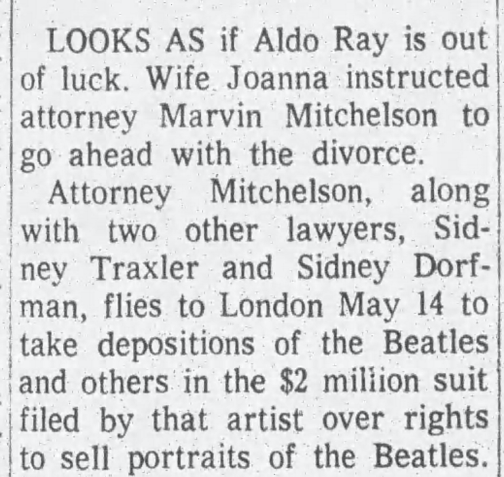
Aldo Ray spoke bitterly about his ex-wives. I have several more articles about him not included here.
(66 also brought Marvin international work in London from a rock band.)
Mitchelson gave it his all in 1965. He filed in court for contempt against Mark Segal for non-payment, every single month of this year, to no avail.
Also in 1966
Paige’s Mother, Donna Holroyd, and her grandmother, Virginia Young LaRocca, are listed in the phone directory at 5760 Hazeltine, an apartment building on the corner of Hazeltine and Hatteras in Van Nuys.
Jack Holroyd, husband of Donna, is not listed at this location. They may have been separated or even divorced, at this time.
Jack Holroyd went on to divorce two more women before he passed away in the early 2000s.
One of them was named JR, a successful realtor in the general area of Kalamazoo, Michigan.
The marriage began in 1970 and lasted only a few years.
I recently spoke with JR’s son who confirmed this and said that his mother had recently died at age 95.
The son said he has no idea how Jack Holroyd ended up in that area of Michigan from Los Angeles. He doesn’t remember a whole lot about him anymore but he does remember not liking him.
And called Jack Holroyd then called him a “shyster” and a “con-man.”
My mother, JR, said about Holroyd “The biggest mistake I ever made.”
1950s #2 Diana Cotterell (Paige Young) in the SFV. Grade School. Sepulveda Stables. Van Nuys Junior High. Donna V. Remarries. Grandfather Ned Dies. Updated 3/15/25
Posted on May 15, 2020
SFV= San Fernando Valley
According to her birthdate, Diana should have started first grade in 1950.
It appears she lived in Gardena in 1950 according to the1950 census.
It’s unknown where or if she started grade school in that community. (See chapter 1950s #1.)
Seen Below:
Grandmother Virginia LaRocca is listed in an onlineGardena 1951 phone directory as a Christian Science Practitioner. Husband Joseph Ned is not listed.
This is unusual as I have seen documents with the couple’s names linked over decades.
Had Ned already moved up to the SFV? Did the girls and Donna move with him or stay with Virginia another year in Gardena?
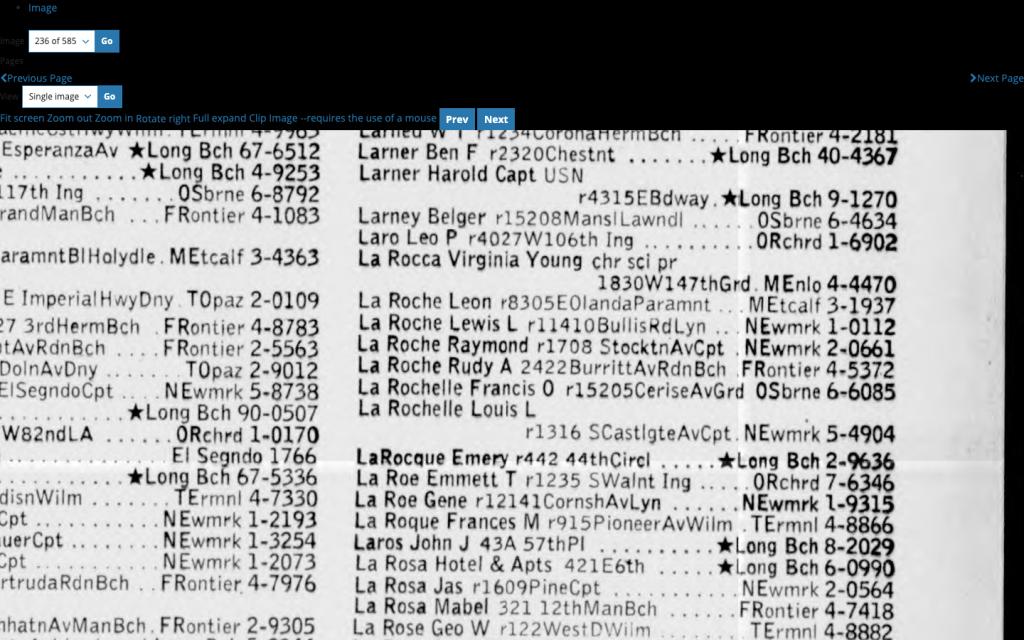
My best guess is the family moved to 13055 Moorpark St in Studio City approx. 1952-1954. Please see related chapters.
In Sherman Oaks
Diana and Connie could have gone to Riverside Drive Elementary. It is located at 13061 Riverside Drive. This is very close to the Moorpark house address.
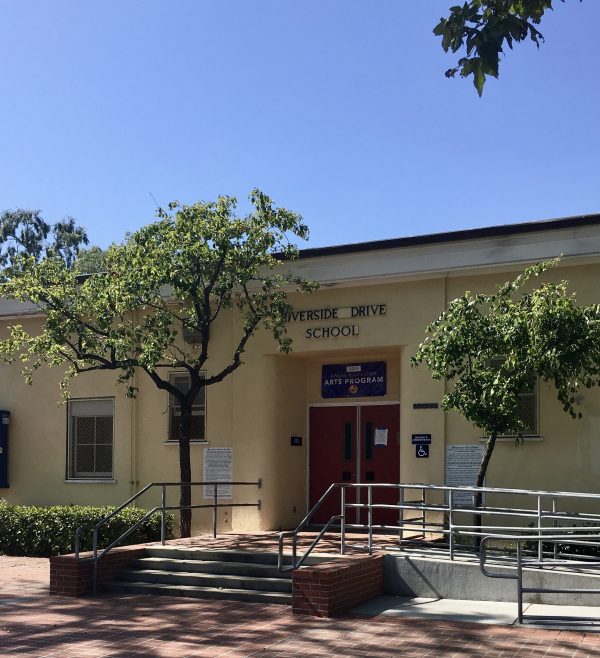
If the Cotterell girls walked to school from their house on Moorpark, all they had to do was turn north on Ethel Ave., and it was a straight walk to the school.
It would have taken only a few minutes.
There would have been no Ventura Freeway to walk under along the way. I think that came in 1959.
UPDATE 5-20-20 I found this article.
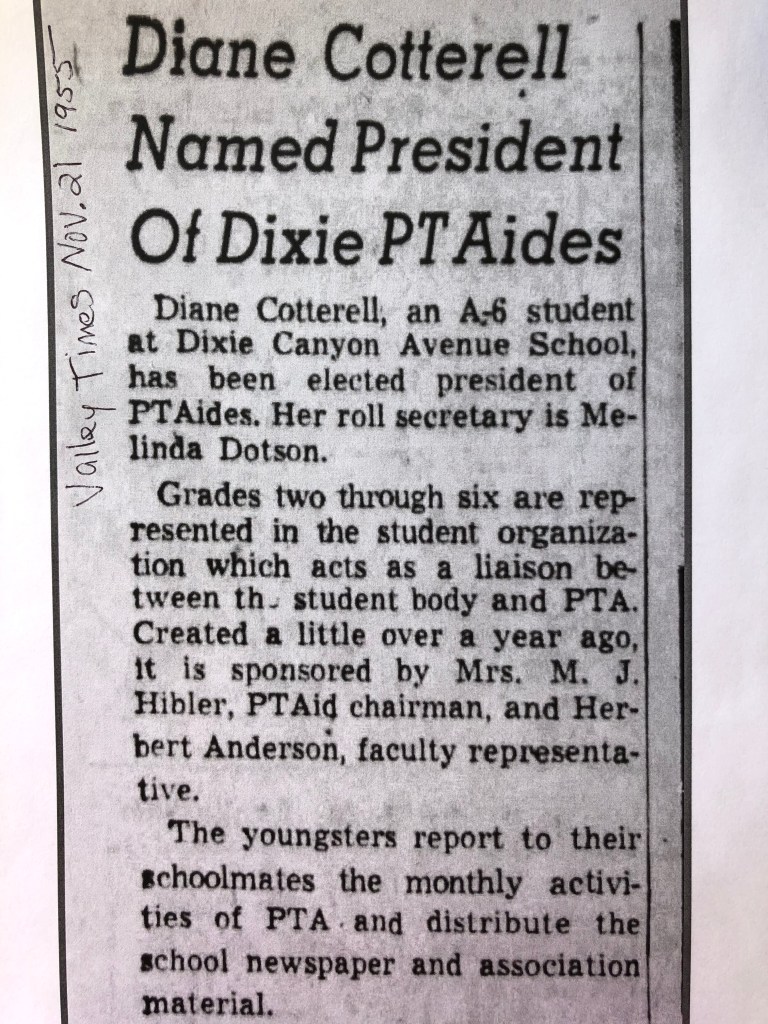
We see that Diana was definitely at Dixie Canyon Avenue School for the 6th grade. Notice she is named “Diane.”
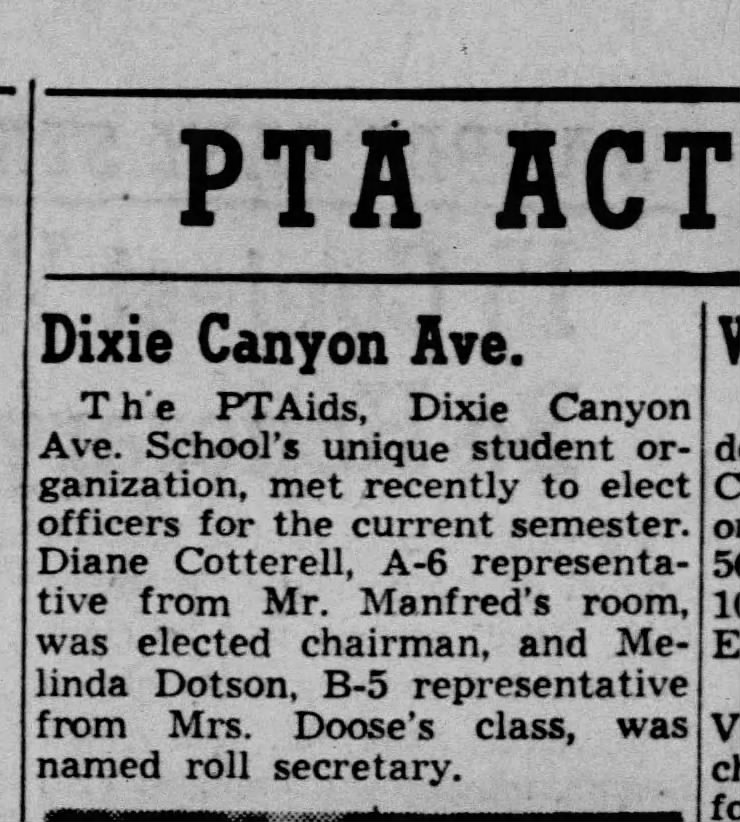
Both Dixie Canyon and Riverside Drive elementary schools are the same distance of .6 miles to the Moorpark/Ethel house where Diana lived with her mother, sister and grandparents through much of the 1950s..
The photo below is one of the first articles I found when I started this research.
It showed me that Diana Cotterell and Paige Young were the same person.
It can be confirmed that she attended Van Nuys Junior High for the 7th and 9th grades.
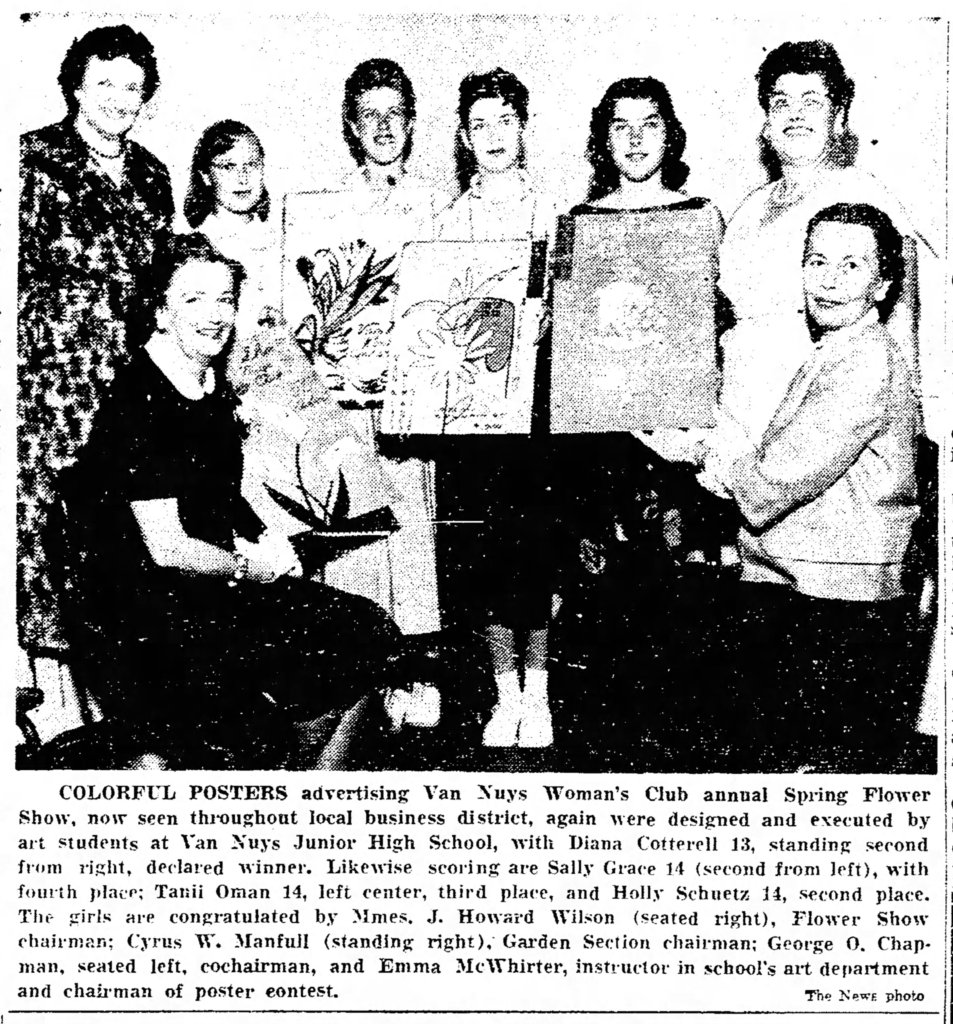
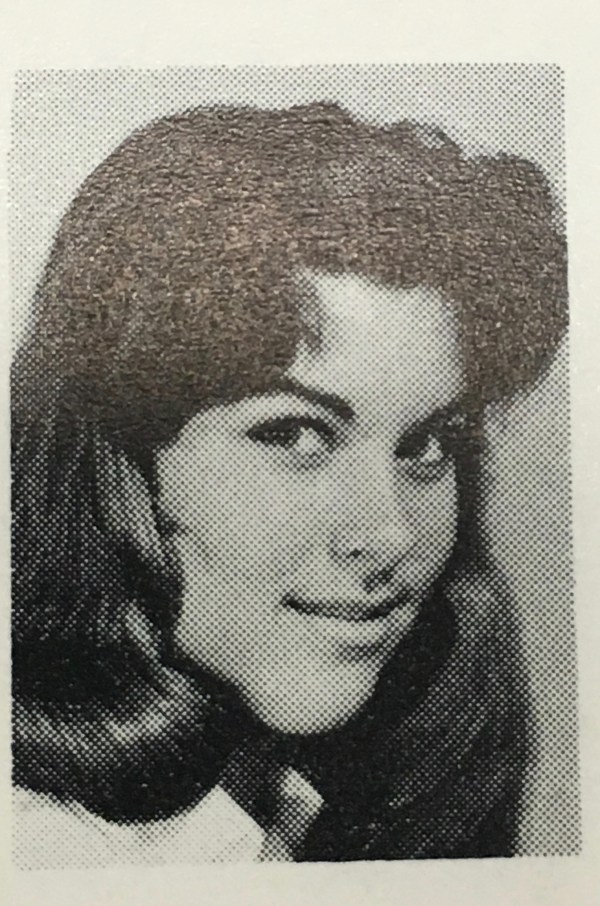
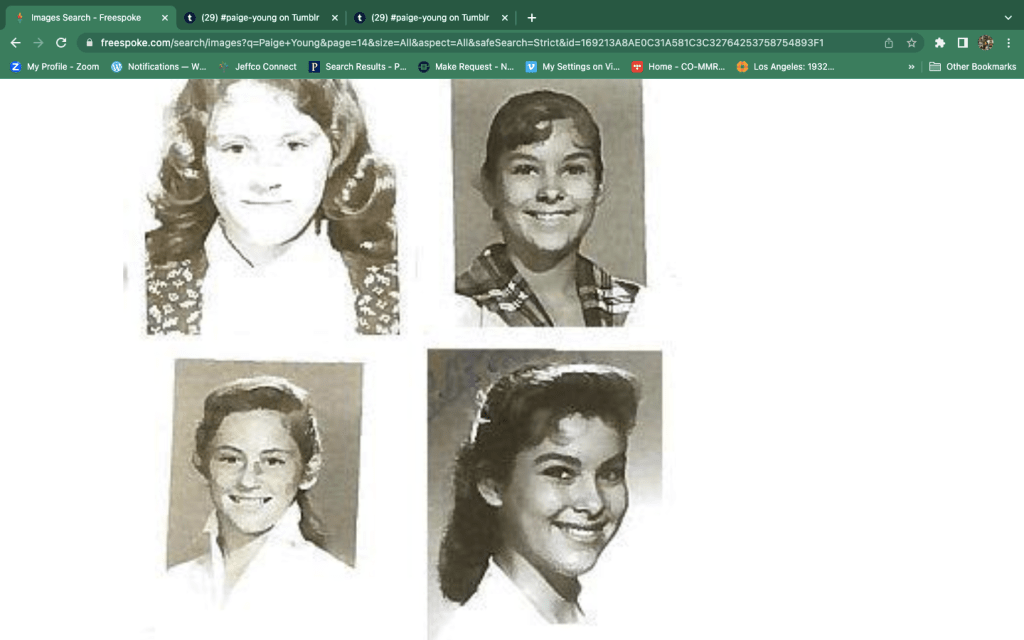
1959 yearbook photo Van Nuys Junior High yearbook. Diana Cotterell was in the 9th grade. Her grandfather Joseph Ned LaRocca would die in November of that year. This would have been taken before his death.
I found the photo in the VNJH school library with the librarian standing over me as lunch was about to start.
There were several yearbooks, more like paper notebooks, in a jumble. This was the only photo I could find of Diana on that day. I haven’t found a photo of her 8th grade year.
I have reason to believe that Diana Cotterell dropped out of school after the 9th grade. You could drop out with parental permission at age 16. I am unsure if Paige went to the 10th grade until she turned 16. I’ve not found her photo in an online high school yearbook
Here is the photo in a larger context. Candy Conklin was a member of the Singing King family and would perform with them in a few years time.
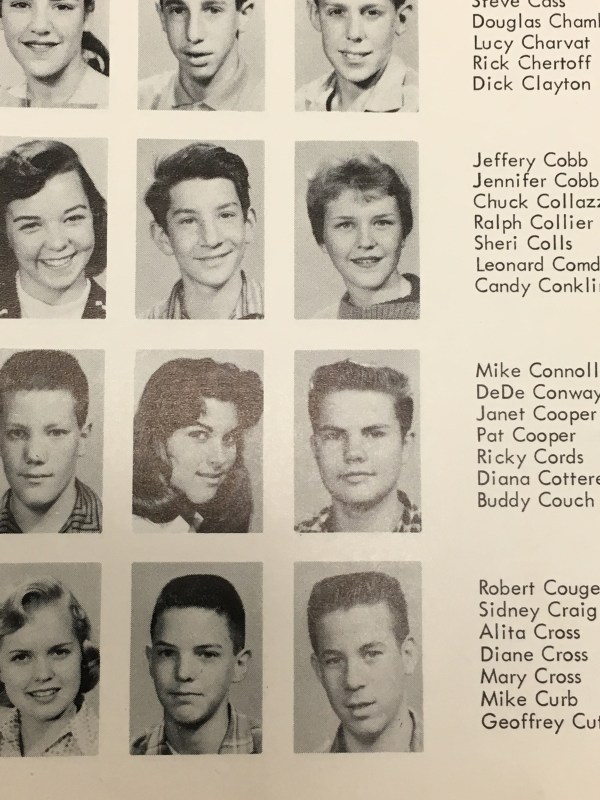

Many SFV schools had graduation ceremonies in mid June1959. This includes Van Nuys Junior High shown in the 3rd column. Diana Lee Cotterell would have been among the graduates that day.
1953-1959 Like many kids living in 1950s San Fernando Valley, Diana Lee Cotterell is obsessed with horses according to her friend from junior high, Joan Edwards.
Diana and Joan ride and board their horses at Sepulveda Stables, located at 5763 Sepulveda Blvd, on the corner of Hatteras.
Equestrian shows were held almost every weekend in the Los Angeles area in the 1950s.

There were commercial horse stables and riding trails all over the SFV in the 50s and 60s. In fact the whole area was known as a rural in the post-war era, even as the population exploded and the rural land was paved over.
Many westerns in movies and on TV were filmed in the SFV. Obviously horses were a big part of this!
In the 1950s of suburban/ruralSFV, horse husbandry was considered a wholesome activity for youth and thought to produce responsible American citizens.
And probably most importantly, it would keep kids and teens busy and separated from the bad influences of “juvenile delinquency,” a growing social concern of the 1950s, all over America.
source: Making the San Fernando Valley: Rural Landscapes, Urban Development and White Privilege by Laura R. Barraclough
Diana owned a horse named Hamish in junior high, 1957-1959. She owned him until at least 1964 when she was married to Mark Segal and living at his house at 4133 Crisp Canyon Rd. .
Sepulvedastables.net is where I got much of this information and the website seems to have now vanished.

I spoke with the owner of the website a few years earlier who remembered Paige. This woman was 12 or 13 when Paige was probably 19 or 20. She was living with Mark Segal on Crisp Canyon Rd. which was located “south of the (Ventura) Blvd.” Paige was known by that name by 1962. She invited this young girl up for lemonade to the address on Crisp Canyon Rd. (See chapters on Marriage and Divorce. 1963)
Donna Virginia LaRocca Cotterell married John “Jack” Holroyd in Las Vegas on October 3, 1958. This information is sourced from online Vegas wedding records, which are very difficult to decipher. Found on ancestry.com.
Patriarch Joseph Ned LaRocca dies of lung cancer towards the end of 1959.
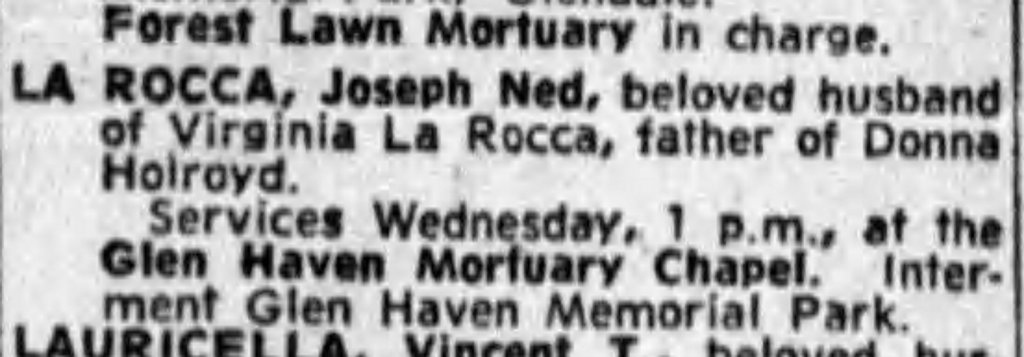
LAT November 18, 1959.
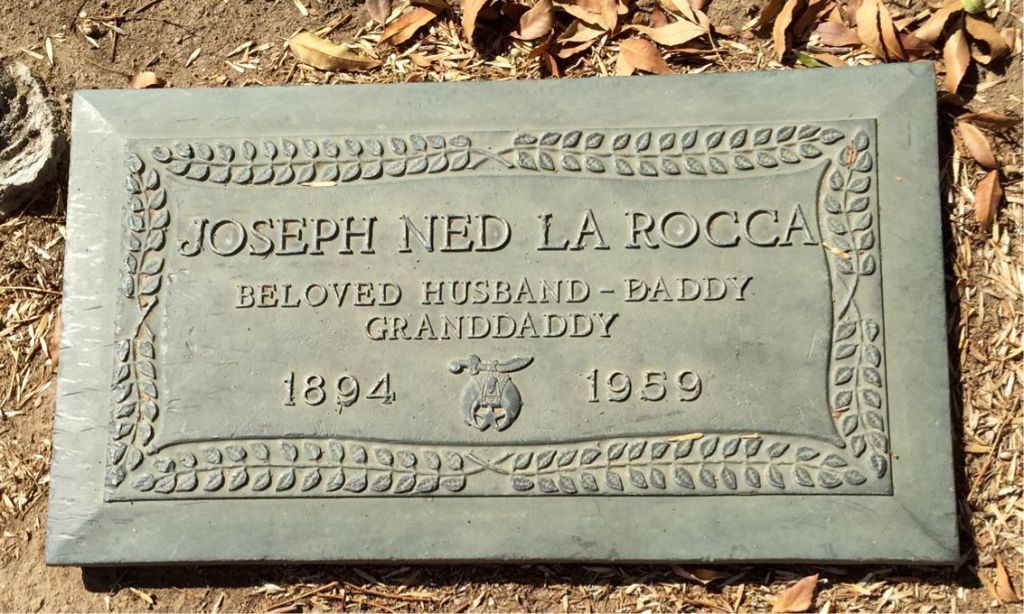
Ned LaRocca’s grave is in Glen Haven Memorial Park in Sylmar.
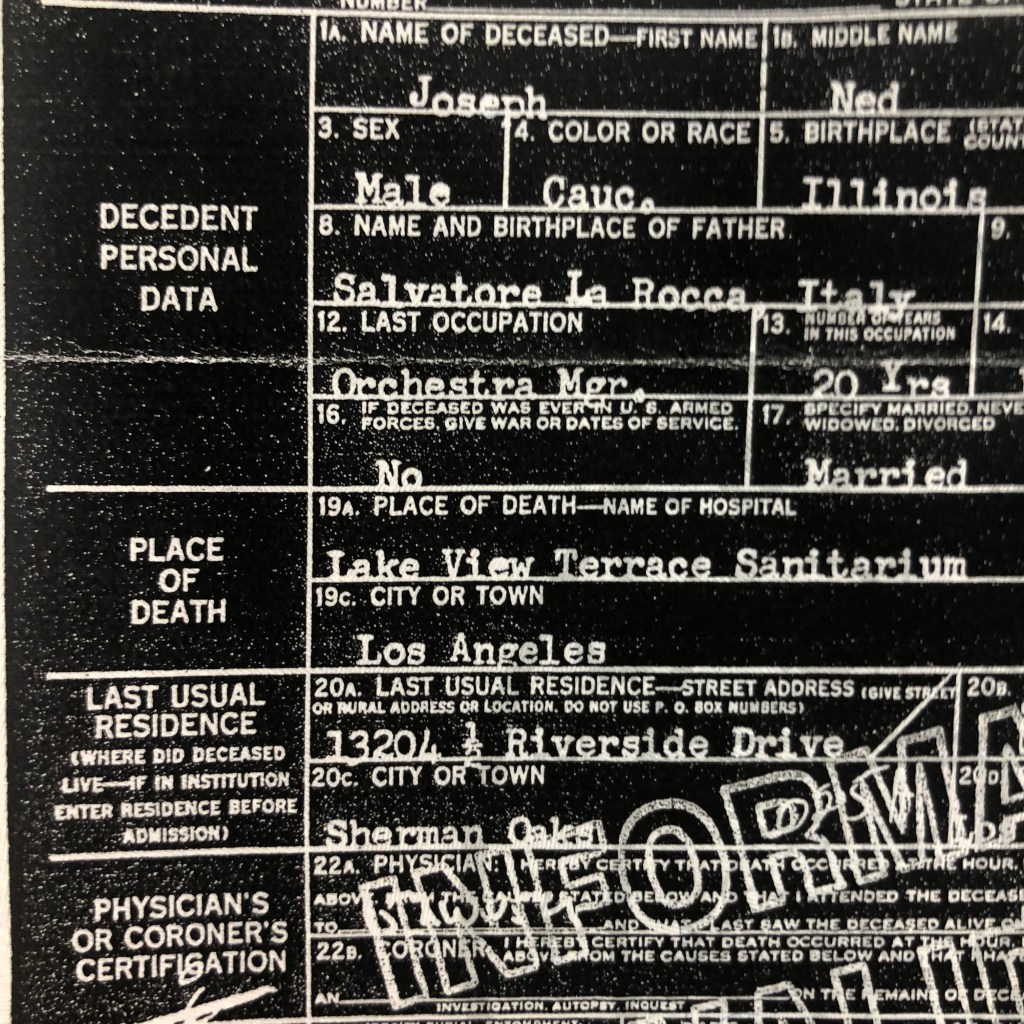
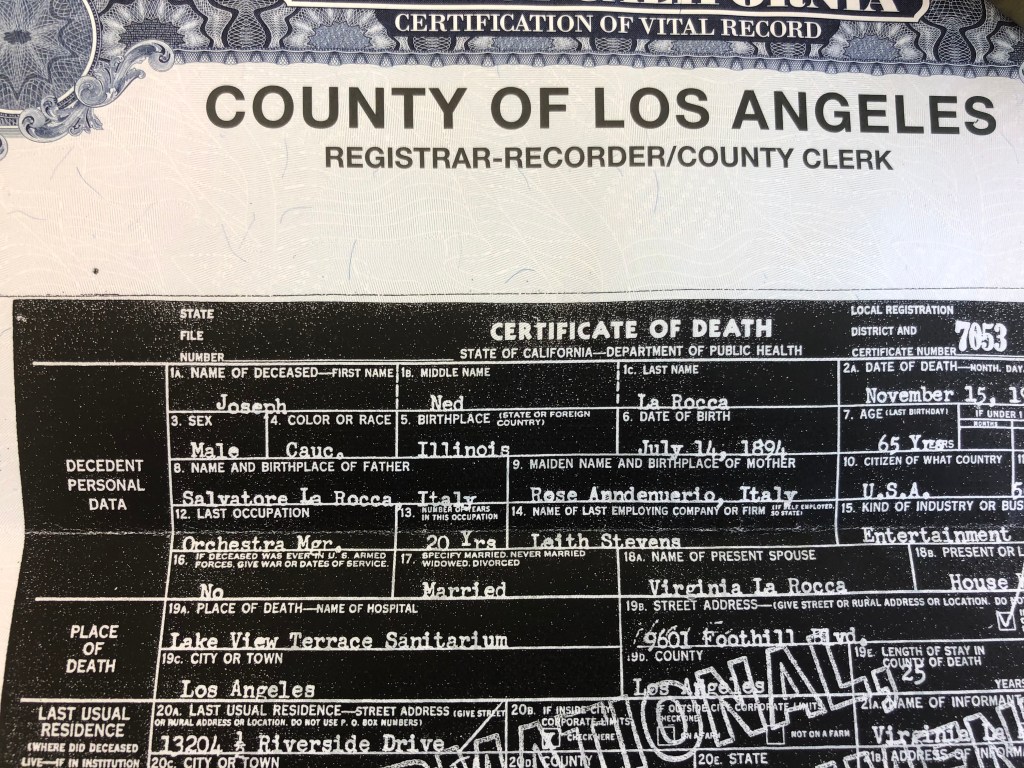
Below are closeups of Ned LaRocca’s death certificate.
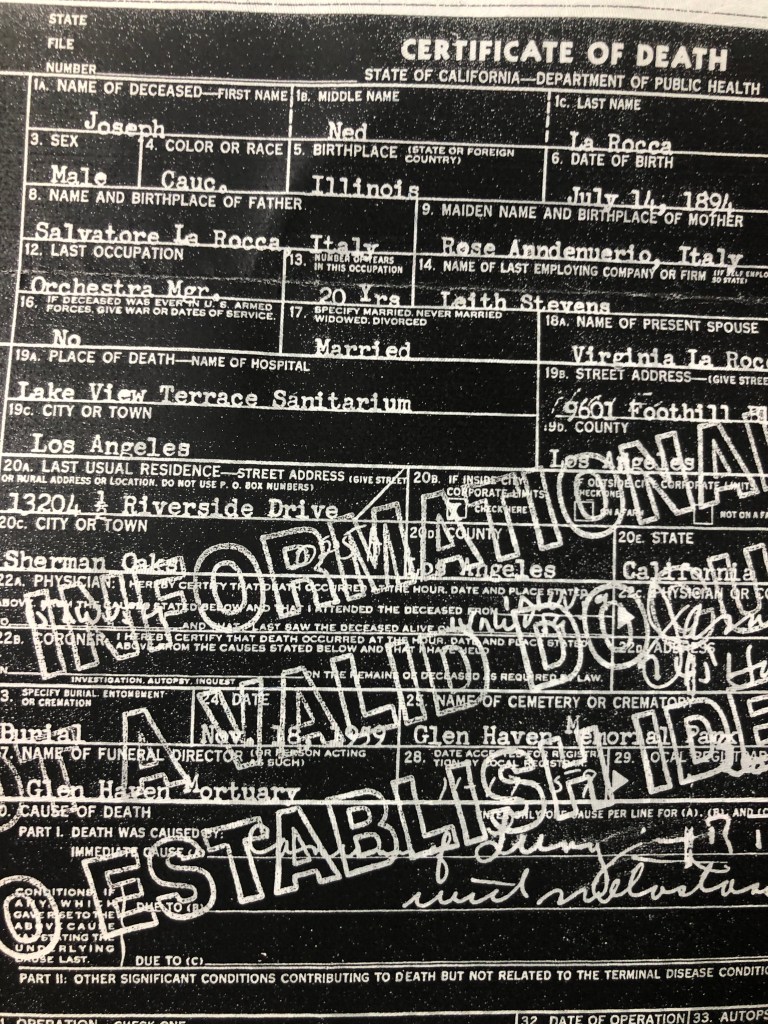
It looks like he spent about a year in a sanitarium located on Foothill Blvd. in the Tujunga/Sunland area. It was called “Lakeview Terrace Sanitarium” and the building was originally the home of silent film star Francis X. Bushman.
I have been unable to learn if this was specifically a Christian Science sanitarium due to his wife Virginia being a CSP.
I have learned that the Tujunga area was considered to have “much cleaner air” than other parts of the San Fernando Valley.
Note the name of last employer: Leith Stevens.

There was an obituary placed in Ned’s hometown of Peoria, Illinois upon his death. Recently posted to find-a-grave, I will transcribe below.
Joe N. (Ned) LaRocca, a native Peorian like his brother Roxy LaRocca and a former Vaudeville star, died Sunday night at his home in Sherman Oaks, Calif. He had been in failing health a number of years and had suffered several strokes.
He was a music contractor for Columbia Broadcasting Co. in Hollywood for many years.
Mr. LaRocca, a harpist, appeared in vaudeville with the Young Sisters, Virginia and Josephine, and later married Virginia. They continued with their act until the birth of a child when Mr. LaRocca joined a brother, Paul LaRocca, now operator of a local barber shop, in a new stage act.
Later, he became associated with his brother Roxy in New York theatre appearances. After Roxy left on a European tour, Mr. LaRocca became associated with CBS Radio, an association that he continued until last summer when he retired due to bad health.
Born in July, 1894, in the house at 1411 Martin St., presently occupied by his brother Roxy, he was a son of Salvatore and Roseanne LaRocca. He and his wife have been married for 42 years. She survives, with a daughter Donna V., and two grandchildren, all of Sherman Oaks: his two brothers, Roxy and Paul: and a sister, Kathryn Marinello, of North Hollywood, Calif. Two other brothers, Nick and Frank, are deceased.
Funeral services and burial will be today in Sherman Oaks.
Peoria Illinois Star November 18, 1959
There are obvious discrepancies between the death cert. and the obit. “Died at home” in obituary, instead of Lakeview Terrace Sanitarium, death certificate.
“Cancer of the lung” in death certificate vs. a “series of strokes,” as we see in the obituary.
Mention of CBS network and no mention of Leith Stevens.
Joseph and Virginia Married in 1915 and after this became a vaudeville act with her sister Josephine. Not the order as described in the obit, which was likely written by Virginia or Donna V. Or relayed over a long distance phone call
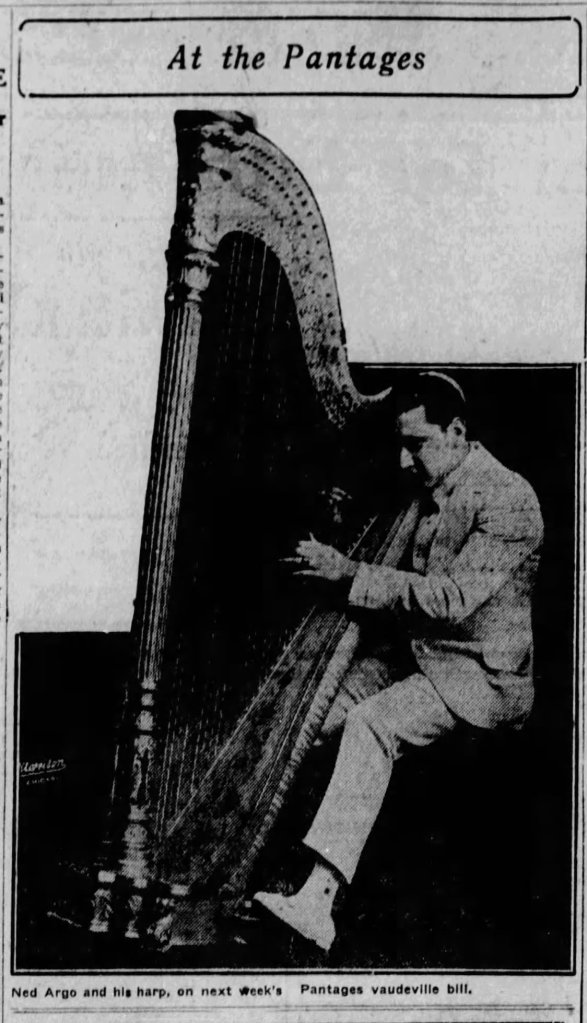
Ned Argo shown in the Edmonton Journal June 1919.
Ned’s granddaughter Paige would memorably visit Edmonton 50 years later on behalf of Playboy. See chapter 1969: Most Popular Year.
1950s #1 Updated 11/4/25: 1950 Census. Gardena. Move to San Fernando Valley. Ned & Virginia LaRocca. The Marinello/Bartletts. Recording Industry LA. Leith Stevens.
Posted on May 12, 2020
San Fernando Valley abbreviated SFV.
The 1950 census
gives more information about the LaRocca/Cotterell family unit.
We seem the family listed at a residence in Gardena at 1830 W. 147th.

Enlarge the document and you see that Joseph’s occupation is Radio Orchestra Manager, Virginia, a Christian Science Practitioner.
Donna has an empty box for occupation, her daughters Constance S. is listed as 7 years and Diana L. as 5 years.
Constance would have been in the second grade and Diana, kindergarten, if she went.
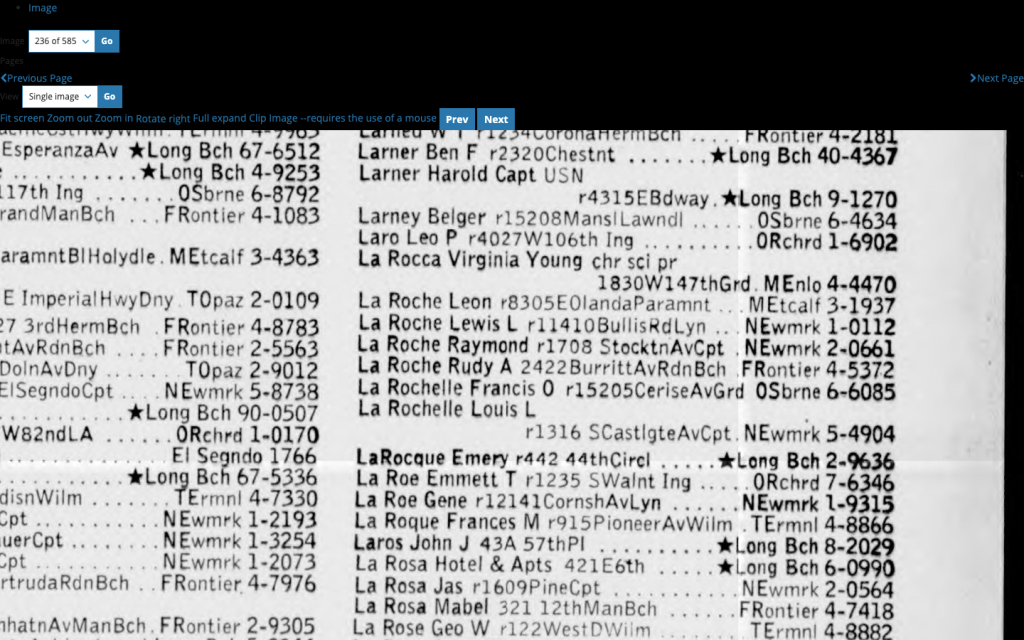
See the listing for Virginia LaRocca, CSP, at this same address but no Joseph is listed.
It’s unusual that Joseph and Virginia weren’t listed together. The married couple had been listed together every other year for decades, both in directories and voter registrations.
I first connected the family to 13055 Moorpark St. address by a city building permit dated Dec. of 1952.
Christian Young, a relative of Paige Young’s, told me in a phone conversation about a memory from his childhood.
“The house on Moorpark had a cabinet you could crawl through and get to their grandparents’ side (of the house).”
It seems reconstruction was made into a duplex, Ned and Virginia are on one side, Donna and the girls are on the other.
More specifically, off of the intersection of Coldwater Canyon and Ventura Blvd.
The duplex on Moorpark & Ethel, is located on the west side of Studio City, close to the eastern border with Sherman Oaks.
The Los Angeles River is nearby the house, as is Sportsman’s Lodge; a classic Hollywood and SFV landmark.
It’s recently been totally or partially demolished.
Ned & family were aware of this part of the SFV area for some time before their move.
Joseph’s only sister of many brothers was named Kathryn Marinello.
She and her husband Anthony, opened a food store at 13251 Moorpark in 1947, seen below.

“New Business Filings in the Valley” Van Nuys News
There is a 1947 City document I have been unable to download; indicating a “food store” at 13251 Moorpark St. The building was not owned by the Marinellos but a business announced, as seen here.


Mildred and Clifton’s first child James is recorded as 1 year old.
Their daughter Donna Lee was born only a few years later. Looks like she was named for Donna LaRocca Cotterell, and Diana Lee Cotterell.


Meanwhile……Diana’s father Robert Morgan Cotterell also moved to the SFV around this time, but further west of his daughters and ex-wife.
His new wife (1949) Patricia/Pat Frick and their two children born in 1950 and 1951, started out in the Canoga Park/Winnetka area.
Robert’s daughters by Donna V., were living in Gardena when “Bob and Pat” were parenting 2 toddlers on Lurline Ave.
I can’t imagine they saw each other that often but who knows?
It’s the first of many moves around LA for the Cotterell family due to Bob Cotterell Sr.’s career at Douglas Aircraft.
We do not know exactly why the LaRocca family moved to the SFV.
However, we know they were part of a massive migration to the area after World War 2, from both inside and outside California.
“The end of WW2 transformed the Valley and vastly accelerated its growth
with: vast tracts of suburban housing, shopping centers and industrial parks where chicken ranches, orchards and cattle ranches and wheat fields once existed. The 1940s and 50s, when I was growing up, the Valley was full of movie cowboys, beautiful ranches and fine horses.”
Jerry England at cowboyup.com
“In the five years after the war, the population (of SFV) more than doubled to 402,538 residents-the pastoral San Fernando Valley was suddenly the ninth-busiest urban area in the nation. Valley society was a mix of young suburbanites, older families who had come west to try their luck as engineers, animators, or pioneers in the new field of television, and ranchers trying to hang on in the face of the new hordes.”
The San Fernando Valley: America’s Suburb by Kevin Roderick
I discovered that Ned LaRocca spent most of the 1950s working as an “orchestra manager.”
He worked for composer/conductor Leith Stevens.
I saw this information through Ned’s death certificate, seen below.
I can confirm two Leith Stevens projects that have a credit as “contractor” for Ned LaRocca: A Doris Day album recorded in 1951 at 1032 Sycamore Street.
It was a studio known at that time as “The Annex.”
The website careerexplorer.com defines an orchestra contractor is: “He or she has the job of finding the appropriate musicians for Broadway shows, television episodes and commercials.”
Ned had experience adapting to a new mass medium.
In his first industry performing on the Vaudeville stage performing the harp. (See related chapters)
Vaudeville died in the early 1930s during the Great Depression and Radio programming became a mass entertainment form.
One significant factor that changed the popularity of radio programming was the rise of TV in the 1950s.
Drama, comedy and musical variety and interview shows moved to TV.
In the 1950s Los Angeles had a burgeoning music recording industry scene.
Ned worked in each of these mediums. Performing on radio broadcasts and orchestra managing for films.
In 1950, just under 20 percent of American homes contained a TV set. Ten years later, nearly 90 percent of homes contained a TV—and some even had color TVs. The number of TV stations, channels, and programs all grew to meet this surging demand.
encyclopedia.com
Ned LaRocca has a credit on Leith Steven’s 1953 score to the Marlon Brando movie “The Wild One.”
This record was a hit, released by Decca records, it remains Stevens’ most widely known work. J. Ned LaRocca is credited as “Contractor” on the project: Per Discogs.com.
As I understand, the Wild One was the first soundtrack entirely made up of Jazz music.
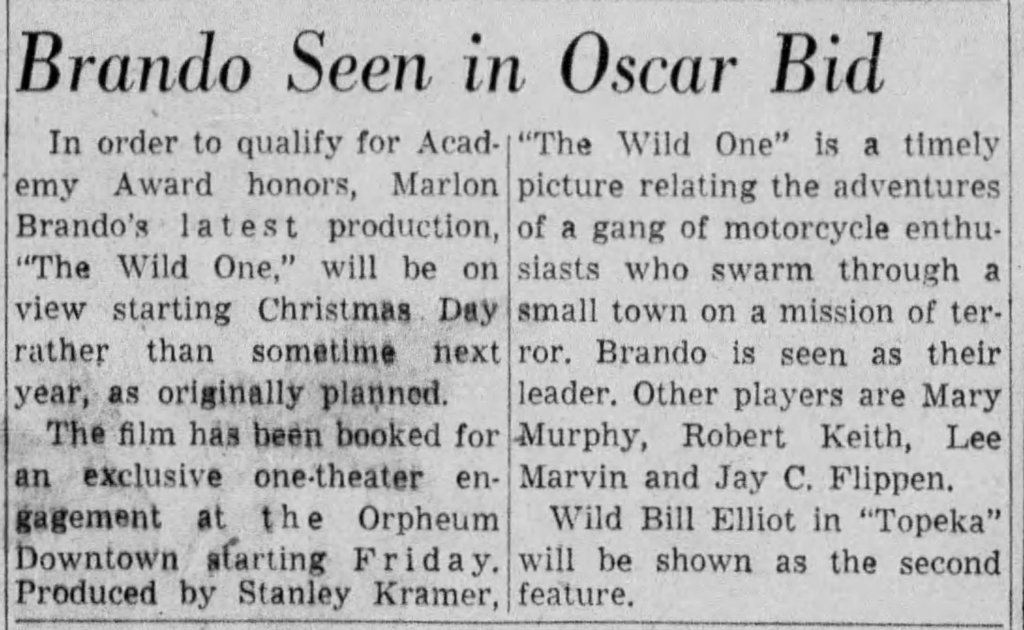
I recently watched The Wild One and noticed there are long stretches where there is an notable absence of music.
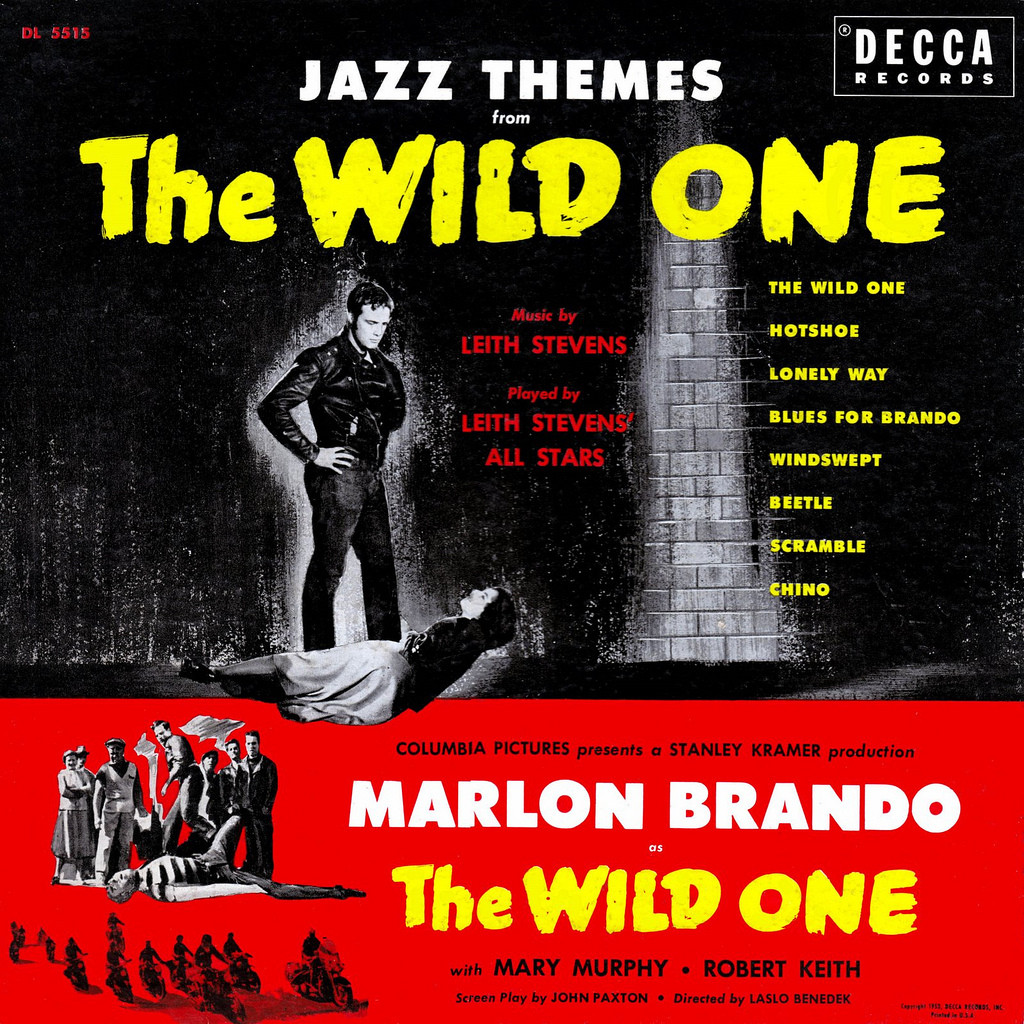
Besides composing and conducting “The Wild One” soundtrack, Leith Stevens composed scores for radio shows, movies and T.V. from the 1930s until his death in 1970.
This includes Film Noir classic Private Hell 36, co-written by and starred Ida Lupino.
Another Stevens credit was for The Bigamist, directed by and starring Lupino. So there was a relationship there with the pioneer female director, Lupino. Or maybe he was just assigned to the project.
War of the Worlds 1953, The Hitch-Hiker, another Lupino film. and Destination Moon, 1950.
Just a very few: It’s a Wonderful Life, 1946, Ma & Pa Kettle Back on the Farm, 1951, 1954, Earth Vs. Flying Saucers in 1956, The Ann Sothern Show, 1960, Twilight Zone, early 1960s.
He composed 100s of stock music pieces for Hollywood media.
Virginia Young LaRocca in the 1950s.
Diana’s grandmother. She started out life as a Mormon in Utah, but somewhere along the way became a Christian Scientist.
She is listed as “Chr. Sci.pr.” (Christian Science Practitioner) in Los Angeles telephone directories in the 1940 and 1950s. Virginia was listed with her own telephone line.
(Read more about Virginia and her sister Josephine’s early years as a Vaudeville performer in the family history chapters.)
A Christian Science practitioner is an individual who prays for others according to the teachings of Christian Science. Treatment is non-medical, rather it is based on the Bible and the Christian Science textbook, Science and Health with Key to the Scriptures (1875) by Mary Baker Eddy (1821–1910), who said she discovered Christian Science in 1866 and founded the Christian Science church in 1879. According to the church, Christian Science practitioners address physical conditions, as well as relationship or financial difficulties and any other problem or crisis.
wikipedia
At some point, the Christian Science Church won the right to accept insurance for their practitioners. However, I have been unable to find exactly what year.
So, I can’t tell how much income Virginia might have earned from her vocation as a CSP.
In 1955, an LA telephone directory lists a Ned J. LaRocca at 4414 N. Ethel and a Virginia Young LaRocca with the same address.
Donna Cotterell is listed with the 13055 Moorpark address. 13055 Moorpark is on a corner with Ethel St.
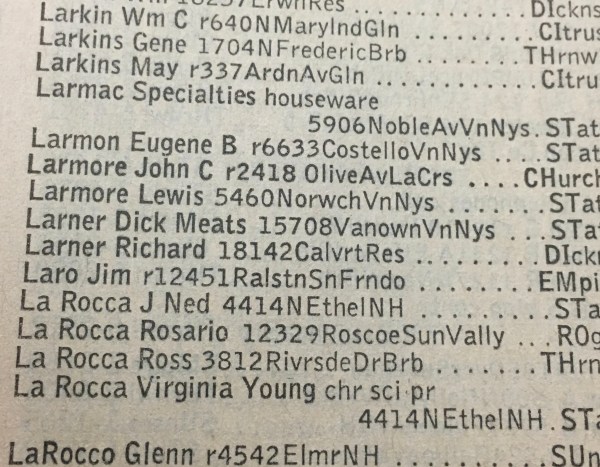
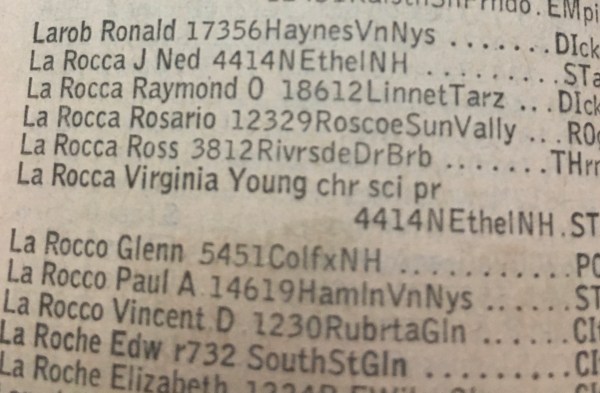
4114 Ethel St. doesn’t seem to be an “real” address; I don’t find a record of it anywhere besides the phone directory.
1957 Virginia Young LaRocca is listed in the phone directory at 4414 N. Ethel State 4-7052 North Hollywood. Cr. Sci. Pr.
This could be a result of the house modification for Donna, Diana and Constance Cotterell, it was made into a duplex.
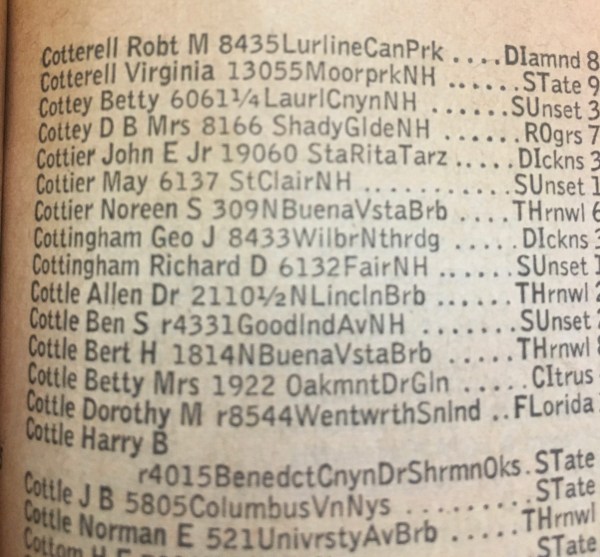
I’m sure Donna received child support from her ex-husband Robert Cotterell. And likely alimony until Donna remarried in 1958 to Jack Holroyd in a Las Vegas wedding.
It is probable that grandfather Ned LaRocca was the primary breadwinner of this household.
This would have been normal for the times.

1940s (1930s) Los Angeles: Family. Marriage. Hollywood Wedding Chapel. Los Feliz Houses. Mildred Marinell. WW2. P.O.W. Divorce. Updated 11/24/2025.
Posted on April 29, 2020
You were introduced to Diana Cotterell/Paige Young’s parents in an earlier chapter, let’s learn more about them.
Robert M. Cotterell was 23 and Donna V. LaRocca 19, when they were married in 1940.
Donna is listed in the 1940 census as living with her parents at 3834 Evans St., and that she was a “New Worker” in “Dramatics.”
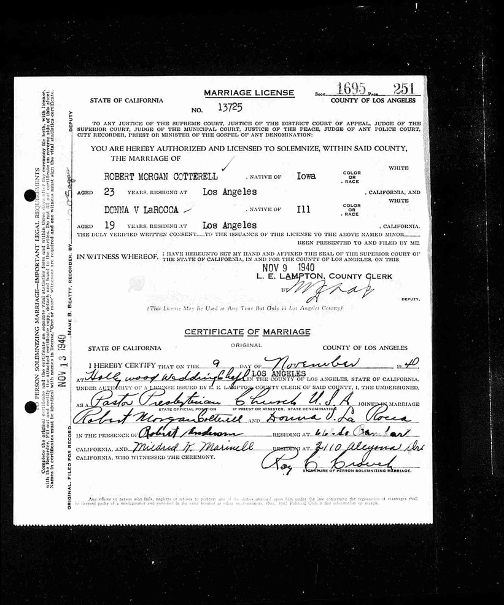
Mildred K. Marinell signature listed on next to last line.
Mildred is the daughter of Joseph LaRocca’s only sister Kathryn LaRocca Marinello, and Donna’s first cousin. Mildred dropped the “o” from her birth name. The family name is recorded as both Marinello and Marinelli; Mildred became Marinell, so it’s been confusing to research.
Below is the Hollywood Wedding Chapel where Robert and Donna were married per the marriage certificate.

The famed Garden of Allah apartment building was across the street.


Much more on Donna’s cousin Mildred coming up. (I suspect she occasionally used the name Penny Pepper in show business.)
This Hollywood Wedding Chapel building was purchased by famous director/writer Preston Sturges in 1940. He transformed it into “Players” restaurant which became a watering hole for the movie business.
Players has its’ own interesting Hollywood history.
Donna and Robert must have been one of the last couples to marry at the chapel before Sturges took over.
Now this location is a Pink Taco restaurant.
**UPDATE** Pink Taco abruptly closed in 2024.
Diana’s father Robert Morgan Cotterell was born around 1917 in Algon, Iowa. He moved to Los Angeles around 1938 to follow his interest in aviation. (According to his son in a facebook message to me.)
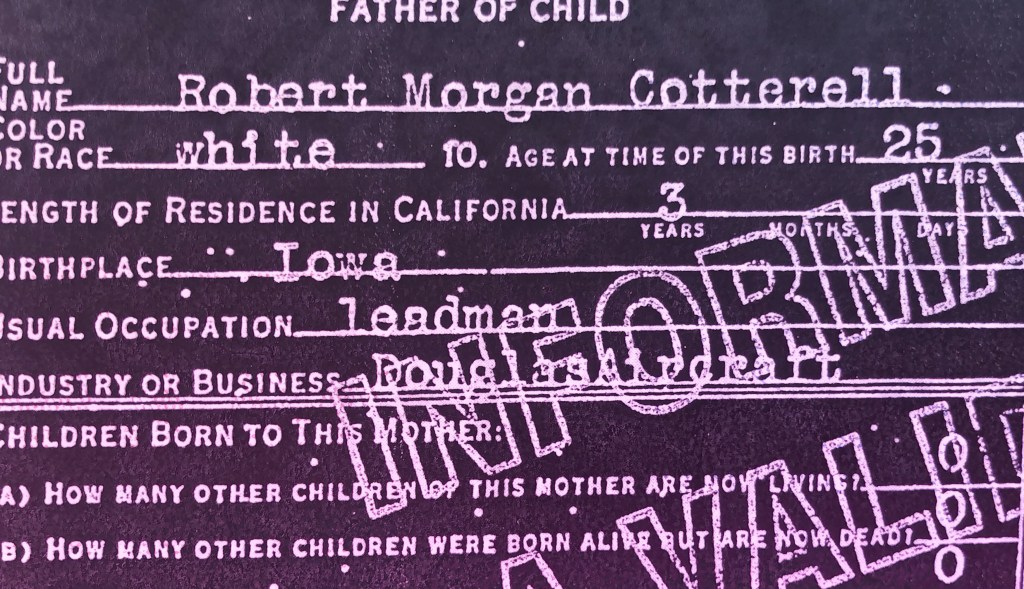
From Constance Susan Cotterell’s birth cert. in 1942. Father Robert a Leadman at Douglas Aircraft.
Donna Virginia LaRocca’s parents Ned and Virginia LaRocca were Vaudeville musicians and traveled the Pantages, Orpheum and other Vaudeville circuits for about the first 10 years of Donna’s life. For more, see related chapters.

This location, Shoredale and Gatewood Streets are in the Elysian Valley or maybe “Frog Town” part of Los Angeles. Very close to Elysian Park which was the very first City Park in Los Angeles
They moved to Evans St. near Marshall High School around 1938.
Donna Virginia was born in 1921, in Peoria, Illinois, the hometown of her father: Joseph Ned LaRocca.
Donna V. moved with her parents to Los Angeles around 1934.
Robert M. Cotterell during World War 2:

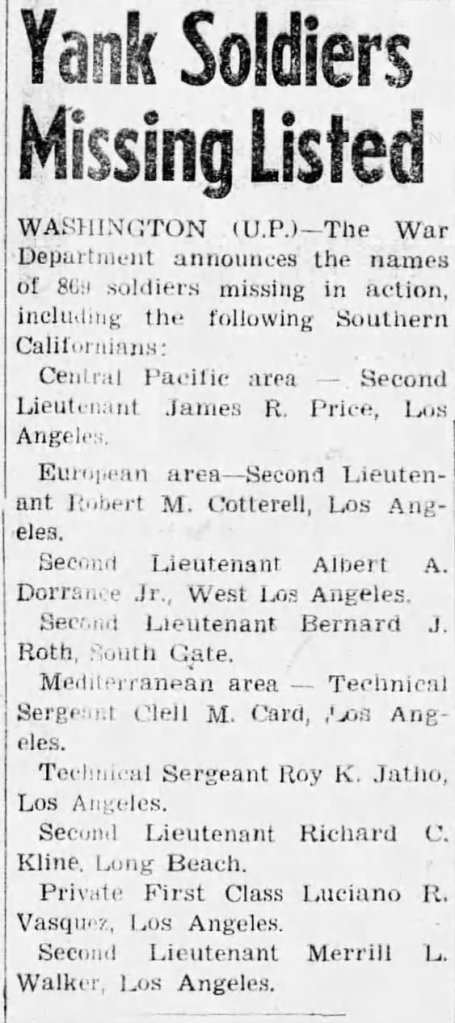
<<<<<<<<<<<<<
Wilmington Daily Press Journal July 26, 1944

Robert Cotterell’s daughter Constance is 2 years old, and Diana only 5 months, on the date the POW announcement was published.

Los Angeles Evening Citizen News July 29, 1944 >>>>>>>>


For his part in the war effort, Joseph Ned LaRocca signed up for the “Old Man’s Draft Card.” In 1942, Congress enacted a “law” to show solidarity for the war effort. It provided the Government an idea of the skills the skills “older” men in the US populations. For utilization in the war effort.
The document shows Ned was living at 3834 Evans in 1942.
He was driving to and working as a harpist in the famous NBC and CBS buildings on Sunset & Vine. (More on this in other family chapters.)
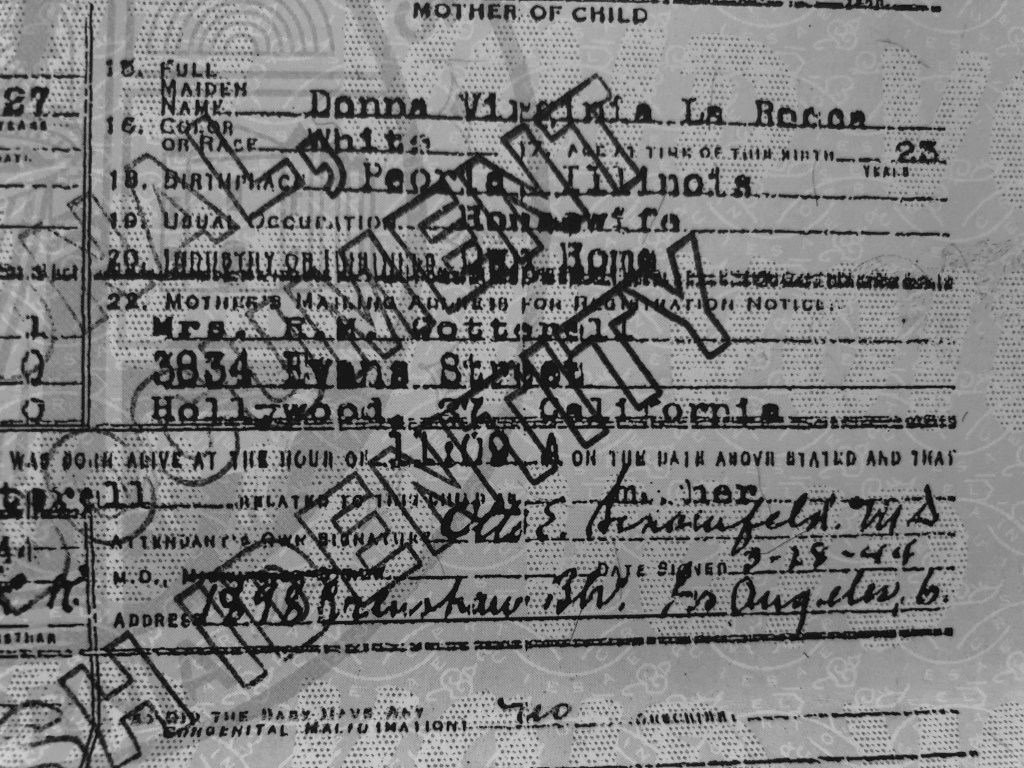
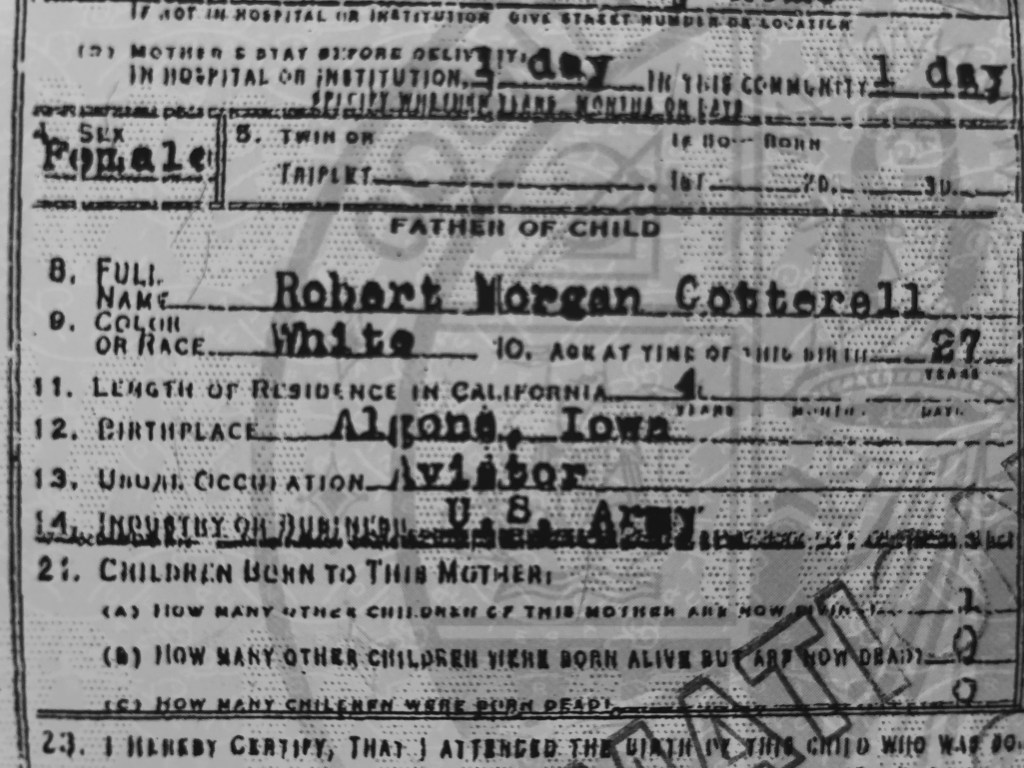
From the 1944 birth certificate of Diana Lee Cotterell, later Paige Young. Home residence listed on Evans Ave., located a stone’s throw away from Marshall High School.
1945 Diana’s father Robert Cotterell is liberated from the German Camp. where he spent approx. one year. I have no idea what he experienced but it probably wasn’t great. Robert’s daughter Diana was 1 year old in 1945 and first-born Constance, 3 years.
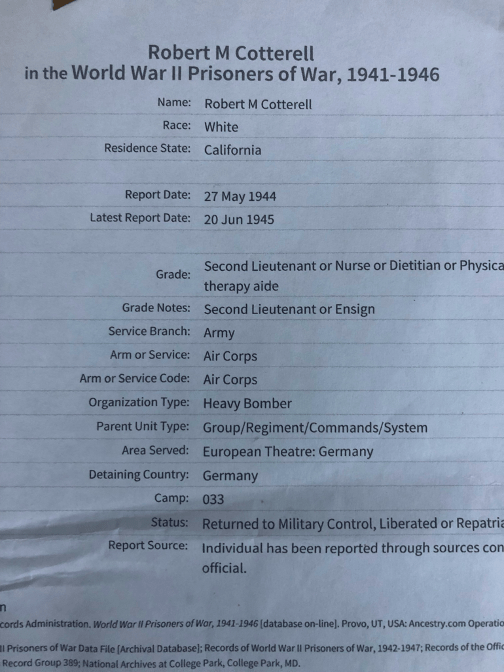
1947
Donna LaRocca Cotterell files for divorce against Robert Morgan Cotterell.

1947 Only 2 months later, the divorce is granted. This seems unusually quick.

Historic Context:
Robert and Donna Cotterell were one couple out of thousands who made up a nation-wide spike in divorce rates after WW2.
Statistics show that in 1946 one in four US marriages ended in divorce.
A 1946 article published in the New York Times said:
“More than half of America’s 1,500,000 war-wed G.I.s have returned. Already one out of every four of these 800,000 men is entangled in divorce proceedings. Experts are predicting that by 1950, 1,000,000 of these wartime marriages-or two out of three-will end in divorce.”
Robert Cotterell remarried in approximately 1949 to Patricia Frick and the couple had two children, in 1950 and 1951.
He got a job after the war working for Douglas Aircraft. The job took his family all over the San Fernando Valley. One stop was Laguna Beach.
I would imagine Robert paid alimony to Donna, normal at the time. He also would have paid child support for his daughters Constance and Diana. I have not been able to learn what kind of relationship the sisters had with their father.
Virginia LaRocca, Donna’s mother, Diana and Constance’s grandmother, was named owner of a double house at 3710 & 3712 Arbolada.
This house is only one mile from the home on Evans St.


Close up
Donna has a voter registration record with this address way back in 1944 below and in Robert Cotterell’s POW announcements in the newspapers.
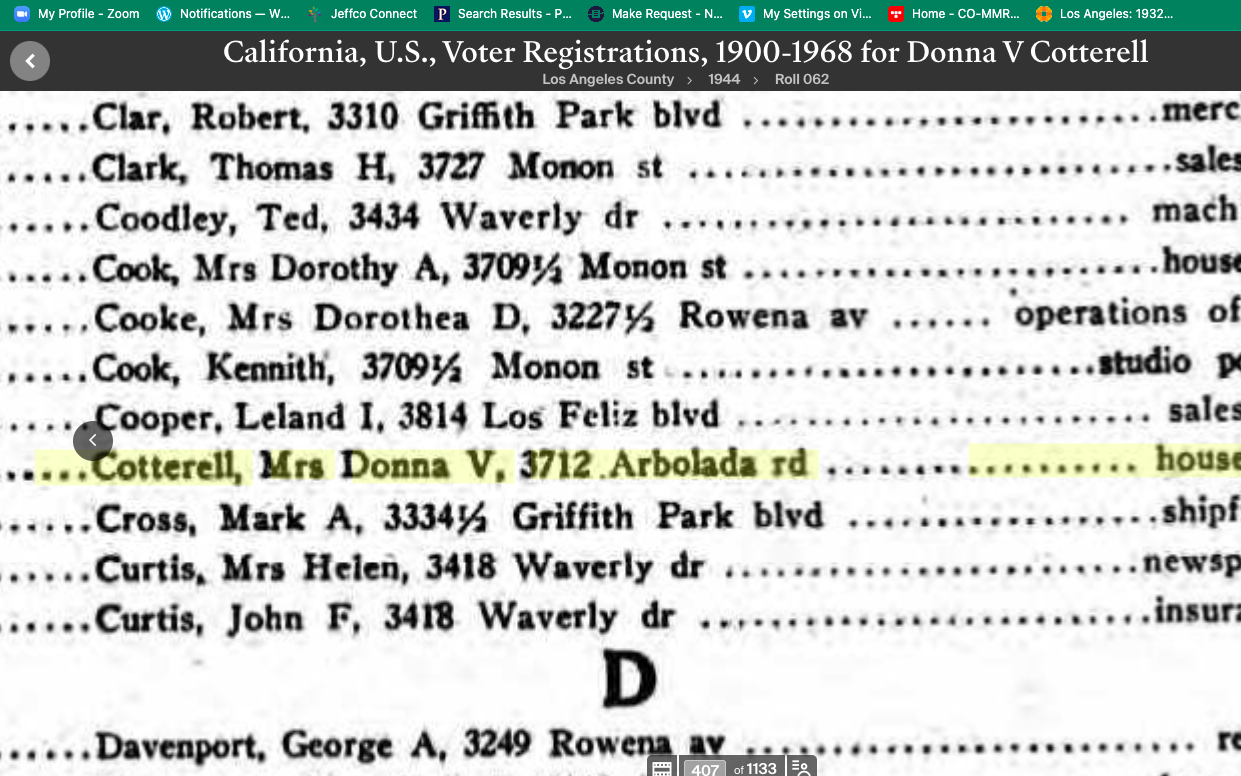
Joseph LaRocca is listed in the LA telephone directory with this Arbolada address in 1948.
Arbolada Rd. is a dead end street.
The homes are located high on a hill with an incredible panoramic view of the area. It’s minutes away from the Evans St. home, so still near Griffith Park.
The homes have a steep step climb.
Document from ancestry lost. Apologies. It was a Voter’s registration showing the following information.
Joseph and Virgina La Rocca listed above at the Arbolada address. Antonio and Corina La Bianca are at 3301 Waverly Dr.
Virginia’s listing leaves off “Christian Science” and just says her employment is “practitioner.” She now has an R by her name!
Antonio and Corina La Bianca purchased the house on Waverly Dr., sometime in the 30s or 40s but will confirm.
Unfortunately, the world knows the story of their son Leno.
The LaRocca Arbolada Road house is close to the LaBianca residence on Waverly Drive. Leno and Rosemary LaBianca were victims of the Manson family at this location. However, between the 2 houses is a large plot of undeveloped (!) land, so one has to travel a circuitous route between the two homes, as a friend did for me one time that I visited. There is no direct path between the two houses.
The 2 Italian families (Joseph’s wife Virginia was not Italian but Mormon with English ancestry) lived a 5 minute car drive from each other at one point, even if they never met.
Mildred Marinell
Diana/Paige’s mother Donna was very close to her first cousin “Mildred Marinell.”
Mildred lived close to Donna in Peoria, Ill., with her in Los Feliz section of LA at 3834 Evans St. And a few doors down from each other in Sherman Oaks, San Fernando Valley, in the 1950s. This is seen in census records mainly.
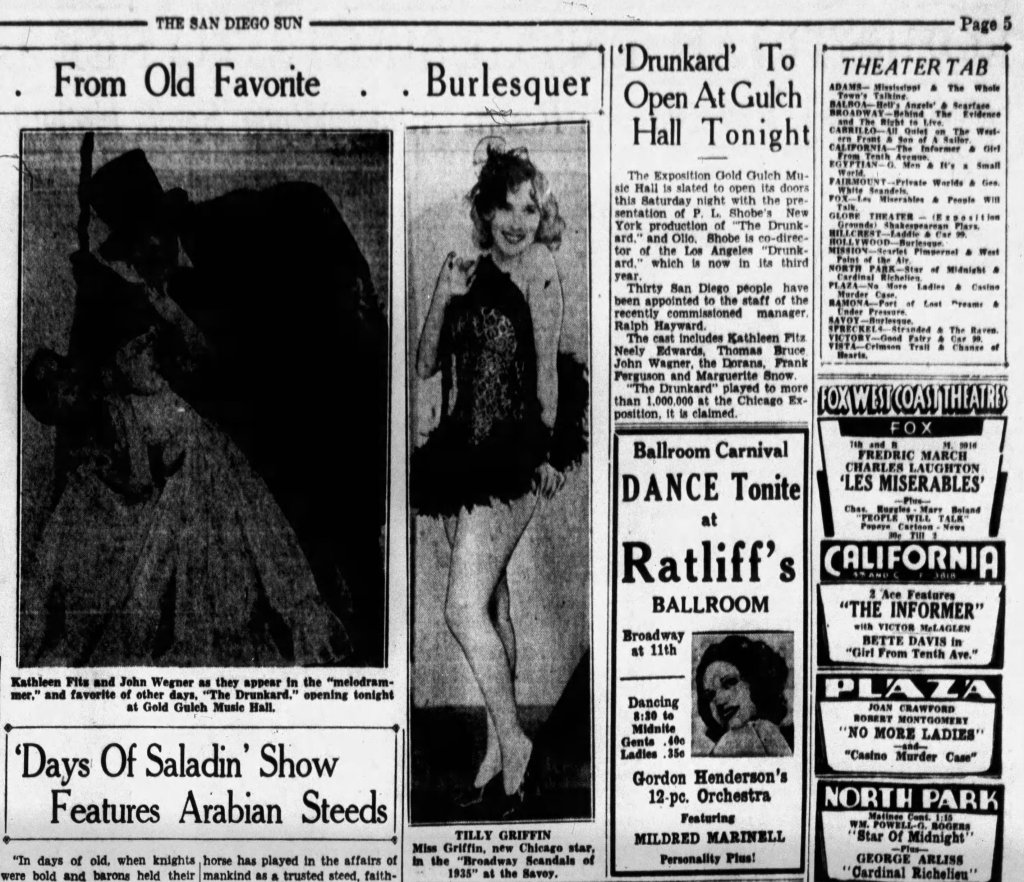
Seen below: Port Angeles, Washington Sept. 21, 1937. Mildred dropped the i/o (I’ve seen it both ways) from her name
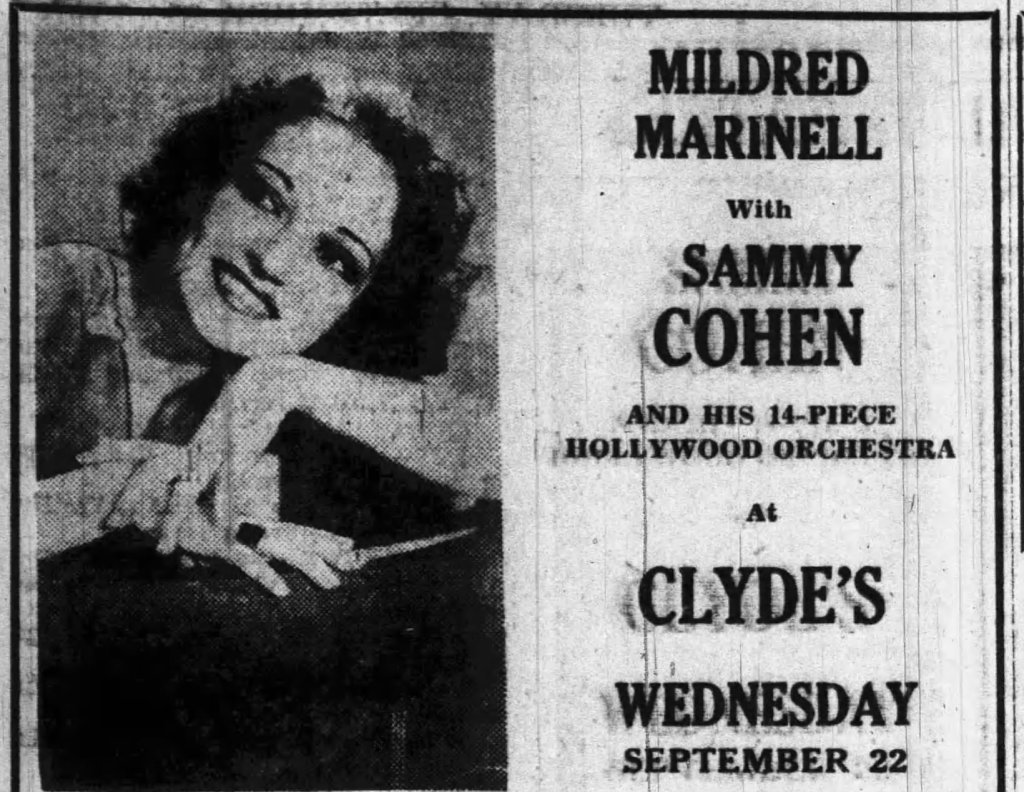
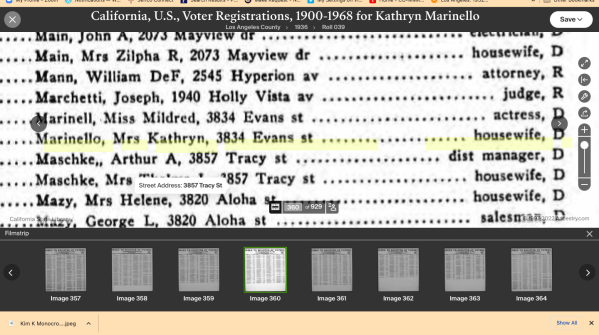
Mildred Marinell and her mother Kathryn living at 3834 Evans. 1936

Mildred ended up marrying Clayton Bartlett and having children with him and living in the San Fernando Valley.
The city of Los Angeles experienced a housing shortage during the post-war years. More so than the usual housing shortage that seems to have almost always existed in LA.
This fact caused me to wonder how the LaRoccas were able afford the 2 houses. They bought one right after the other, or overlapping, in the 1940s. Evans St and Arbolada Rd. houses.
Documents and articles show both addresses were used beginning in 1944 up until about 1948.

Mildred would name her daughter “Donna Lee,” (Lee was Diana/Paige’s middle name) Bartlett,” born in the early 1950s. I’ve tried and can’t reach her.
I didn’t find an exact answer but the next several chapters may shed some light on this “upwardly mobile” family.
Virginia LaRocca had been a full time Christian Science Practitioner sometime in the 1940s, as best as I can tell now.
She had her own phone listing in LA phone books for many years for the purpose for her work as a Practitioner or CSP.
“Gin” became a Christian Science Reader at some point. Her income from this is unknown. It is a high position in the Church of Christ Science.
Virginia’s sister Josephine Harker was listed in a directory at the Evans house around 1940. Harker was her sister’s sometimes singing/dancing partner back in the days of Vaudeville (see related chapters).
It’s easy to imagine that the Evans house was entirely too small to fit all these family members comfortably.
And of course there was daughter Donna and granddaughters Constance and Diana Cotterell born in 1942 and 44.
Father Robert was serving overseas most of this time, his name was connected with both addresses as articles show.
I’m not sure where exactly Robert moved soon after he was liberated and returned from a German POW camp.
His son Robert Cotterell JR. wrote me that his father told him he received a “Dear John” letter from wife Donna, when he was overseas.
I imagine POWs weren’t allowed any mail.
All these names, excluding Diana and Constance, were linked to the Evans or Arbolada address from 1938 through around 1947. These dates are per records I have shown or seen.
Donna and Robert were officially divorced in 1947 per notice in the LAT.

View of the surrounding area is spectacular as is the building itself. It’s one of those house you see in Los Angeles that look precariously balanced on a steep hill.
Perhaps Virginia and Ned sold this spectacular double house to finance their home in the San Fernando Valley?
 Paige Young in Los Angeles