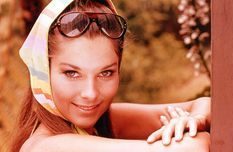
 Paige Young in Los Angeles
1970/1 Paige At Pasadena Art Museum With Warhol Wearing A Rudi Gernreich Dress. Meet Paige’s Date Bill Gardner & Artist DeWain Valentine. Venice Beach Studio. Art Scene LA.(Long) *Updated* 3/8/25
Posted on July 21, 2020
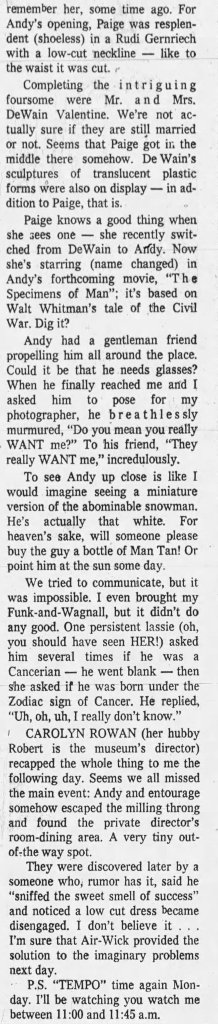
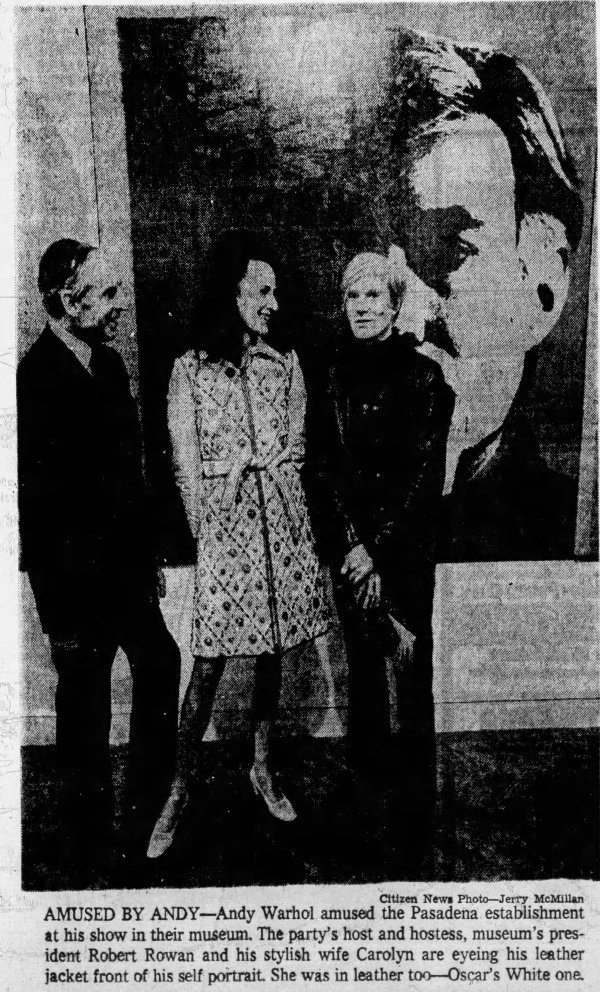
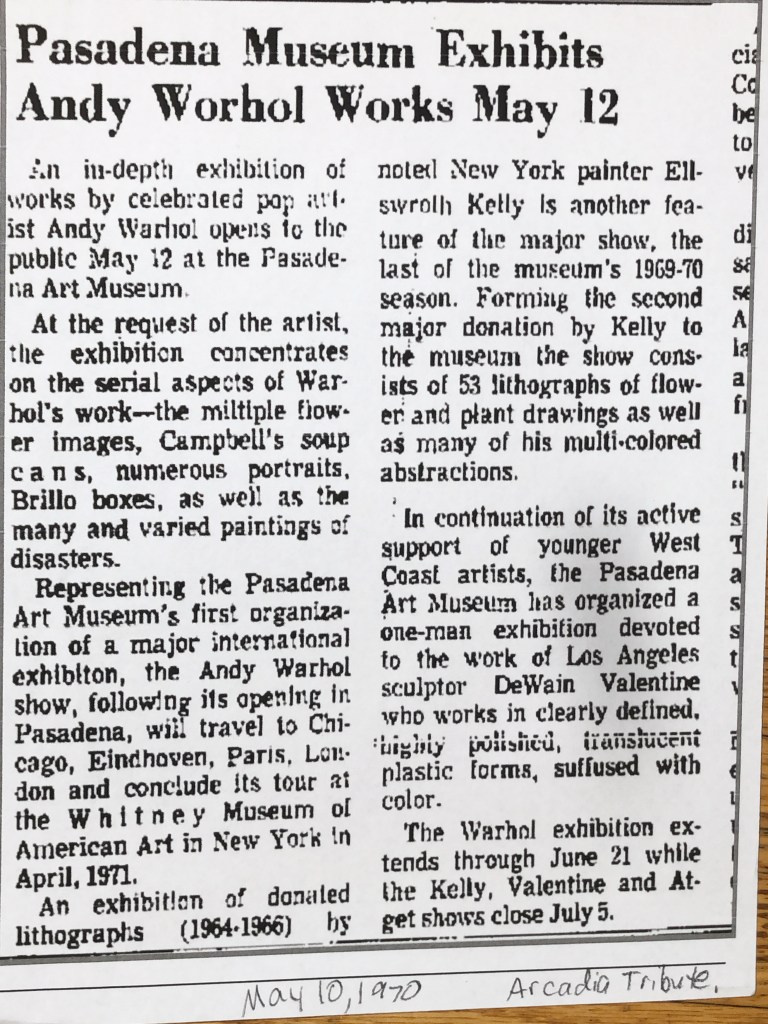
Around May 15, 1970, An appearance by Paige Young at the Pasadena Art Museum (PAM) was recorded by Marvene Jones of the Los Angeles Evening News, and her photographer. Jones’ column, The Social Butterfly, Focused on hip happenings of the LA social set.
The occasion at PAM was a gala opening for the new Andy Warhol exhibit.
Warhol himself makes an appearance, obviously a big deal.
Los Angeles Evening Citizen 5/16/1970

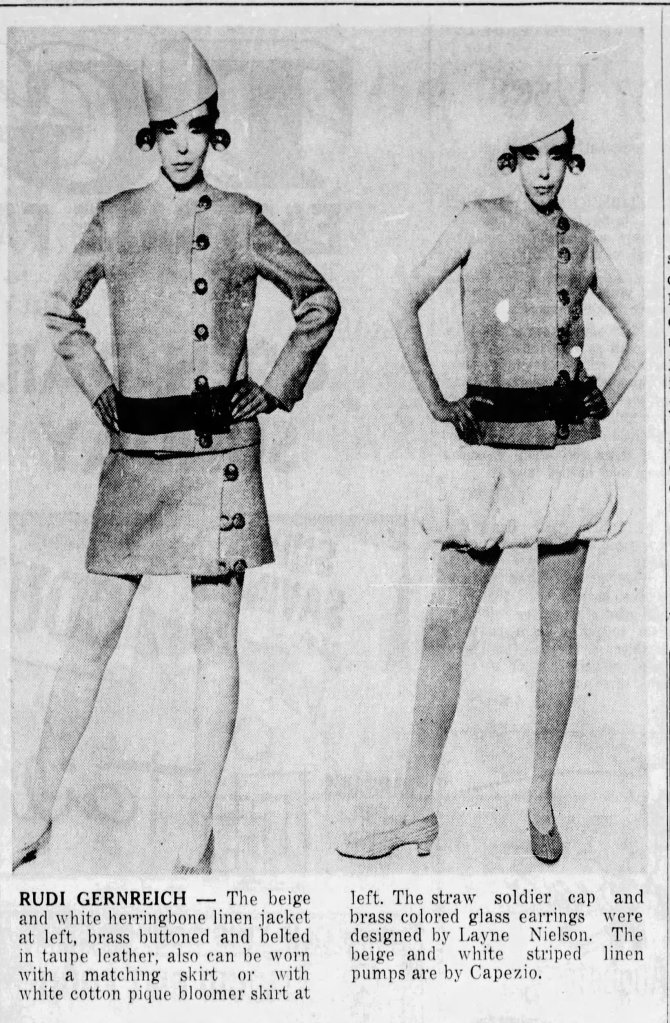
Rudi Gernreich is famous for his aesthetic contributions to fashion in the 1960s.
Did Paige get the dress directly from Rudi? I think so. Paige Young and Rudi Gernreich lived or hung around Venice Beach at the time. Both were guests at Venice Beach artists’ openings. Rudi Gernreich was and is known for his innovative, modern, risque and gender-bending clothing. He is celebrated to this day for his impact on 1960s fashion and way beyond..
At the end of the article, Marvene Jones gossips that Paige removed her Gernreich dress in the VIP area, later in the evening.

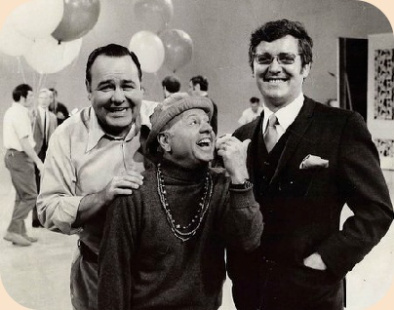
Who is Bill Gardner? pictured with Paige.
From his own website:
William Louis Gardner
William Louis Gardner was born in Minnesota and finished school there. He
Bill Gardner’s website
joined the US Air Force and worked at the Pentagon in the Target Library of the world. Went on to the Pasadena Playhouse to learn television and movie making. He got a job with actress Marion Davies at her home. There He met a movie agent and started a career in Hollywood. William Louis Gardner has worked in Hollywood as the agent, personal secretary, PR advisor and manager for for Mickey Rooney, Jonathan Winters, Jill St.John, Bobby Van and director, John Huston. William Gardner is the author of two books, “Confessions of a Hollywood Agent,” and “The Games End.”
According to the Jones article column 2, Paige Young and Andy Warhol discuss a role for Paige in an upcoming Andy Warhol film.
It’s not something that ever happened. I think the two were making flirty small talk. Ironically, Paige mentions Warhol and the Pop Art scene in an interview with Playboy magazine.
She said about Pop Art “it gives me a headache.” And
“I wouldn’t waste my paint on it.”
Marvene Jones also says that Mr. and Mrs. DeWain Valentine made up a foursome that evening with Paige and Bill Gardner. Valentine had an exhibit showing some of his large cast polyester resin pieces at the Pasadena Art Museum. It was being shown along with the Warhol exhibit.

PAM has been called the Norton Simon Museum since October 1975. (An interesting LA story itself.) Classic Hollywood actress and widow of producer David Selznick, Jennifer Jones married Norton Simon, a very wealthy man. He took over the museum in the mid-1970s.
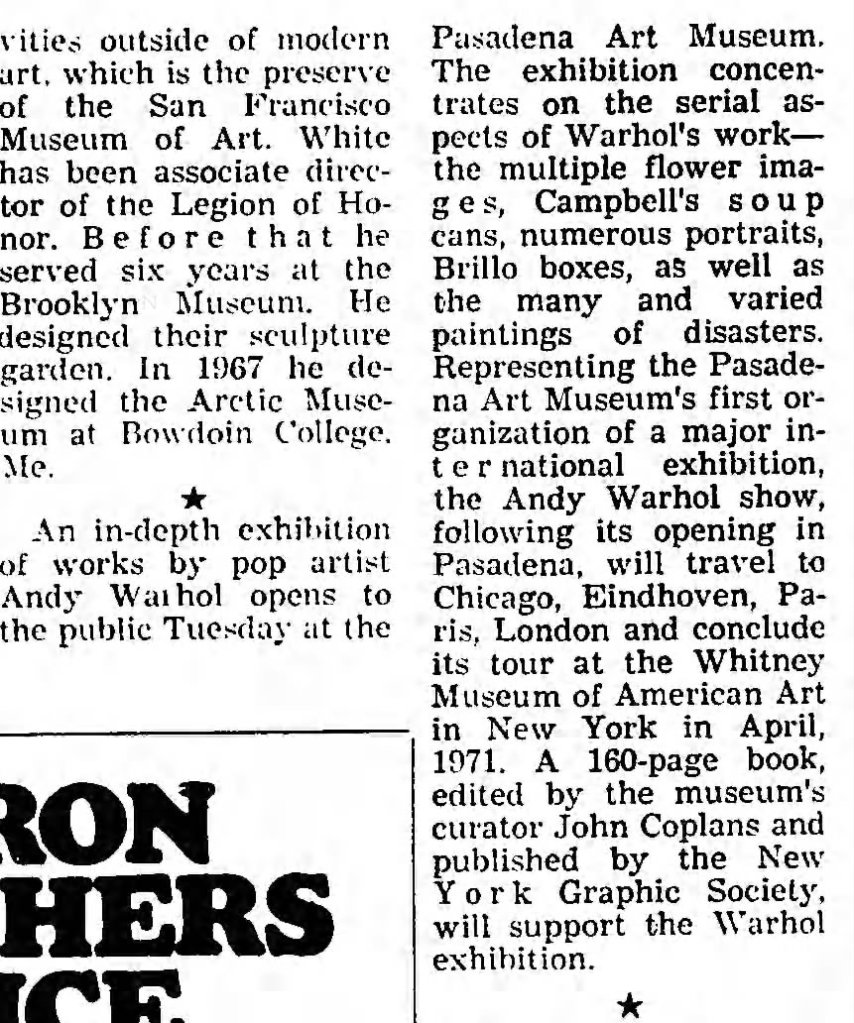
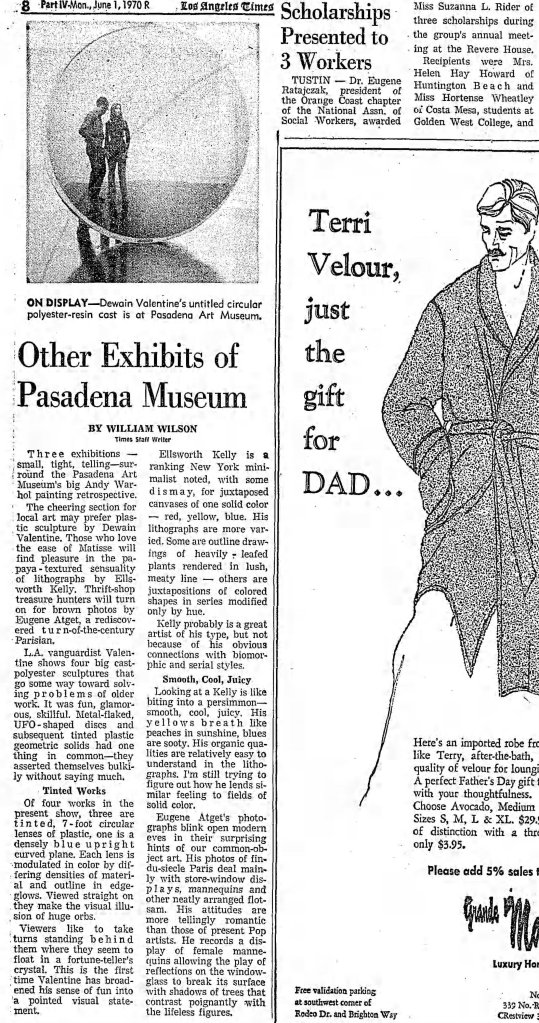
DeWain Valentine, sculptor from Colorado, was a young and rising artist in the 1960s Venice Beach art scene.
Los Angeles Time March 10, 1968.

Valentine is considered one of the innovators of the “Light and Space” art movement. The others include Larry Bell, Robert Irwin, Helen Pashgian, James Turrell, John McCracken, Fred Eversley, and Doug Wheeler.
Many of these artists lived or rented a studio in Venice Beach due to the cheap rent. This was continuing a practice already established by this point in time.

brief Background of the Venice Beach Art scene:

Before the
Light and Space artists emerged in the 1960s,
there was the Ferus Group.
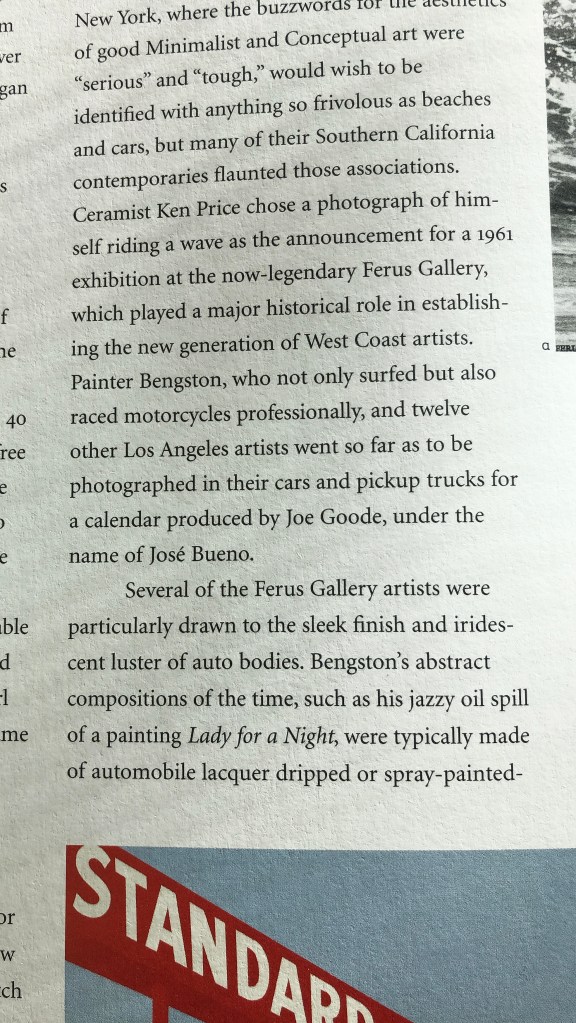
Named so because they exhibited at the Ferus Gallery, which opened in 1957.
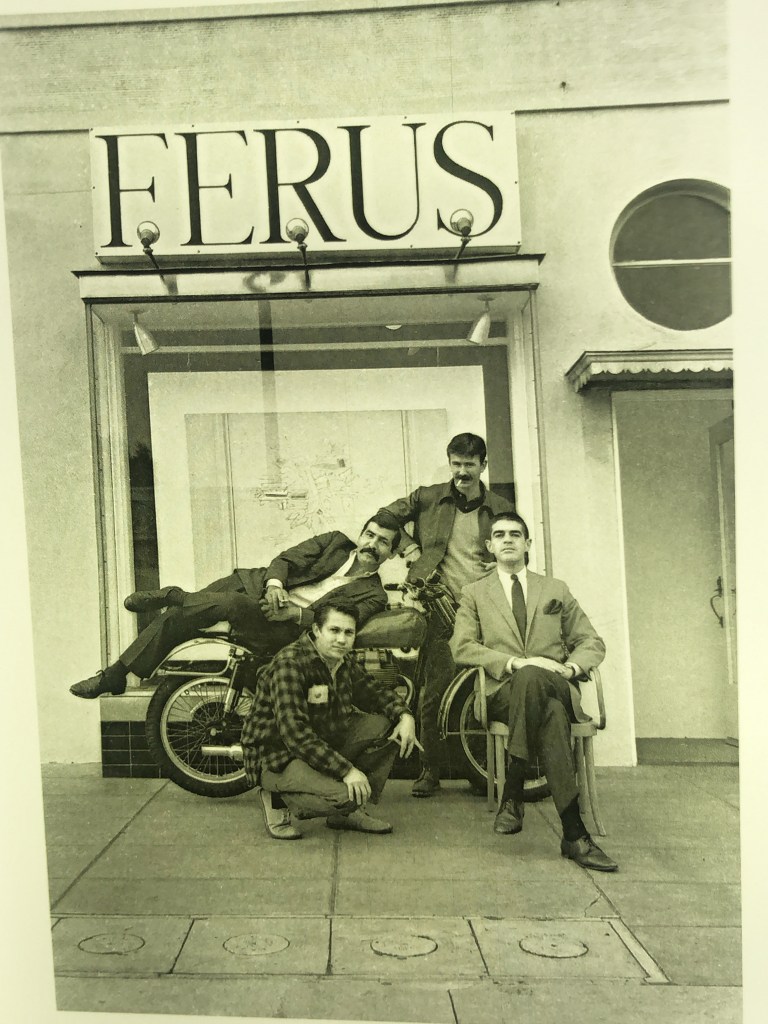
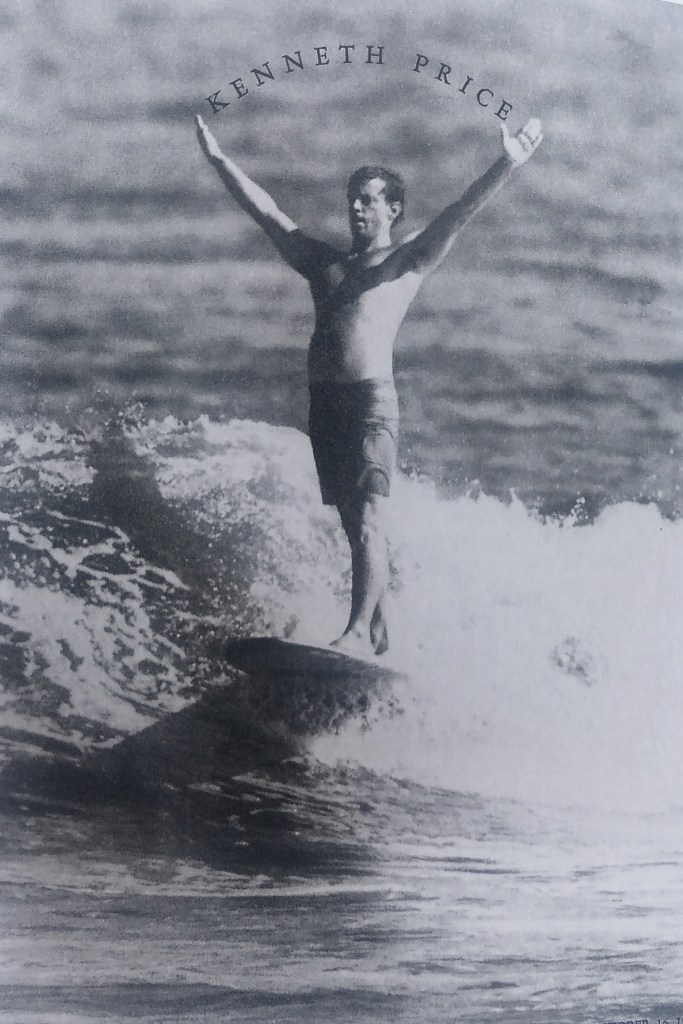
The Ferus Group includes California based artists: Ed Keinholz (original part-owner of the Gallery), Wally Berman, Billy Al Bengston, Ed Ruscha, Larry Bell, Robert Irwin, Ed Moses, Craig Kauffman, Ken Price and John Altoon.
Artists Jay DeFeo and Sonia Gechtoff from San Francisco.
Ferus Gallery included New York artists in their exhibits: Andy Warhol, Robert Rauschenberg, Roy Lichtenstein, Frank Stella.
The curators and owners of the Ferus Gallery who helped bring them to renown are Walter Hopps and Irving Blum.
Hopps had the eye for cutting edge art.
Irving Blum was good at selling the art.
Many of southern California artists lived in Venice Beach.
The Ferus Gallery gang interacted with Andy Warhol during his well documented stay in Los Angeles in the early 1960s.
Warhol drove with actor Taylor Mead, assistant Gerard Malanga and painter Wynn Chamberlain from NYC to LA.
It was Warhol’s very first trip to LA.
The trip plan was to catch opening night for Warhol’s 2nd exhibit at Ferus. His Campbell’s soup can collection has already shown there to jeers and laughter.

The Southern California artists were allowed to live and create far away from the critics and competitors of the Art world.
They found freedom outside of New York City.
Ed Moses once said “No one cared what we were doing.”
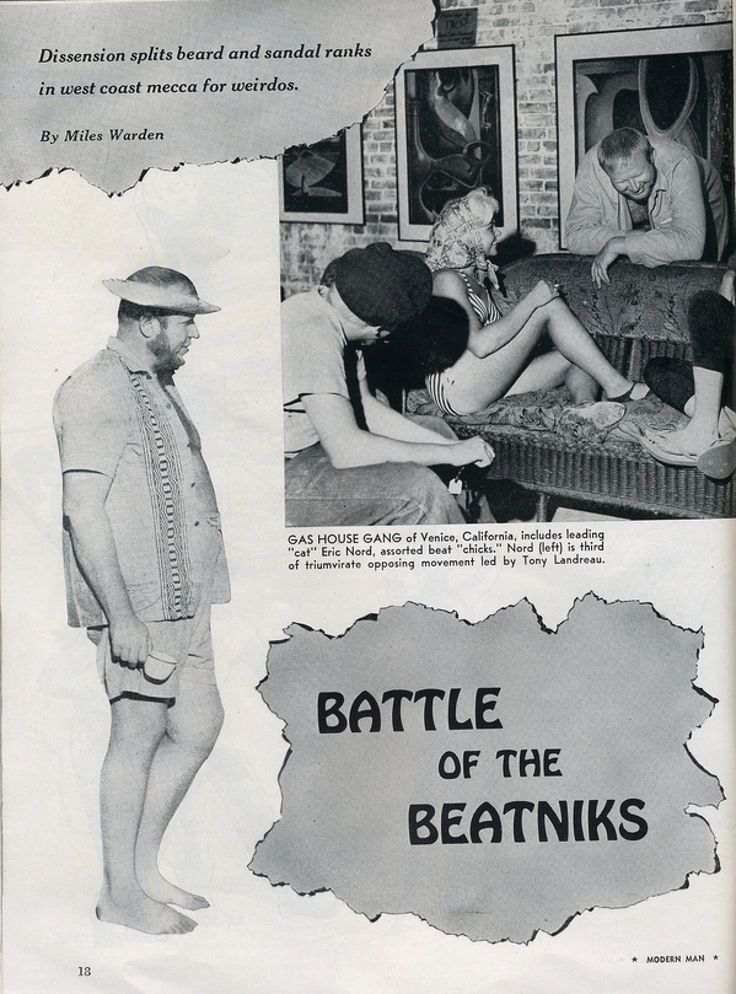
Alongside this growing art scene in Venice Beach in the 1950s and early 1960s, the “Beatnik Scene” was happening.
Author Lawrence Lipton documented and helped popularize Beats and Beatniks into a popular culture trope. More on this soon.
The hotspots for Beats and Beatnik culture:
Venice Beach and Hermosa Beach communities in LA, North Beach in San Francisco and Greenwich Village in NYC.
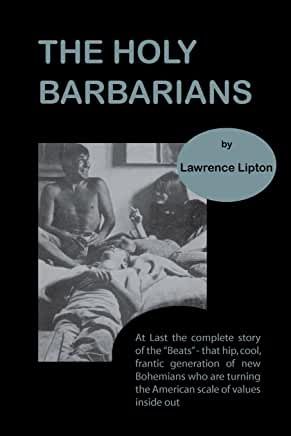
In 1959 Lawrence Lipton published The Holy Barbarians, a seminal work that served as one of the first comprehensive “insider” accounts of the Beat Generation. Lipton, a poet and critic, lived in Venice, California—an area he dubbed “Venice West“—and functioned as a “father-confessor” and chronicler for the local Beat community. PBS SoCal
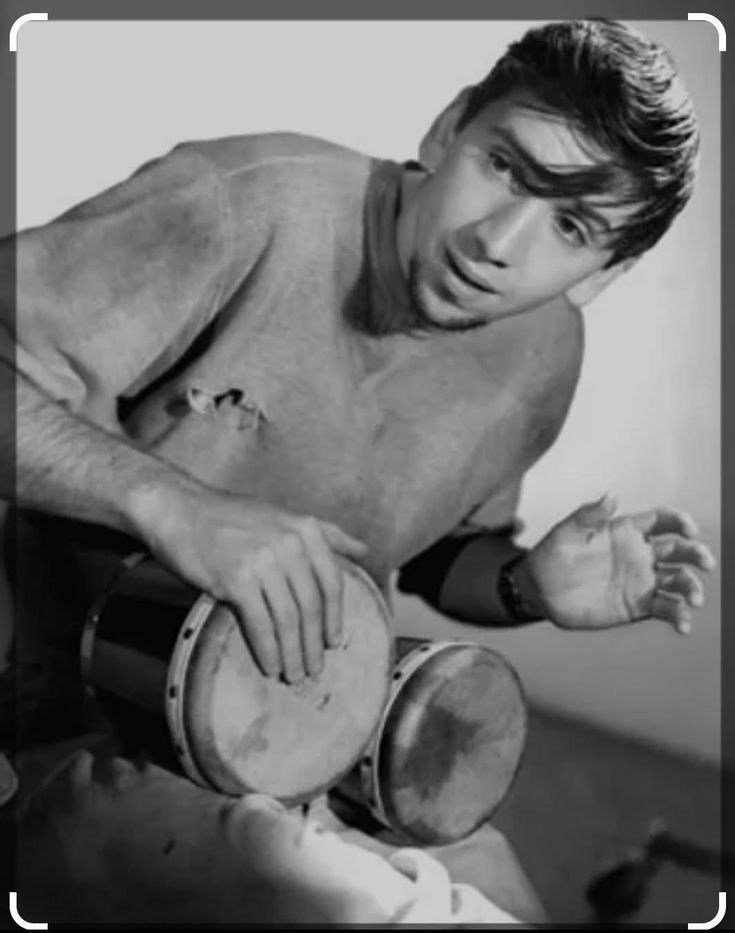
Bob Denver as Beatnik Maynard G. Krebs in the TV show The Many Loves of Dobie Gillis. 1959-1963. The Krebs character helped to create the trope of the Beatnik in popular culture. Bongo drums were essential.
Movies:
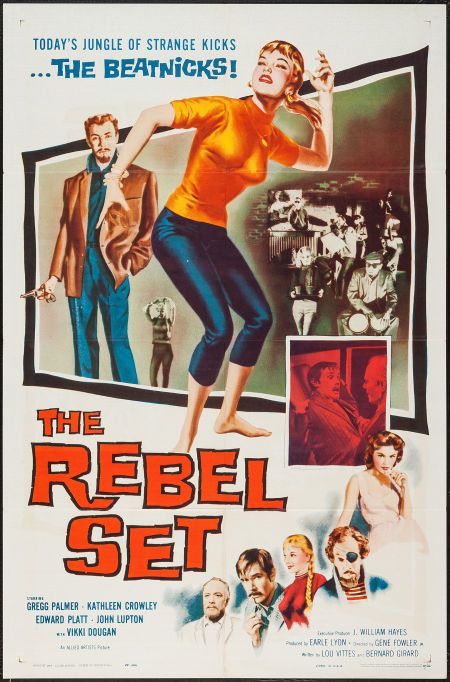
1959 Mr. Tucker, proprietor of a Los Angeles coffee house, hires three down-on-their-luck classic beatnik patrons. They are out-of-work actor John Mapes, struggling writer Ray Miller, and George Leland. George is the wayward son of movie star Rita Leland. They agree to participate in an armored car robbery. This occurs during a four-hour stopover in Chicago on the trio’s train trip from Los Angeles to New York. Mapes’ worried wife Jeanne joins him on the train, concerned about his not having had a job in more than a year. (wikipedia)
Disappointingly, The Rebel Set is not about Beatnik culture.
The film begins in a Beatnik coffeehouse with Beatnik patrons. Two of the patrons are struggling actors. They are recruited to join in an armored car heist in Chicago.
The group of Ferus artists were organizing as a Cultural force at the same time the Beatniks were becoming a pop culture force.
Over the next couple of years, Ruscha fell in with the artists orbiting the Ferus Gallery, which opened in 1957 on La Cienega Boulevard in West Hollywood. Founded by the curator Walter Hopps, his wife Shirley Hopps, and the artist Edward Kienholz, Ferus quickly became the ground zero of Los Angeles art, hosting exhibitions by Kienholz and a roster of talents that included John Altoon, Larry Bell, Billy Al Bengston, Robert Irwin, John McCracken, and Ed Moses, as well as Ruscha. Stylistically they were a diverse lot whose efforts ranged across figuration, Expressionism and Minimalist abstraction and this was no less true of Ruscha’s output, which ran the gamut from Pop Art to conceptualism. ART NEWS Nov. 2, 2023. Article about Ed Ruscha by Howard Halle.
The Ferus ‘Studs’ the new generation of artists, young abstract painters, ceramicists and assemblage makers who had been flying under the wire now were the featured artists at the Ferus Gallery. The Gallery was ripe for the adventurous artists who would set the new bar in contemporary styles. The Ferus Gallery had belief in the performance of their work and was one of the first galleries to support it.
Ferusgallery.com

END
The Light and Space or Finish Fetish art movement was born in the mid-1960s.
DeWain Valentine was a key player along with Larry Bell, Doug Wheeler and Robert Irwin, Helen Pashigan, Peter Alexander and more.
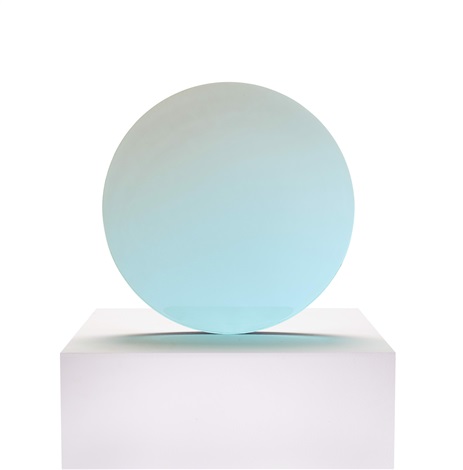
Originally from Ft. Collins, Colorado, Valentine developed a type of polyester resin material. This material allowed him to make large scale pieces like the one you see here.
Previously, the material would crack when making a piece this size: approx: 17 1/4x 17/4 x 7/8.
Valentine was a newcomer to Venice Beach compared to the others artists, he arrived with his wife Darlene and sons in 1965.
He had been hired to teach a course on plastics at the UCLA Extension program.
From my reading, he experienced a rapid success on the West Coast.
For much more detail on these art movements which established the Los Angeles art scene as one on par with New York City or even Europe, watch the documentary “The Cool School, ” available on Netflix.
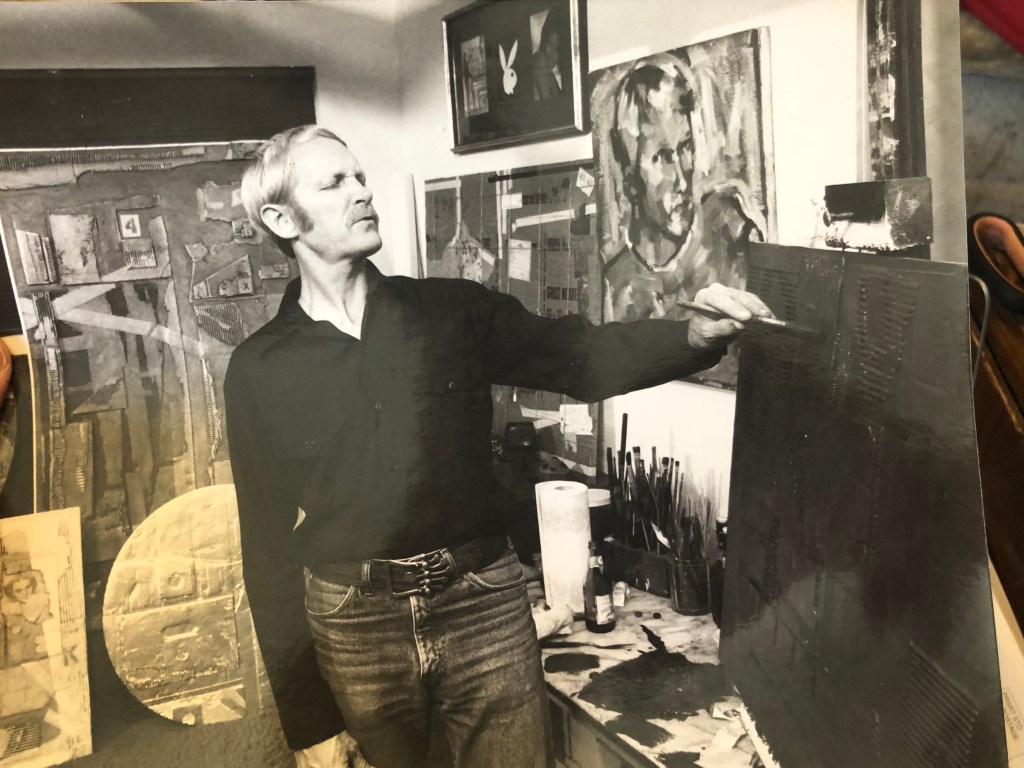
Richard Sample
Told me that after he moved to a studio-home in Venice (late 1960s), he invited Paige to live with him.
Richard’s father is artist and western jewelry maker, Charlie Sample. He was able to get Richard the studio space in Venice Beach.

I asked Richard the location and he said he could not remember it, but that it was quite close to the ocean and his artist neighbors and friends were, DeWain Valentine and Larry Bell. (See chapter: Interview with Richard Sample)
Paige refers to her “new Venice art studio” and discusses the art scene there in several interviews with Playboy magazine and US newspapers in 1969 and 1970. (See chapter: Most Public Year 1969)


De Wain Valentine, Concave Circle Blue Green, 1968–2017. Cast polyester resin, 23 1/2 x 23 1/2 x 9 7/8 inches. © De Wain Valentine. Courtesy of the artist and Almine Rech. Photo: Melissa Castro Duarte. Brooklyn Rail.
Richard Sample and Paige Young joined the community of Venice artists. They were “not working with the new materials,” to quote Paige in an interview. She was referring to her neighbors and friends, Valentine, Bell, Irwin, etc.

A female friend does remember Paige talking about her Venice art studio. For the most part, I have confirmed that Paige’s Playboy publicity about her personal life mostly aligned with the truth of her real life.
She did live in Malibu as her Playmate feature and interviews state. However, technically it was the southern end of Topanga Canyon near the beach across the Pacific Coast Highway. So Topanga Beach?
Paige mentions Venice Beach as an “art colony,” where she now lives.
Philadelphia Inquirer Jun. 27, 1969

I found the location of this Venice studio:62-68 Market St.
Research and interviews show that artist Robert Irwin lived across the street from Valentine. His name was not mentioned by Richard Sample.
At one point I asked Richard if he “knew Ed Ruscha or Robert Irwin” and some others. He did not recognize those names, he was certain about Larry Bell and DeWain Valentine.
Richard Sample’s niece Ellen Sample remembers visiting her uncle and grandfather Charles Sample at the art studio/home in Venice Beach. Charles Sample was a jewelry maker and had a retail storefront in addition to his studio.
Ellen, a child at the time, remembers hearing frequent talk about a man named “Valentine.”
Richard and Ellen both recalled being able to see the beach from the studio. 62-68 Market St., a block from the ocean, is a large structure. Many artists rented their own studios according to Ellie. This is why the address lists a range of numbers.
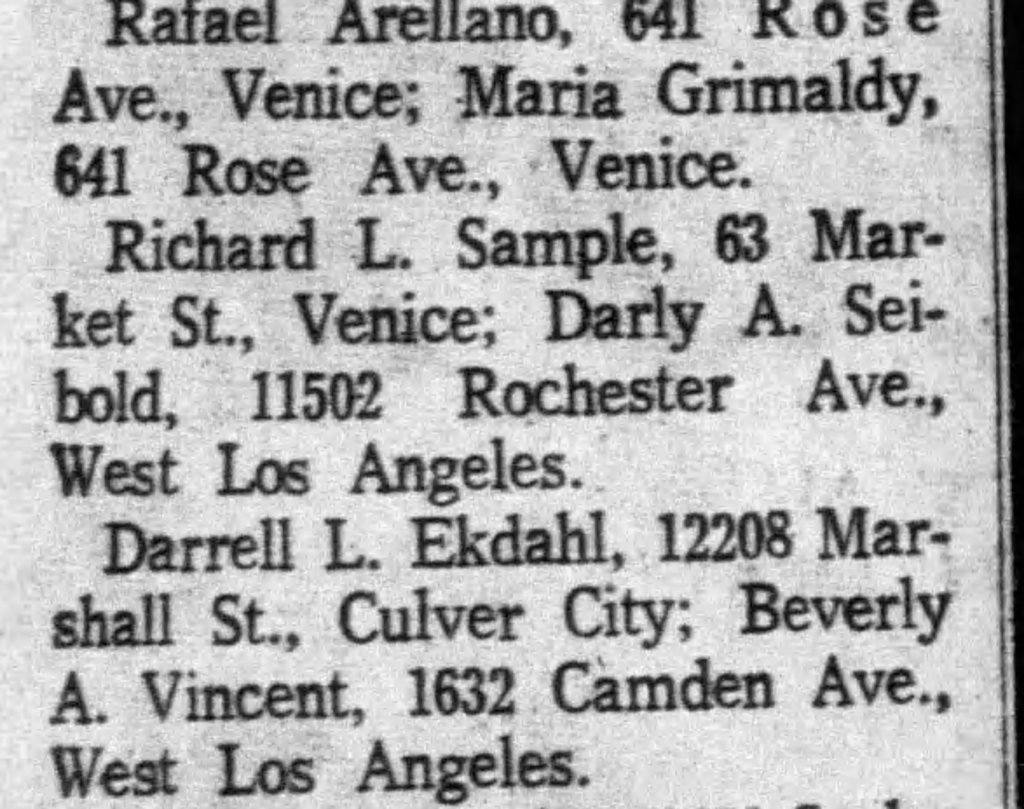
Richard Sample is listed with an address of 63 Market St. Venice, in a newspaper marriage announcement, 1968.
Ellen texted me a story: she thinks her Uncle Richard sublet the Venice studio to Paige at one point.
Ellen recalls “tensions” about Paige among Ellen’s aunts.
These women were the wives of Charles Sample and his sons.
Ellen said her own mother was not bothered by Paige living at the studio. However, her mother did “go with her sister-in-laws to see what was going on at the studio.” Ellen says the most tense time was when Paige’s Playboy issue was current and shortly after. (This would have been November of 1968 and 1969. In 1969 Paige was frequently traveling all over the US to promote her photos published in a”current” issue of the magazine.
Richard Sample told me he was forced to ask Paige to leave the Venice studio because she never paid him rent. (See chapter Richard Sample interview)
I have learned that Paige was not a good manager of money.
I asked Ellen if it was a possibility that Richard felt pressured to ask Paige to leave due to the tension with the women in the family.
Ellen said she thought it was possible, but just didn’t know for certain.
DeWain Valentine has spoken about his Venice studio in several art magazine interviews and the influence it had on his art.
Mrs. Darlene Valentine told me in a telephone conversation that Paige was one of many women Valentine “slept with” or “dated” during those days.
She remembered the night at the Pasadena Art Museum, but not specifically that she double dated with Paige. She does remember that Warhol superstar Ultra Violet was along with Warhol.
She does not recall meeting Bill Gardner, Paige’s date of the evening.
DeWain Valentine fondly remembers the friendships with his many fellow artists. He had a special connection with Larry Bell and Robert Irwin. This was particularly true during the 1960s and early 70s.


DeWain Valentine above states that he lived in and eventually purchased the 62 -65 Market St.
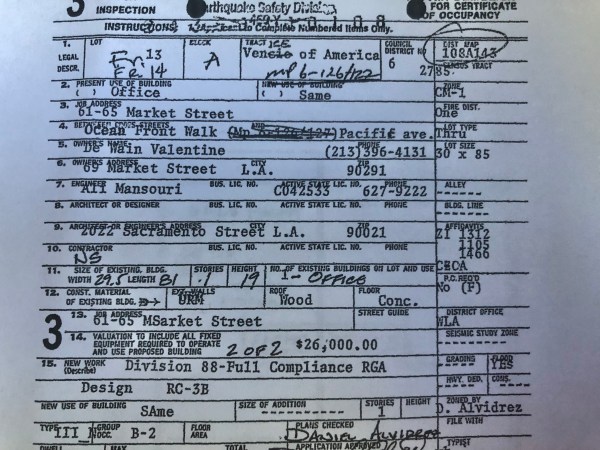
61-65 is the address listed here.
And indeed, several records with his signature and name can be seen in public building archives from LA County. They are now available online.

DeWayne Valentine spent many years living and creating art in Hawaii after the 1970s.
When he moved back to LA from Hawaii, it was to a large studio and home in Gardena.
.
From the Documentary “The Cool School.” Market St, where Valentine, Bell and Irwin, probably others, had art studios. Richard Sample and Paige Young made art and lived, briefly. Paige lived or rented the studio space for about one year. When she could not pay the rent for several months, Richard Sample “had no choice but to ask her to leave.” When he went to tell her this, Sample found her living on a houseboat in Marina del Rey.
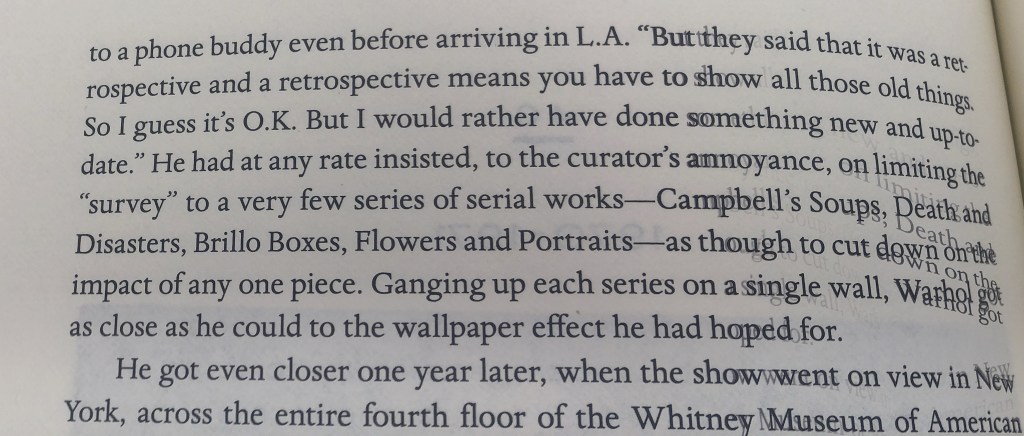
From an 800-page + biography of Andy Warhol.

I have uploaded these paragraphs from the Warhol Biography describing the night Paige attended the Warhol opening at PAM, written up in the Social Butterfly column.
Notice the sentence “Specimen Days, a comedy about Walt Whitman’s time as a Civil War Nurse.”

<<<<<<<<<From the Marvene Jones column above. Andy’s new movie idea, Specimens of Man.

Family History #1:Teens, 1920s. Vaudeville. Joseph And Roxy LaRocca. Peoria. Virginia & Josephine Young. SLC. The Great Depression. Oakland.
Posted on May 2, 2020
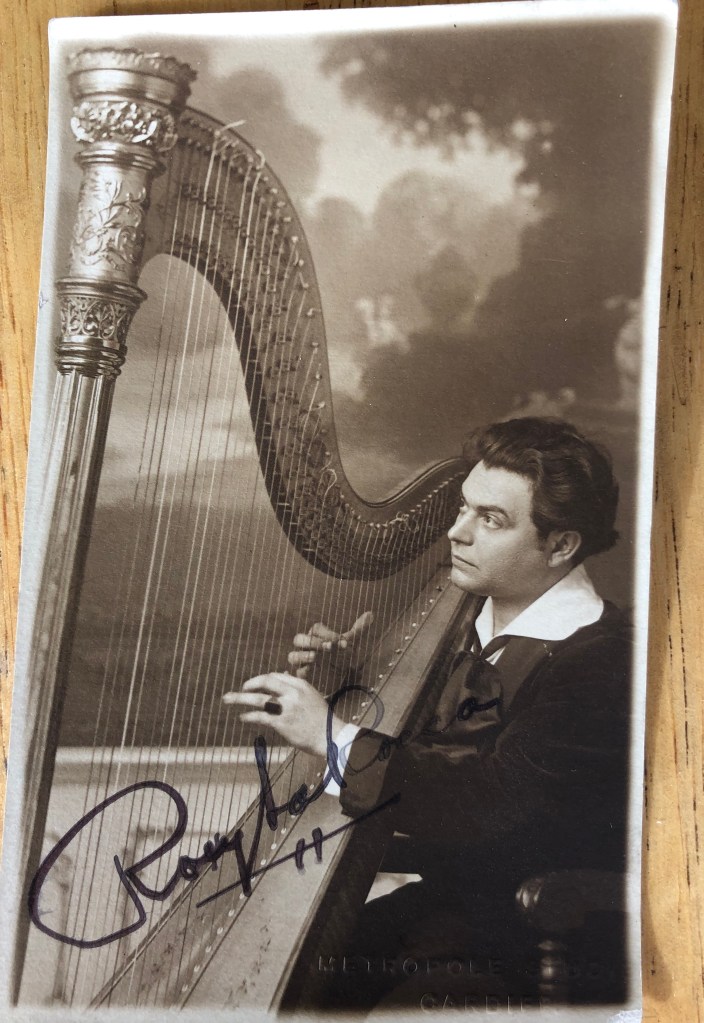
Family Background In Vaudeville:
Census records, military records, and local directories reveal that Joseph Ned LaRocca was born in and lived in in Peoria, Illinois.
He was Diana Cotterell’s grandfather.
Known as “Ned,” Joseph Ned LaRocca was a harpist in a family of several musician brothers and one sister named Kathryn.
His father was Salvatore LaRocca. “Sal” a harpist from Italy who settled in Chicago. He raised a family in Peoria with Rose Ann, born Dunufrio.
According to Find a Grave website, the couple moved to Peoria when Salvatore was offered the leadership of a local Italian band: Marino’s:
Emigrated in 1872. Married Anna Rosalia Denufrio in 21 Dec 1879 in Cook Co, IL. In 1900, this family lived in Peoria. The children included: Roxie (1886), Katie (1890), Frank (1893), Joseph (1895), Nickolas (1897), and Paul (1899). Listed in Peoria City Directory by 1892. He was a musician, specifically, a harpist in Marino’s Italian Orchestra. It’s hard to read the marker, but Anna is listed as his widow in the 1907 Peoria City Directory. Anna and most of his children are buried at St. Mary’s Cemetery in West Peoria. Find a Grave.
Salvatore LaRocca, died at age 52 in 1906, according to records from Peoria listed on ancestry.com.
I have found a few articles about Marino’s Italian Band. UPDATE SOON. Salvatore.
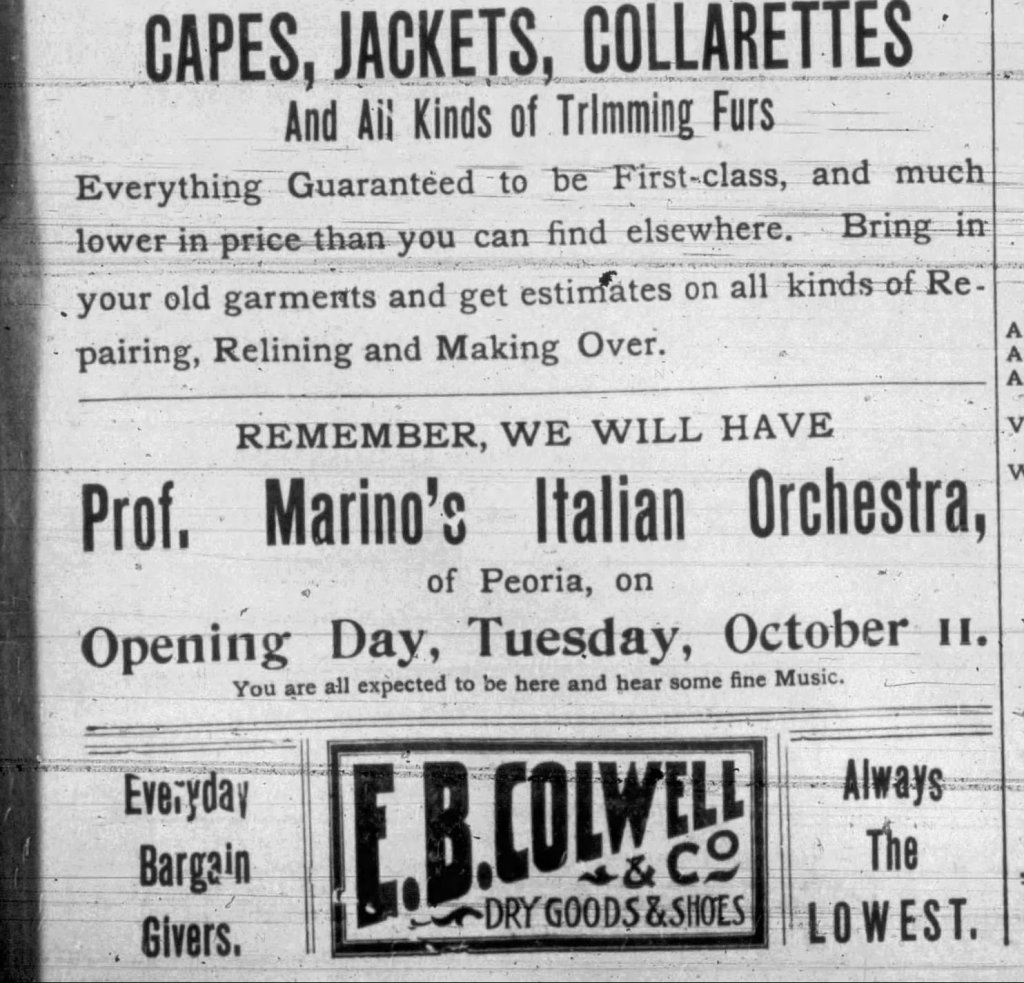
As of 2025, the traditional department store is on it’s way out. Mostly, anyway.
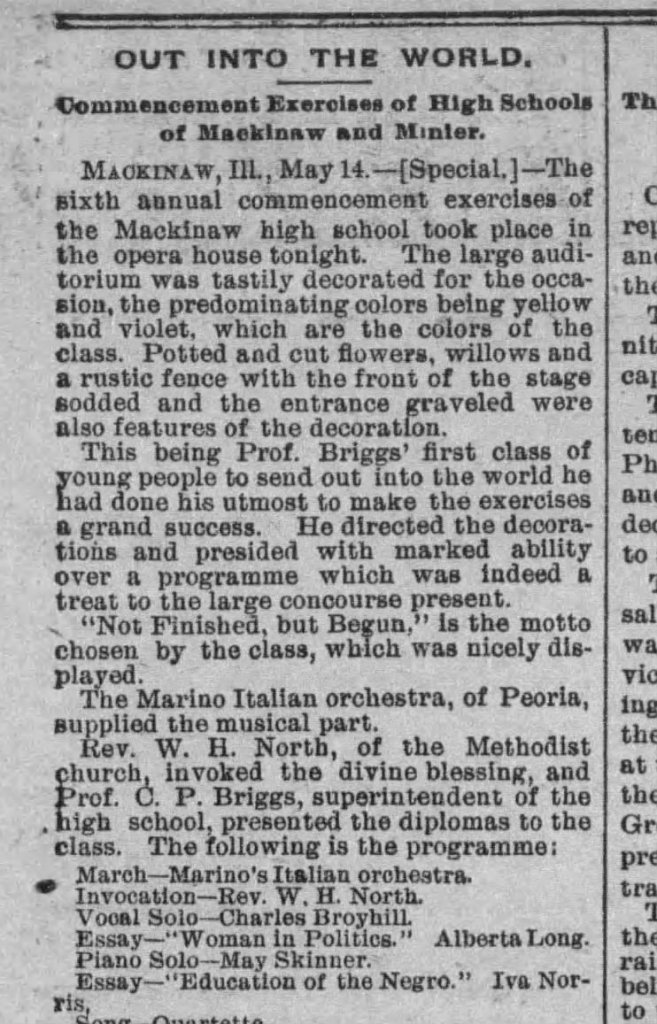
High School commencement ceremonies at an opera house in Mackinaw, Illinois. Marino’s Italian Orchestra from Peoria provides music.
The Weekly Pantagraph, Bloomington Illinois. May 21, 1897
<<<<<<<<<<< Sal LaRocca’s band participates in a graduation.
<<<<<<<<<<< Marino’s plays a march.
There are a few more articles about Marino’s playing around the state of Illinois, mainly.
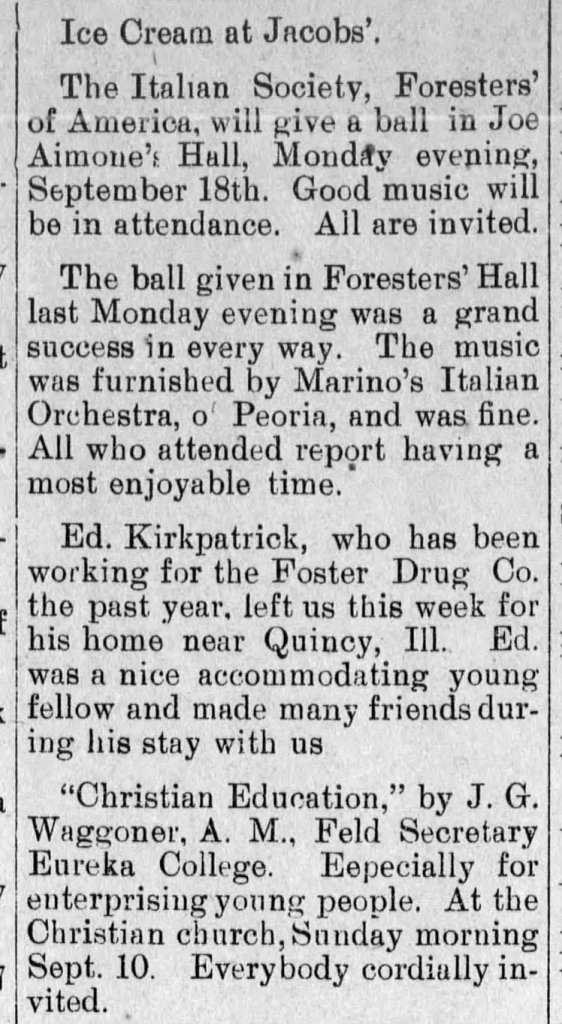
Marino’s plays at an Italian Society in Toluca, Illinois. Toluca Star Sept. 8, 1899.
In the early 1950s, Ned would settle his family in Studio City, California, located near the famous Toluca Lake, California. Known as the home of the Bob Hopes.
According to the 1910 census
Ned and his brothers were living in Chicago with their widowed mother Anna, at 1245 Ohio St.
Ned LaRocca’s profession is listed as musician and age is 16 yrs.
His older brothers were listed as musicians also, the one sister Kathryn, a telephone operator.
The family returned to Peoria at some point.
Roxy LaRocca, the oldest La Rocca brother, was the family’s most commercially successful brother.
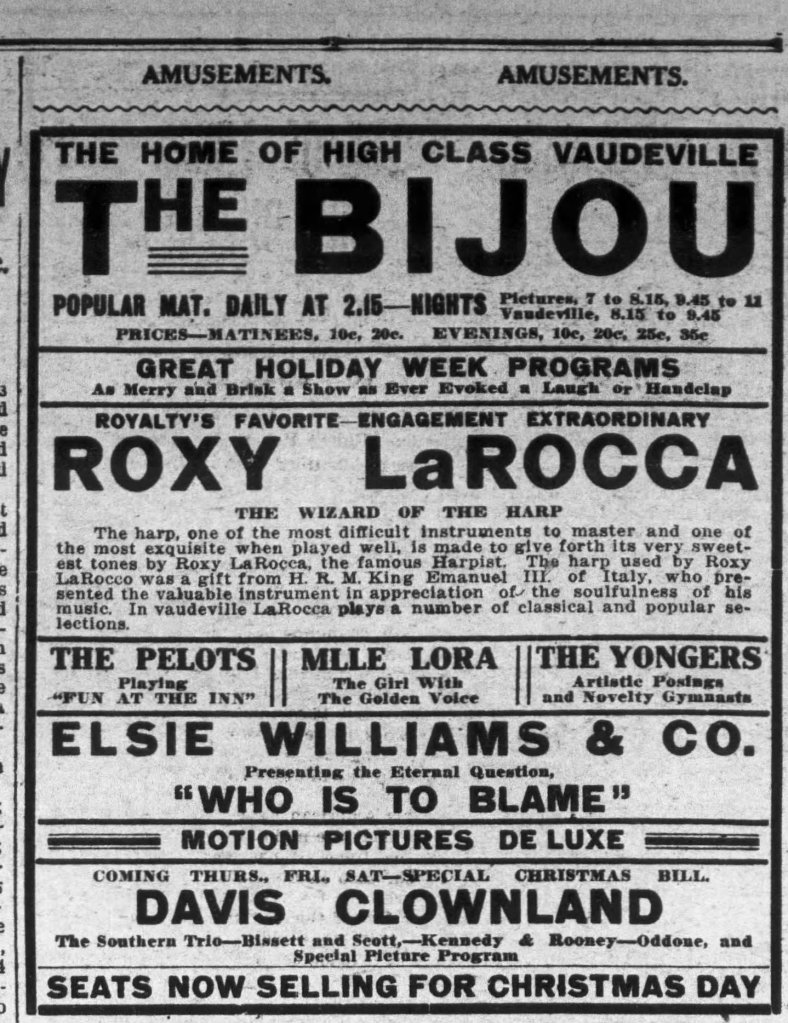
December 20, 1915 Bangor, Maine. Vaudeville was still a popular entertainment form this year.
Roxy was a famous-at-the-time Vaudeville harpist, known affectionately as the Wizard of the Harp.
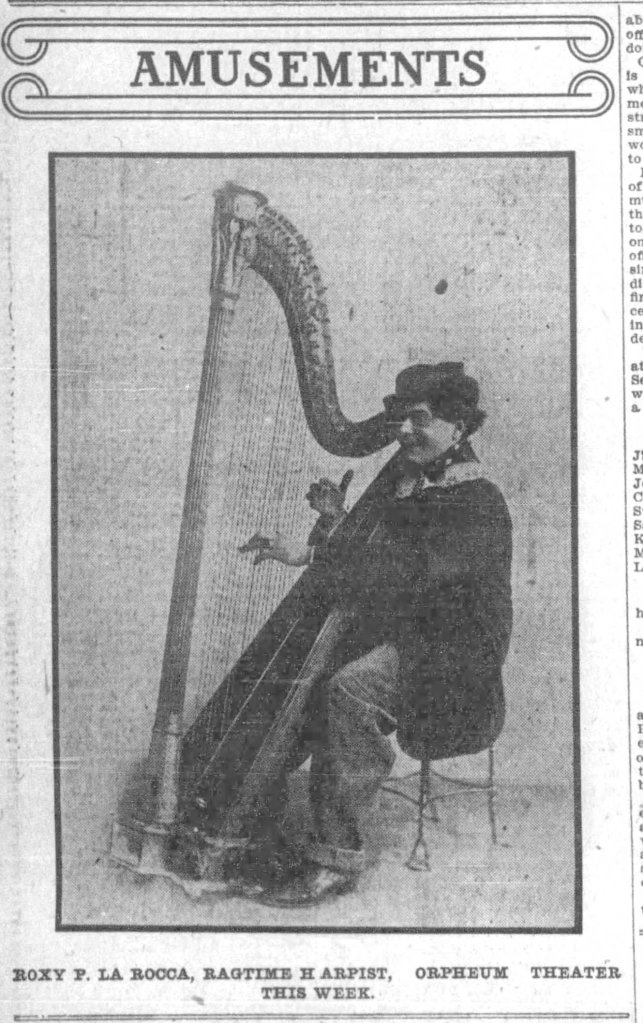
Florida Times-Union Aug. 28, 1911 Roxy on the the prestigious Orpheum Vaudeville Circuit.
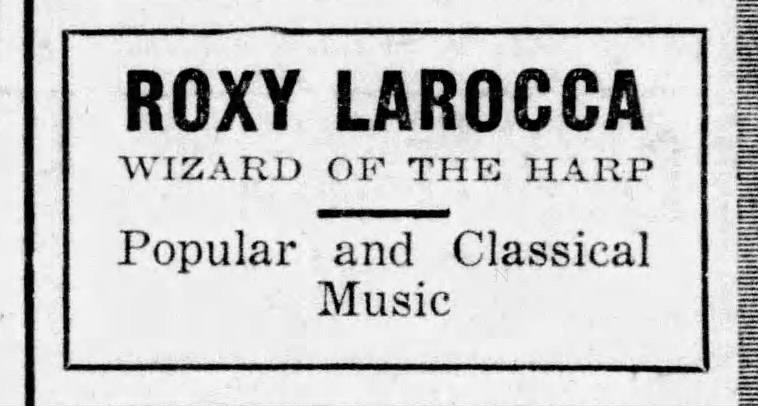
He had several other monikers during his long career on stage.
Roxy’s name made it across the nation when he broke a record for longest harp playing.

May 25, 1923. Middlebury, Vermont Register.

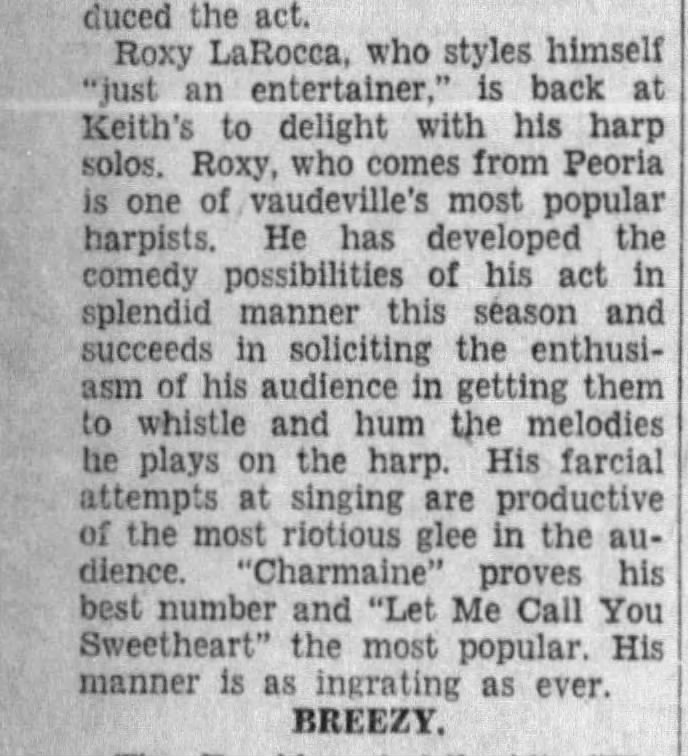
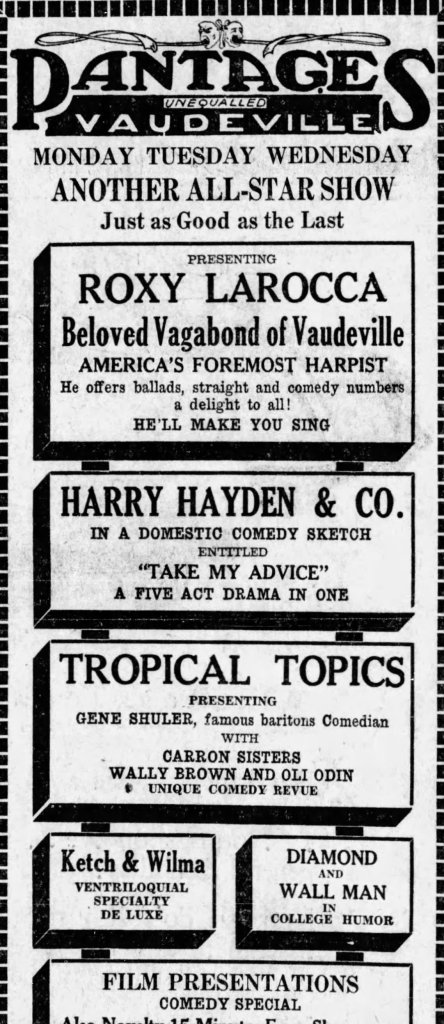
Roxy and Ned both toured with major vaudeville circuits like Orpheum and Pantages in the 19-teens, 1920s and 30s.
None of the LaRocca brothers became quite as well known as Roxy.
Ned La Rocca
is Diana Cotterell/Paige Young’s grandfather and younger brother of Roxy.
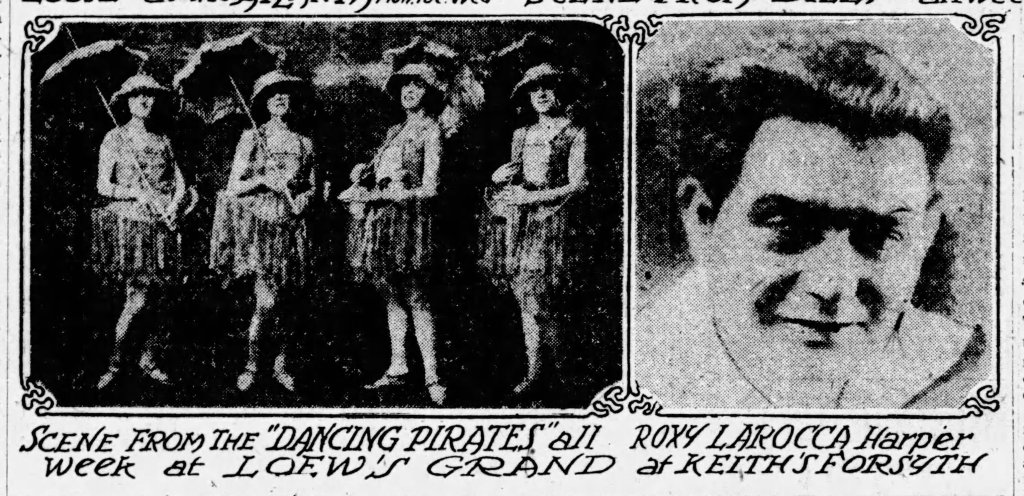
Ned’s instrument is the harp, just like brother Roxy and father Salvatore.
Ned often used the professional name Ned Argo or just plain Argo.
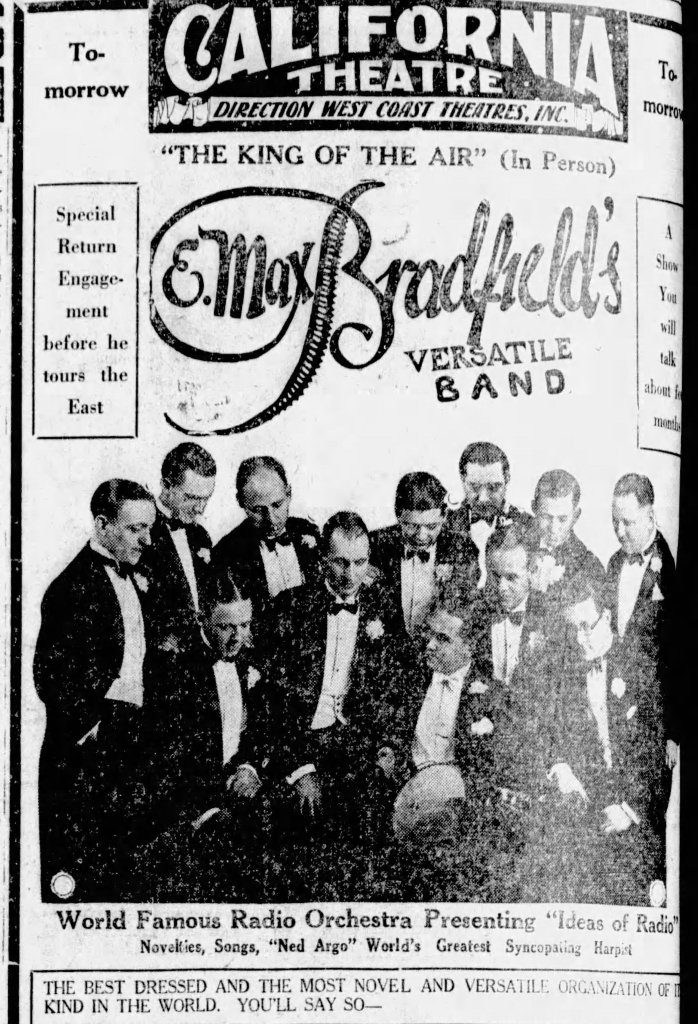
Vaudeville was beginning to slide as a live entertainment form in the 1920s.
“Moving pictures” and Radio continued to chip away at the popularity of Vaudeville.
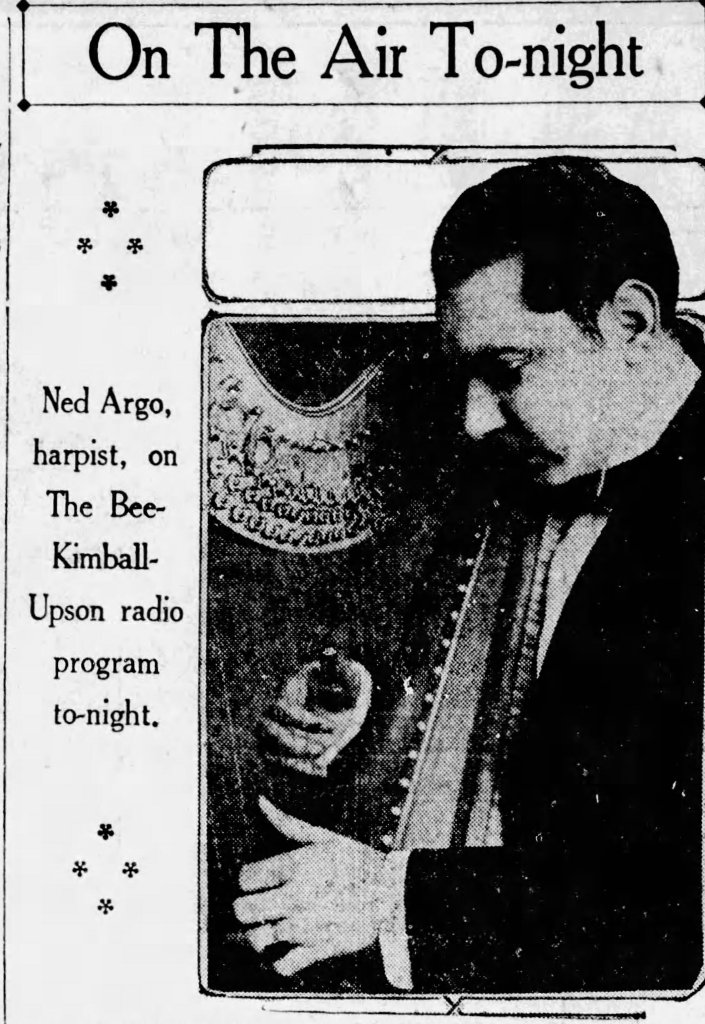
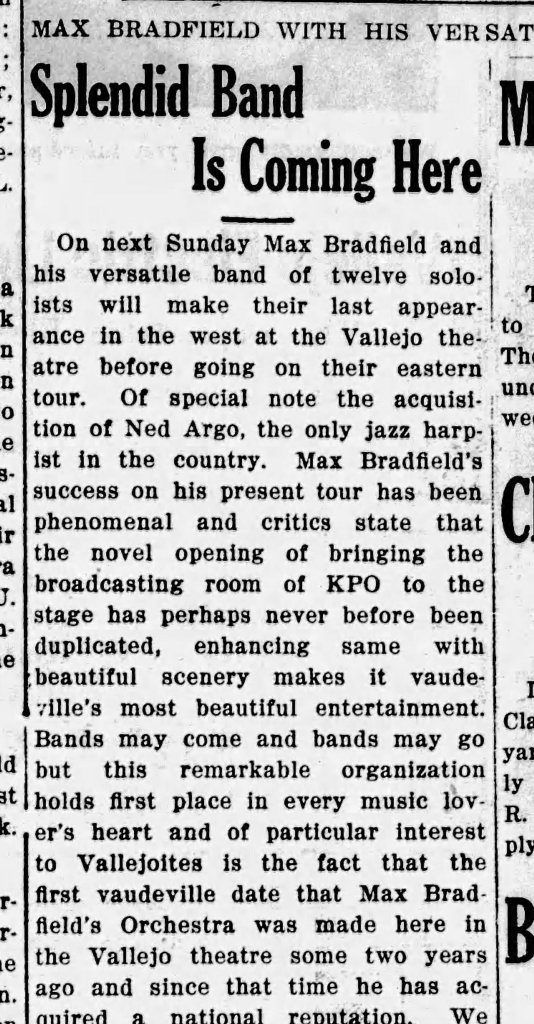
Ned was to have a future in performing with his harp for radio broadcasts in Los Angeles. More on this later.
RCA Corp. did a study in 1925 and found that 19% of homes had a radio. In 1930, it was 40%.

Part of the Salt Lake City drama and music community, Virginia and her sister Josephine were touring Vaudeville performers while still teenagers. (Not uncommon at the time.)
The sisters’ mother was named Josephine Young.
She died when her daughters Virginia and Josephine were in their early teens.


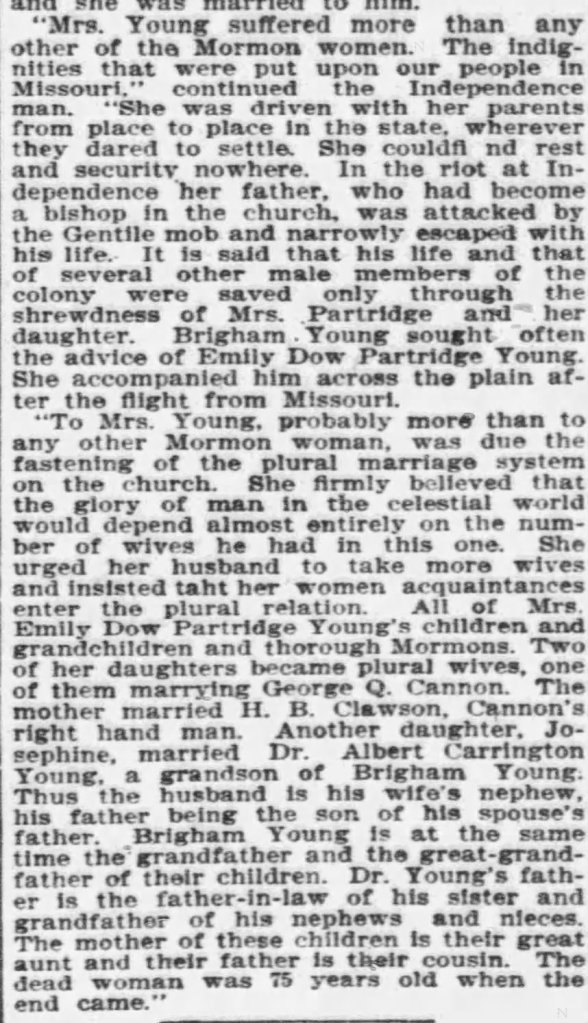
Virginia and Josephine’s grandfather was Brigham Young, head of the Mormon church aka LDS or Church of Latter-Day Saints.
The girls’ grandmother was one of his many wives: Emily Partridge Young.
If you google Emily Partridge Young, you will see that she and her sister Eliza hold a significant place in LDS history.
The sisters were among the first “plural wives” of founder Joseph Smith.

The youngest two daughters of Josephine and Albert Carrington Young: Josephine and Virginia.
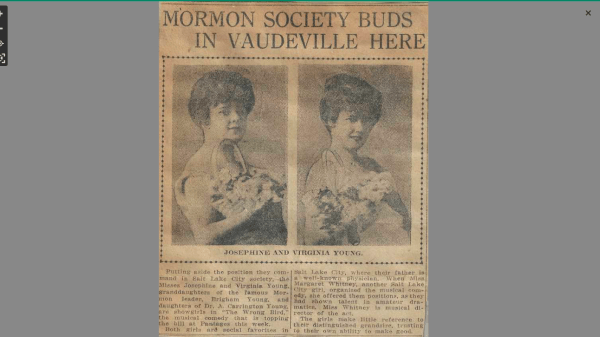
Who survived to adulthood that is.
(From a Mormon genealogy website.)

Virginia and Joseph Ned LaRocca marry.
This states how they met on the Pantages circuit.
The musical play The Wrong Bird was written by Margaret Whitney, of the theater and music circles in SLC. Whitney was noted as a successful “girl composer,” by several news articles at the time. The homestate Utah newspapers offered generous coverage to Whitney’s career, The Wrong Bird and later on, Shadow Girl.
Pantages picked up th and the SLC based troupe toured on the circuit of Pantages owned theatres
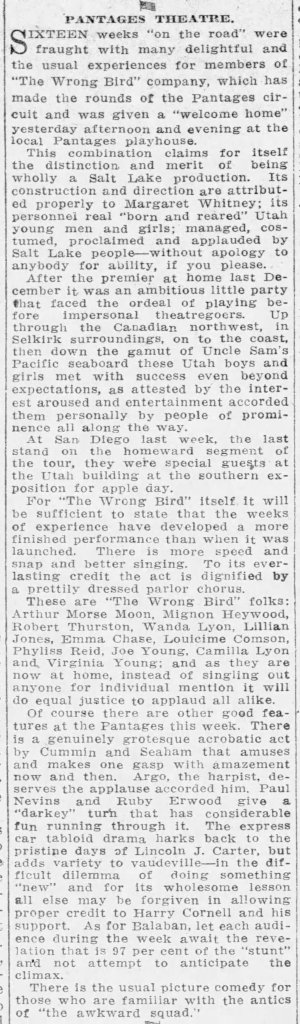
Virginia Young and Ned Argo are both on this Pantages bill. His harp act toured with The Wrong Bird. Local Pantages Playhouse in Salt Lake City.
Salt Lake Herald Apr. 1, 1915
<<<<<<<Virginia Young listed as a player. Josephine is Joe here.
<<<<< Argo the harpist on the bill.
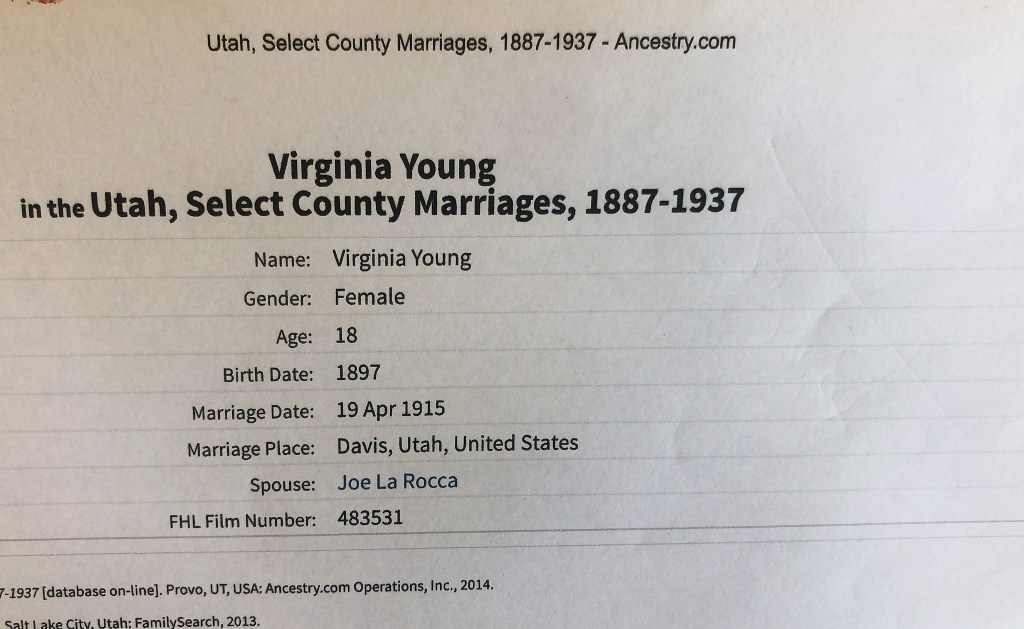
The married couple form a vaudeville act. They tour the US in the late 19–teens. They perform through most, if not all, of the 1920s. Ned continues to use the name Ned Argo or Argo. Virginia uses several different names. Jean Virginia is one. Verjenia is another.
Article about Wrong Bird star, Josephine Young.
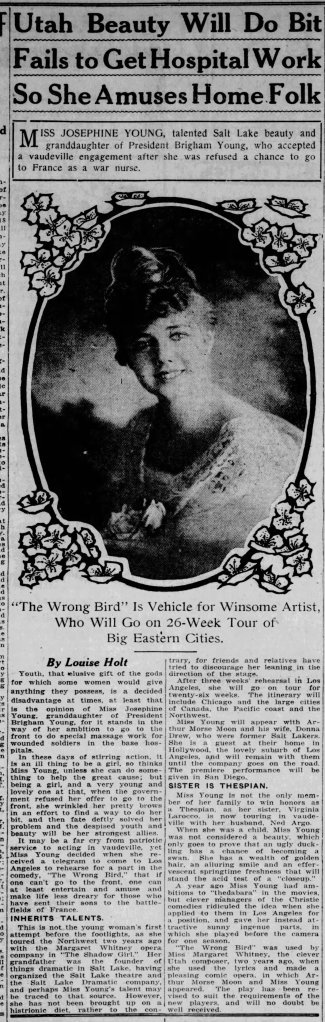
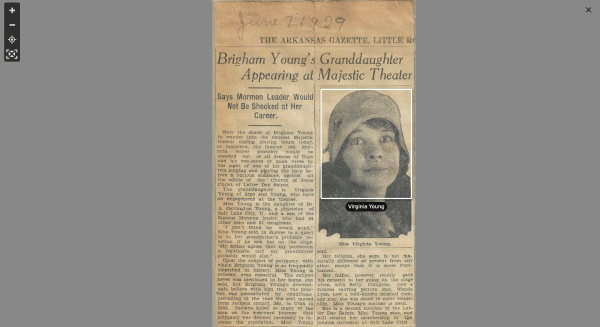
Joseph N and Virginia LaRocca are listed in the 1917 and 1918 and 1923 Peoria, Ill. directory.
1917 Peoria directory lists under LaRocca: Annie, Frank and Rose, Joe and Virginia, Nick, Paul, Roxy and Emma, all at 205 Martin St. ancestry.com
1922 Peoria directory lists Anna, widow, Paul, Roxie (no Emma) Ned and Virginia, Frank and Rose. ancestry.com
Sometimes Virginia’s sister and fellow vaudeville player Josephine, is part of the act. The girls went by the name “The Virginia Sisters.” This is seen in the ad below from the Salt Lake City Tribune. It is from Oct. 1, 1919.

June 30, 1917 Goodwin’s Weekly SLC.
Virginia was married by now and singing in a vaudeville act with her husband Ned, not named here.
.

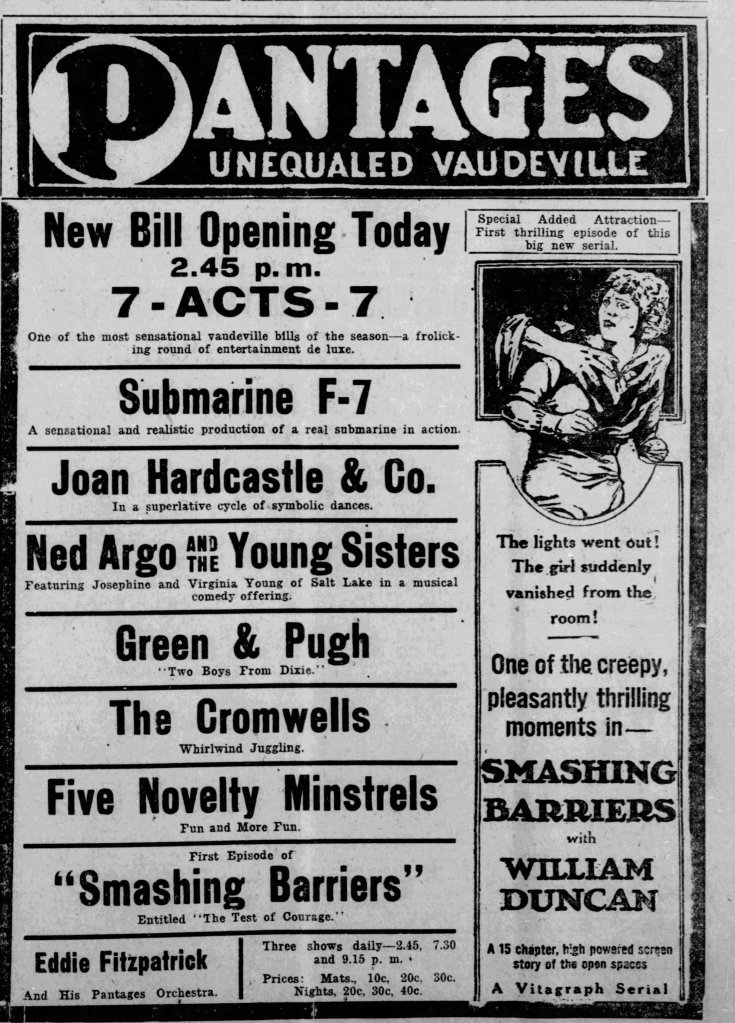
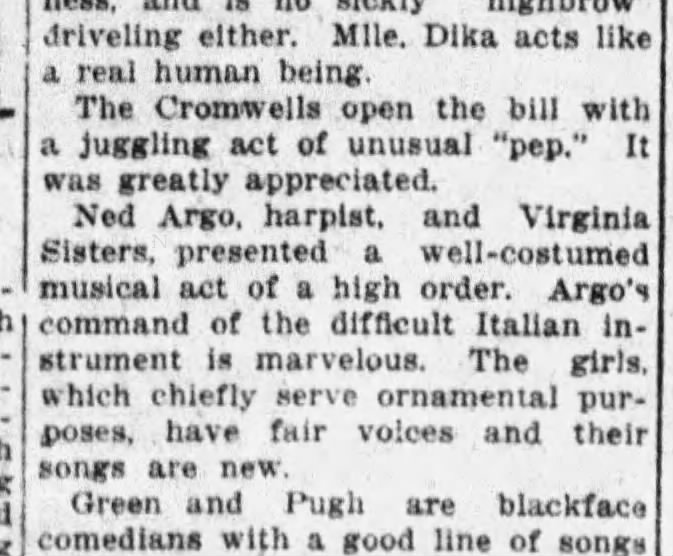

Saskatoon Daily Star June 6, 1916
Below we see Ned Argo and the Virgina Sisters play the Pantages in LA.
D.W. Griffith will be introducing his film Broken Blossoms and you will need a ticket!

Look at the few lines at the very end of the ad. 1919. ^^^^^^^^^^^^”dainty dancing and musical numbers.”


1920 approx. Josephine Young quit touring with her sister and brother-in-law and moved to San Francisco with her husband George Truman Harker.
They started a family there:Jack Truman Harker born in 1921, and a daughter, Mary Jane, in 1923 .
In the 1920 Federal Census, Virginia is listed as living in Peoria, Illinois with her husband and his family. Her occupation is listed as “Actress on stage.”
Virginia would gave birth to Donna Virginia LaRocca, 1921 in Peoria, Ill.

The whole LaRocca family including in-law Virginia, living together in 1923 in Peoria, Illinois, home base for the LaRoccas.
Her sister Josephine Young Harker is across the country in San Francisco. She gave birth this year to Mary Jane Harker. She had given birth to son Jack Truman Harker in 1921. I’m not sure where right now.
<<<<<<from a directory found on ancestry.com
Brother Frank, a violinist, and his wife Rose, would soon move to nearby Decatur for Frank’s employment at the Avon Theatre.
Anna, the matriarch, is listed as a “widow of Salvatore.”
As you have seen
Ned and Virginia continued to tour Vaudeville throughout the 1920s.
I don’t know if they brought their young daughter, Donna, along on the tour. She might have stayed in Peoria with Grandma Anna LaRocca.

The couple had a stop over in 1926-1928 in Oakland, California as seen by directories on ancestry.com

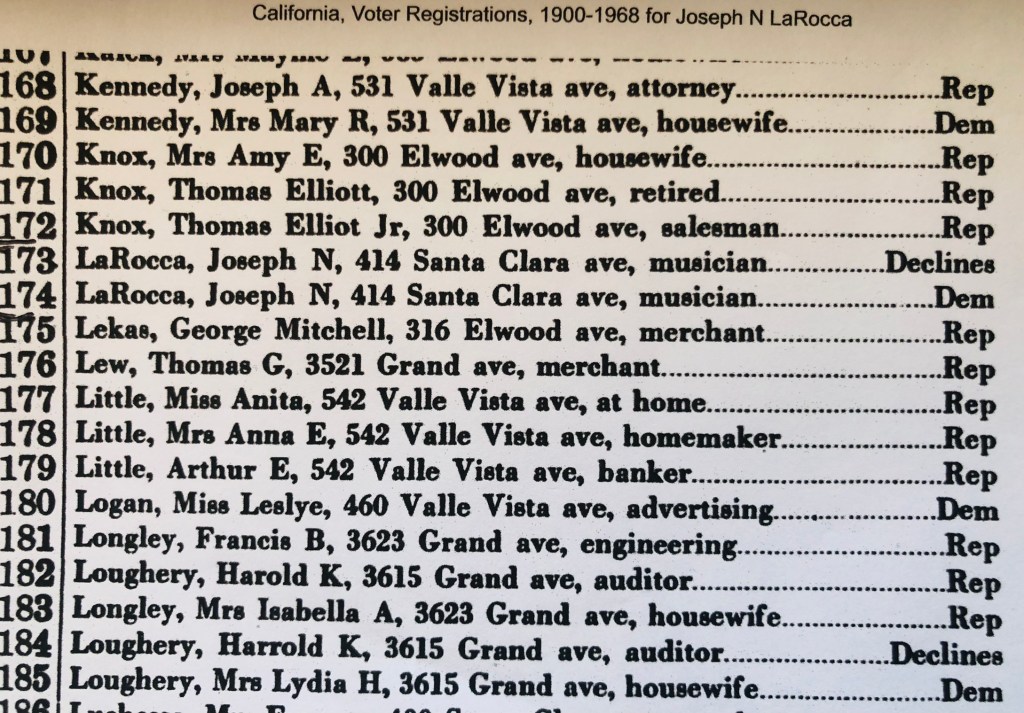
Charlotte Observer June 27, 1929. With an act called “From Peoria.”
Ned & Virginia are listed in the 1930 census as living in Peoria,Ill. The family was only a few years away from permanently relocating to Los Angeles.
Vaudeville would soon be dead.


Mount Vernon Argus April 20, 1929
Another ad featuring “From Peoria”: An Act with the theme of middle-America i.e. Ned Argo’s hometown.
As we’ve seen, the couple was living in Oakland, California for two years in the late 1920s.
Yet they can lay claim to being from Peoria, Ned’s hometown, and play this up for their latest Vaudeville act.
1930 Census Marinellos and LaRocca, cousins Mildred and Donna V. are listed next door to each other in the family home on Martin in Peoria. Looks like the Marinellos are sharing 208 Martin with another family. Ned, “Jeanette” and Donna Vey are lodgers at the home of a Lena Buckley. Previous census and directories show the LaRoccas only, listed in this address home.
It appears like they were renting their own home in 1930, just months after the 1929 stock market crash that resulted in the Great Depression.

After Vaudeville died out in the early 1930s, the Great Depression was already in full swing.
Roxy LaRocca retired at this time to the LaRocca family hometown of Peoria, Illinois, where he started a magazine stand. He later became involved in local politics.
Frank and Rose, Ned and Virginia, moved to LA during the Depression early/mid 1930s. See much more information about this in the next chapter……..
Please see my next chapter Family History #2 for an in-depth history. It includes the move to Los Angeles in the 1930s and covers Radio City from 1938 through the 1940s.
Jane is credited on imdb as the “red-headed snob” in Humoresque starring Joan Crawford and John Garfield.
Harker had small parts in movies with stars such as Joan Crawford, Ann Sheridan, John Garfield, Bette Davis, Jack Carson, Errol Flynn, Eleanor Parker and more.
.
 Paige Young in Los Angeles